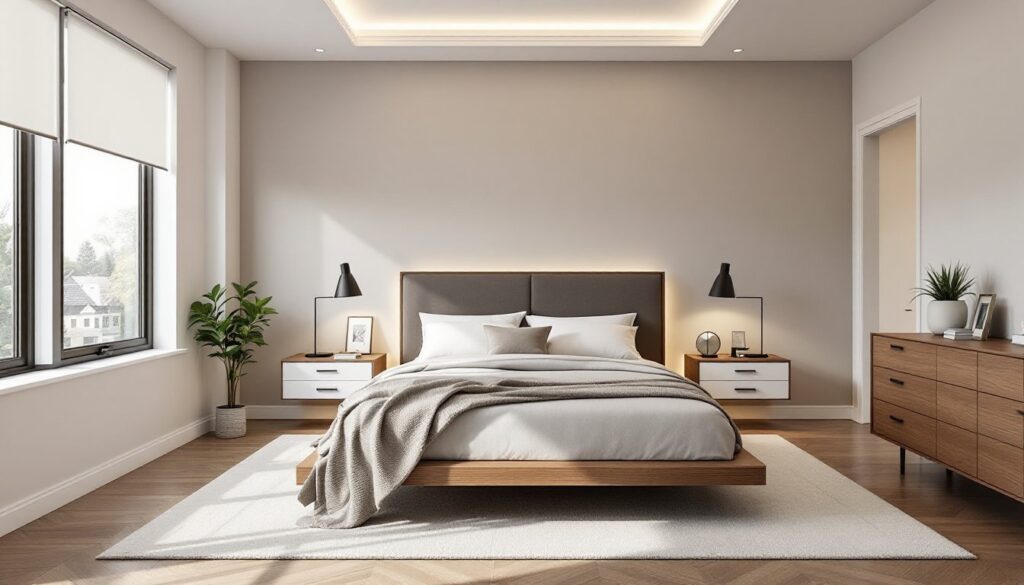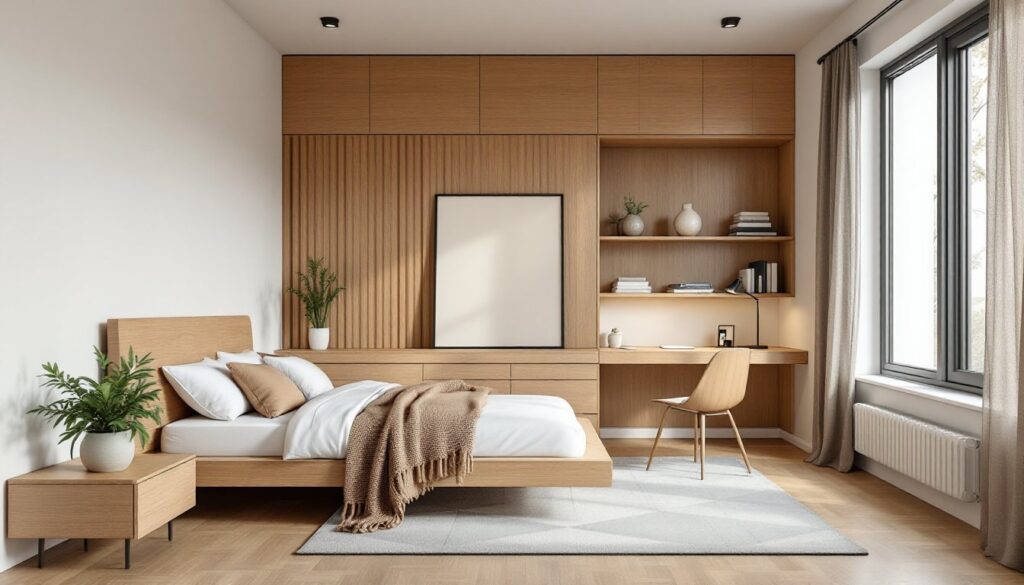

A modern bedside table is far more than a place to set your lamp and phone. It’s a statement piece that anchors the bedroom aesthetic and sets the tone for how the entire room feels. Whether you’re drawn to sleek minimalism, mid-century modern interior design, or something in between, selecting the right modern contemporary bedside table can completely reshape your sleeping space. This guide walks you through what makes a bedside table truly modern, which design features matter most, and how to style one so it doesn’t just function, it shines. If you’re redecorating or building out a bedroom from scratch, you’ll find the clarity needed to pick a piece that fits both your lifestyle and your design vision.
Table of Contents
ToggleKey Takeaways
- A modern contemporary bedside table combines clean lines, honest materials, and purposeful proportions to create a functional statement piece in your bedroom.
- Ideal modern bedside tables measure 24–28 inches in height, 16–20 inches in depth, and 20–30 inches in width to match mattress height and provide adequate surface space.
- Material honesty—solid wood, matte finishes, and metal legs—defines modern design; avoid high-gloss finishes, ornate hardware, and cheap veneers that cheapen the look.
- Style variations like mid-century modern, Scandinavian, industrial, and minimalist modern offer distinct aesthetics; the key is choosing one direction and maintaining internal consistency throughout your bedroom.
- Styling a modern bedside table demands restraint: include only essential items (a simple lamp, a small tray, one book stack), prioritize negative space, and use height-balanced layering to avoid visual clutter.
- Proper lamp placement on the outer table edge and warm-white bulbs (2700K) improve both functionality and sleep quality while maintaining the modern aesthetic.
What Defines a Modern Bedside Table
A modern bedside table strips away ornament and embraces clean lines, purposeful materials, and honest construction. Unlike traditional nightstands, which often rely on carving, brass hardware, or dated finishes, a modern piece celebrates simplicity and functionality.
The core DNA of modern design includes flat surfaces, minimal visual clutter, and a focus on how the table actually works in daily life. You’ll often see legs (rather than skirted bases), open shelf space, and materials chosen for their inherent qualities, natural wood grain, metal patina, or concrete texture, rather than applied decoration. The table should whisper, not shout.
A modern bedside table also respects proportion. Heights typically range from 24 to 28 inches, matching mattress height so items sit at arm’s reach. Depth is usually 15 to 20 inches, enough for a lamp, a small stack of books, and a water glass, without eating into floor space or blocking wall outlets and vents.
Key Design Features to Look For
Materials and Finishes
Modern bedside tables thrive on material honesty. Solid wood (walnut, oak, maple, or white oak) is a cornerstone choice because the grain and color deepen with age, you’re not fighting a finish, you’re building a relationship with the piece. Paint-grade hardwoods paired with matte or satin finishes (rather than high gloss) also read contemporary without the warmth of natural wood.
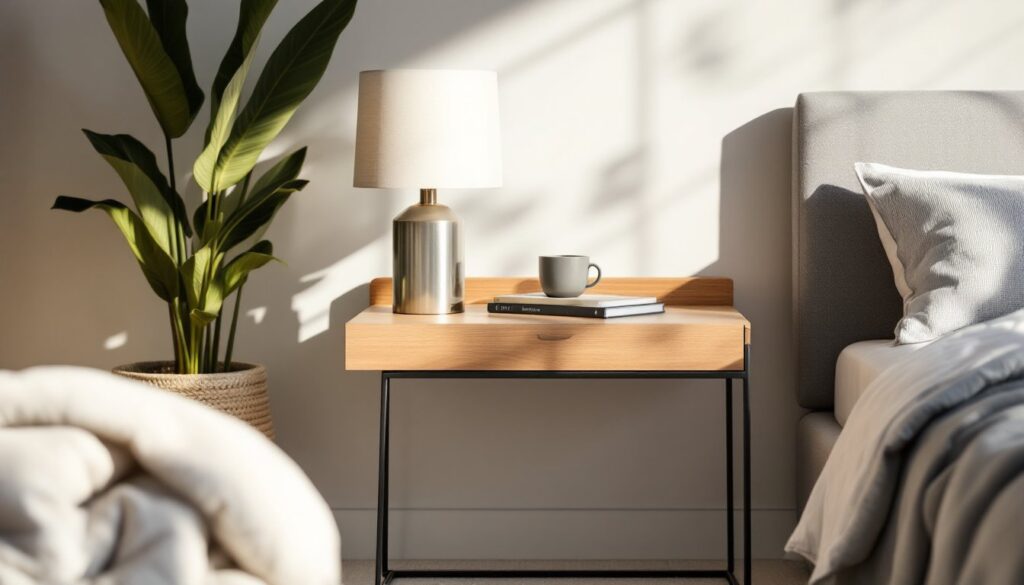
Metal legs, typically steel, aluminum, or powdercoated iron, add visual lightness and industrial character. Combining wood tops with metal bases is the hallmark of mid-century modern interior design, so if you lean that direction, look for that pairing. Engineered wood (plywood or MDF) works fine for painted pieces, but avoid veneers unless they’re thick and high-quality: they chip and reveal seams over time.
Avoid high-gloss finishes, overly ornate hardware, and mixed materials that feel gimmicky. Matte black, brushed steel, natural oil finishes, and soft whites are your allies here.
Shape and Size Considerations
Rectangular tops are the modern standard because they pair well with platform beds and minimize awkward corners. Depth matters: go for 16 to 20 inches if your bedroom is tight: 20 to 24 inches if you have breathing room and want surface real estate. Width should complement your bed, usually 20 to 30 inches, wide enough to balance the mattress, not so wide it dominates a small room.
Height is critical and often overlooked. A table that’s 2 to 4 inches below your mattress feels integrated: anything lower reads like a side table rather than bedroom furniture. If your mattress sits 30 inches high, aim for a table at 26 to 28 inches. Shelving underneath (versus a solid base) creates visual openness, which is essential in modern bedside table design. One shelf is often enough: two feels busy.
Style Variations Within Modern Design
Modern is a umbrella term, and bedroom furniture modern style spans several distinct directions. Understanding them helps you avoid mismatches when decorating.
Mid-century modern leans into tapered legs, warm wood tones, and asymmetrical proportions. Picture a walnut table with hairpin legs, maybe a small drawer and open shelf. This flavor of modern bedroom furniture modern style pairs beautifully with vintage art, warm textiles, and vintage-style lighting. Think 1950s–60s Scandinavian or American design sensibility.
Scandinavian modern emphasizes light woods (ash, birch, natural pine), minimal hardware, and an almost stark simplicity. It’s the breakfast-table-next-to-your-bed aesthetic. There’s warmth here, but zero excess.
Industrial modern shows its bones: raw metal frames, distressed finishes, concrete or reclaimed wood tops. This style works if your bedroom already has an open, loft-like energy.
Minimalist modern is the extreme end, a single shelf or thin slab top on barely-there legs, often in white, black, or natural wood. It’s stunning in the right room but leaves no room for styling error.
You don’t have to pick one pure style. Many of the best bedrooms blend mid-century warmth with Scandinavian restraint or throw in one industrial accent. The rule is internal consistency: if your bed frame is walnut and tapered legs, your bedside table should nod in that direction, not against it.
Styling Your Modern Bedside Table
Once you’ve chosen the right table, styling it is where personality lives. A modern bedside table offers less surface than a traditional nightstand, so restraint is the name of the game.
Start with function. A lamp is non-negotiable, pick one with a simple shade (linen, paper, or metal) that echoes your table’s finish. A warm-white bulb (2700K) matters more than you’d think: it supports sleep. Add a small dish or tray for keys, rings, or a phone. A single book stack, a potted plant, or a ceramic vessel can sit nearby, but resist the urge to crowd.
Choose a height-balanced look. If your lamp is tall, a short object (like a box or stone) balances it. Negative space is your friend, empty shelf room is part of the design, not wasted real estate. Modern designers call this “breathing room,” and it’s what separates a curated bedside from a cluttered one.
Consider surface texture. A wooden table benefits from cooler metal objects (a stainless steel tray, a black picture frame) or soft natural materials (a linen shade, a ceramic cup). Concrete or raw-edge wood tables come alive with warmer brass or warm-toned ceramics. Design Milk regularly showcases contemporary furniture and design product approaches that can spark ideas for how to layer colors and materials.
Lighting placement. Position your lamp on the outer edge of the table so light doesn’t blast your sleeping partner. If your table has two levels, the bottom shelf is perfect for a low-profile item, a folded linen, a stack of magazines, a decorative basket, that doesn’t interrupt sightlines.
Anchor with color. Modern bedrooms often lean neutral, but a bedside table can introduce a subtle color note. A walnut table against a soft gray wall reads warm: a white painted table against pale yellow feels fresh. If you’re uncertain, start with the table’s natural finish and build your palette from there.
Dwell’s guide to midcentury-modern nightstands for curated examples of how designers match tables to room flow and personal style. If you’re drawn to asymmetrical layouts, 30 bedrooms with mismatched nightstands showcases how two different tables can still read cohesively when they share material language or finish.
Conclusion
A modern bedside table is an investment in both function and aesthetic. By understanding what makes a piece truly modern, clean lines, honest materials, and purposeful proportion, you can spot a quality table whether you’re shopping big-box stores or independent makers. Don’t rush the choice: measure twice, think about how it pairs with your bed and existing palette, and remember that the best bedside table is the one you’ll want to see every morning for the next decade.