
Walk into any room and you’re stepping into centuries of design evolution, most of which you’ve never heard about. Interior design isn’t just about throw pillows and paint swatches. It’s rooted in psychology, history, geometry, and even ancient real estate schemes. Whether you’re planning a renovation or just curious why your living room feels “off,” these facts reveal how much thought (and sometimes accident) shapes the spaces we live in. You’ll never look at your furniture layout or wall color the same way again.
Table of Contents
ToggleKey Takeaways
- Wall color psychology is measurable—warm tones stimulate appetite making them ideal for kitchens, while cool colors lower blood pressure and work best in bedrooms and bathrooms.
- Ancient Rome pioneered interior design as a profession around the 1st century BCE, with wealthy Romans hiring specialists to coordinate frescoes, mosaics, and furniture placement much like modern designers do today.
- Floating furniture 12–18 inches away from walls creates the illusion of more floor space and helps rooms feel less cramped compared to furniture pushed against the perimeter.
- The golden ratio (1:1.618) appears throughout well-designed interiors in furniture proportions and room dimensions, creating visual harmony without relying on symmetry.
- Interior design trends repeat every 20–30 years driven by nostalgia and generational shifts, so investing in timeless proportions and swappable elements prevents expensive mistakes.
The Color of Your Walls Is Secretly Controlling Your Mood
Paint isn’t just decoration, it’s environmental psychology in a can. Color temperature affects how your brain interprets a space, and the effect is measurable.
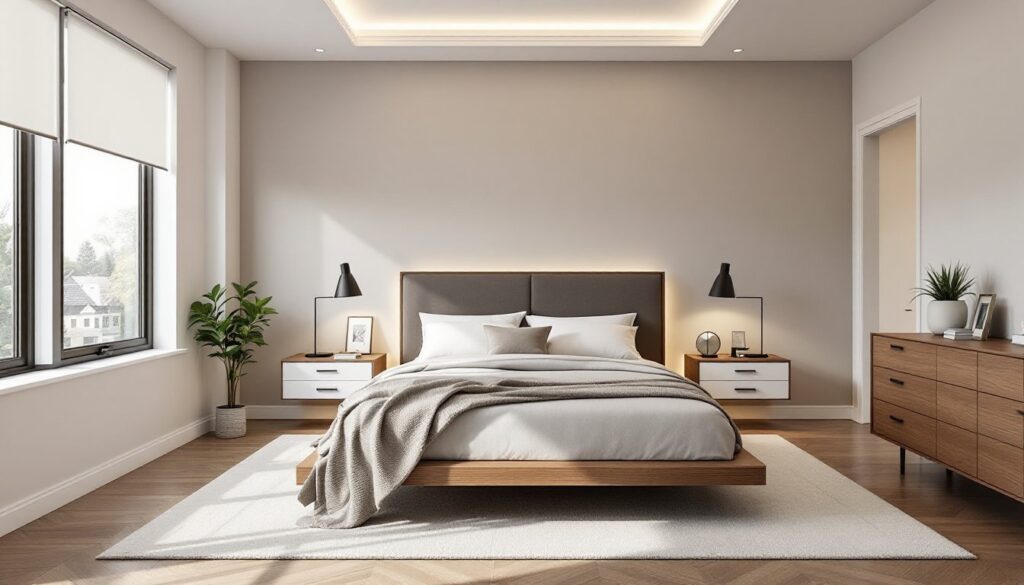
Warm colors like reds, oranges, and yellows increase heart rate and stimulate appetite. That’s why so many kitchens and dining rooms default to warm palettes. Cool colors, blues, greens, grays, lower blood pressure and promote calm, making them popular in bedrooms and bathrooms.
But here’s the catch: the same color can behave differently depending on the finish and lighting. A flat or matte finish absorbs light, making colors look deeper and more muted. Satin or semi-gloss finishes reflect light, which can make a blue feel colder or a yellow more intense. If you’ve ever painted a room and thought, “That’s not the color I picked,” blame the sheen and your lightbulbs, not the paint chip.
Natural light also shifts throughout the day. North-facing rooms get cooler, bluer light: south-facing rooms get warmer, golden tones. Test your paint color on all four walls and observe it at different times before committing to five gallons. Designers and those focused on home styling guides often recommend this step to avoid regret.
One more thing: color saturation matters as much as hue. A highly saturated red (think fire truck) can feel aggressive in a small space, while a desaturated terracotta feels grounded. If you’re repainting, consider stepping down one saturation level from what looks good on the sample card.
Ancient Rome Had the First Interior Designers (Yes, Really)
Interior design as a profession didn’t start with HGTV. It started with wealthy Romans hiring specialists to decorate their villas around the 1st century BCE. These early designers coordinated frescoes, mosaics, furniture placement, and even fountain installations. They weren’t called “interior designers”, the term didn’t exist, but their job descriptions match modern design roles almost exactly.
Roman interiors were status symbols. Elaborate mosaic floors (tesserae, tiny stone tiles) could take months to install and required skilled artisans. Frescoes were painted directly onto wet plaster, a technique called buon fresco, which meant no do-overs. Furniture was minimal by today’s standards, couches for reclining, small tables, storage chests, but materials mattered. Imported woods, bronze fittings, and inlaid ivory signaled wealth.
The Romans also pioneered zoning within homes. Public spaces (atrium, tablinum) were designed to impress guests, while private family quarters were simpler. That concept of dividing a home by function? Still foundational in residential design today.
After Rome fell, interior design as a profession mostly disappeared in Europe until the Renaissance, when Italian architects like Michelangelo started designing entire interiors, furniture, textiles, wall treatments, as unified projects. By the 19th century, professional decorators emerged in France and England, and the modern interior design industry was born.
Your Furniture Placement Can Actually Make Rooms Look Bigger
This isn’t subjective, it’s spatial perception, and you can manipulate it without knocking down walls.
Floating furniture away from walls creates the illusion of more floor space. Counterintuitive, but true. When every piece is shoved against the perimeter, your eye registers the negative space as “leftover,” which makes the room feel cramped. Pull your sofa 12 to 18 inches off the wall, and suddenly the room breathes.
Traffic flow also impacts perceived size. If you have to sidestep a coffee table or squeeze past a chair, the room feels smaller than it is. Maintain at least 24 to 36 inches of walkway clearance around major furniture pieces. In tight layouts, consider armless chairs or benches that tuck under tables.
Vertical sight lines matter too. Low-profile furniture, platform beds, low-back sofas, leggy mid-century pieces, keeps your eye moving across the room instead of stopping at a visual barrier. Heavy, tall furniture chops up the space. If you’re working with an 8-foot ceiling (standard in many post-war homes), keep large furniture under 36 inches tall when possible.
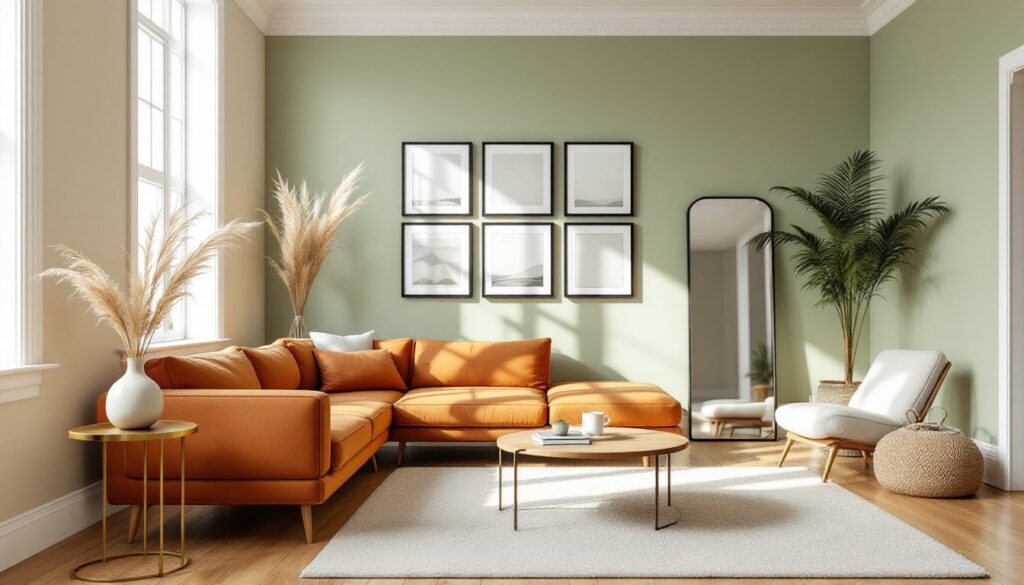
Another trick: mirrors opposite windows. They double the perceived light and create a sense of depth. Many who browse interior design ideas discover that a well-placed mirror can visually expand even the smallest rooms. Just don’t place them directly across from cluttered surfaces, you’ll just double the mess.
Finally, scale matters. A sectional designed for a great room will overwhelm a 12×14 living room. Measure your space, then measure the furniture (including clearances). Tape out the footprint on the floor before you buy. It’s tedious, but it prevents expensive mistakes.
The Golden Ratio Exists in Your Favorite Rooms
The golden ratio, approximately 1:1.618, is a mathematical proportion that shows up in nature, art, and architecture. It’s also quietly at work in well-designed interiors, whether the designer knew it or not.
You’ll see it in furniture dimensions. A coffee table that’s roughly two-thirds the length of your sofa follows the golden ratio. So does a gallery wall where the largest frame is about 1.6 times the size of the next-largest. The ratio creates visual harmony without symmetry, which is why it feels balanced but not boring.
Architects use it in room proportions. A room that’s 16 feet by 10 feet is close to the golden ratio and tends to feel naturally proportioned. Windows, door placements, and even crown molding reveals can follow the same logic. The Parthenon, the Pyramids of Giza, and Leonardo da Vinci’s Vitruvian Man all incorporate it.
You don’t need a calculator to apply this. A simple trick: when hanging art or arranging objects, aim for a roughly 60/40 split instead of a 50/50 one. It’s close enough to the golden ratio and avoids the static feel of perfect symmetry.
Not every designer uses it consciously, but many who do, especially those working in classical or transitional styles, report that clients say the space “just feels right.” That’s the golden ratio doing its thing.
Mirrors Were Once More Valuable Than Paintings
Before the industrial revolution, mirrors were luxury items reserved for royalty and the ultra-wealthy. A large mirror could cost more than a commissioned oil painting, and for good reason.
Early mirrors were made by applying a thin layer of reflective metal (silver or tin-mercury amalgam) to glass, a labor-intensive and toxic process. The glass itself had to be perfectly flat and polished, which was difficult to achieve by hand. Most mirrors were small, warped, or cloudy. A clear, large mirror was a status symbol.
The Hall of Mirrors at Versailles, completed in 1684, was a flex of unimaginable wealth. It contains 357 mirrors, which at the time represented a significant portion of France’s national budget. Guests were meant to be awed, and they were.
Mirror production industrialized in the 19th century, and prices dropped. By the early 20th century, mirrors became standard in middle-class homes. Today, a frameless 24×36-inch mirror costs about $30 at a home center, a bargain Louis XIV couldn’t have imagined.
If you’re installing mirrors in a renovation, consider the weight and backing. A ¼-inch glass mirror weighs about 3.5 pounds per square foot. Use appropriate wall anchors (toggle bolts or masonry anchors, depending on your wall type) and mirror mastic adhesive for large installations. Don’t rely on wire and a picture hook, mirrors that fall do serious damage.
Interior Design Trends Repeat Every 20-30 Years
If you lived through the 1990s, you’ve already seen this cycle. Shiplap, subway tile, and open shelving? All making comebacks. The 20-to-30-year trend cycle is real, and it’s driven by nostalgia, generational shifts, and the availability of old housing stock.
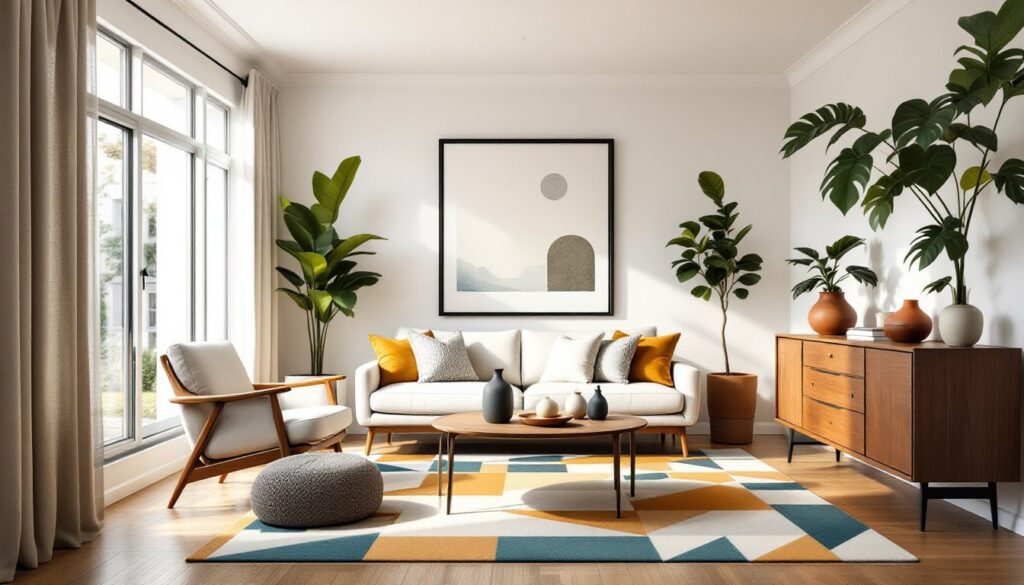
Here’s how it works: styles that were trendy during someone’s childhood become desirable again when they reach their 30s and 40s, peak home-buying and renovating years. Mid-century modern had a resurgence in the 2010s because Millennials grew up around their grandparents’ original pieces. Now, 1980s postmodern and Memphis Group influences (bold geometry, pastels, mixed materials) are creeping back in.
Some elements never fully disappear, they just get rebranded. “Farmhouse” style is a repackaging of American country aesthetics from the 1980s and 1990s, minus the geese and gingham. “Coastal grandmother” is just Hamptons style with a new Instagram handle.
If you’re planning a renovation, think twice before going all-in on the trendiest finishes. Current favorites like home decor inspiration sites showcase may not age well. Herringbone tile and matte black fixtures are popular now, but in 10 years, they might scream “2024 renovation” the same way granite countertops and travertine tile scream “2005.”
For longevity, stick with classic proportions and neutral bases, then layer in trends through easily swappable elements, paint, hardware, textiles, lighting. That way, you can ride the cycle without ripping out tile every decade.
Conclusion
Interior design is more than aesthetics, it’s history, psychology, and a little bit of math. Understanding how color, proportion, and layout affect a space gives you real control over how your home looks and feels. Whether you’re rearranging furniture, repainting, or planning a bigger project, these principles hold up across styles and decades. Use them, and you’ll make smarter, longer-lasting design decisions.