
Restaurant design isn’t just about aesthetics, it’s infrastructure that directly affects revenue per square foot. Every layout choice, from the kitchen pass to the host stand, either speeds up table turns or creates bottlenecks. A well-designed dining room maximizes seating capacity without making guests feel cramped, supports efficient service flow, and reduces staff fatigue. Whether converting a retail shell or renovating an existing space, understanding the structural and operational requirements of restaurant interiors helps owners avoid costly redesigns and permits delays down the line.
A well-planned space should balance atmosphere and functionality, using a thoughtful restaurant lighting design guide to create an inviting dining experience while supporting operational efficiency and profitability.
Table of Contents
ToggleKey Takeaways
- Commercial restaurant interior design directly impacts revenue per square foot by influencing table turns, check size, and labor efficiency through thoughtful layout and operational planning.
- Successful restaurant interior design requires balancing front-of-house appeal with back-of-house functionality, with kitchens typically occupying 30-35% of total space in full-service establishments.
- Design style, materials, and finishes must align with your concept and menu pricing while meeting commercial durability standards—residential-grade finishes fail quickly in high-traffic restaurant environments.
- Lighting design dramatically affects the dining experience and guest spending, requiring layered ambient, task, and accent lighting with appropriate color temperature (warm 2700-3000K for fine dining, cooler 3500-4000K for fast-casual).
- Skipping permits, underestimating HVAC requirements, and ignoring ADA compliance create costly problems; treat restaurant interior design as infrastructure requiring professional expertise and code compliance, not decoration.
- Strategic space planning for seating capacity, service flow, acoustics (targeting 65-70 decibels), and accessible aisles ensures both operational efficiency and guest comfort during service.
Why Restaurant Interior Design Matters for Your Bottom Line
Design decisions impact three critical metrics: table turns per shift, average check size, and labor efficiency. Poorly planned spaces force servers to take unnecessary steps, slowing service and limiting how many tables one person can handle. Tight aisles create collision points during rush hours. Inadequate lighting or ventilation drives diners out faster, cutting into dessert and drink sales.
The math is straightforward. A 2,000-square-foot dining room with 60 seats at 15 square feet per seat leaves room for aisles and service stations. Drop that to 12 square feet per seat and you’ll pack in 75 seats, but if the cramped layout adds two minutes to each table turn, you’ve lost capacity during peak hours. The International Building Code (IBC) mandates minimum aisle widths and egress requirements, which vary by occupancy load and jurisdiction. Ignoring these during design means failed inspections and expensive fixes.
Design also signals price point. Guests expect different finishes at a $15-per-plate bistro versus a $75 tasting-menu spot. Mismatched design and menu pricing creates cognitive dissonance that hurts repeat visits. A neighborhood pizzeria with white tablecloths and chandeliers confuses diners. So does a steakhouse with laminate tables and Edison bulbs on extension cords.
Essential Elements of Successful Restaurant Interior Design
Every restaurant interior balances front-of-house appeal with back-of-house functionality. The kitchen typically occupies 30-35% of total square footage in full-service restaurants. Fast-casual concepts may push that to 40% to support higher throughput. The dining room, restrooms, storage, and office space split the remainder.
Zoning matters. Separate loud bar areas from quiet dining sections using half-walls, planters, or ceiling height changes. Position the host stand with clear sightlines to the entrance and dining room, but not blocking the main traffic path. Service stations need proximity to multiple tables without being visible from every seat.
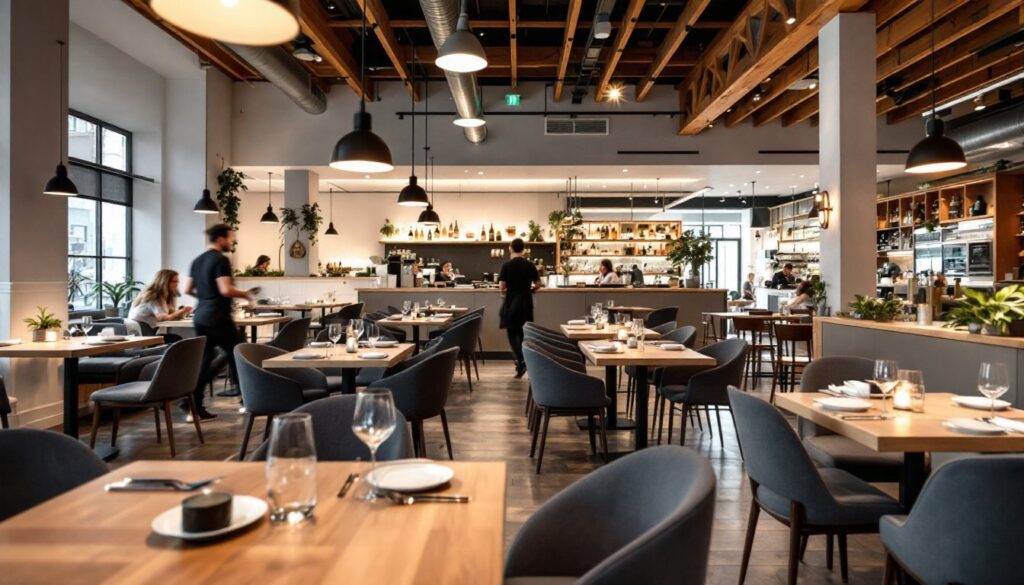
Acoustics rarely get enough attention during design. Hard surfaces, concrete floors, exposed ductwork, large windows, create noise levels that force diners to shout. Target ambient sound levels between 65-70 decibels during service. Add acoustic ceiling panels, upholstered seating, heavy drapes, or wall treatments to absorb sound. Many contemporary interior design choices prioritize industrial aesthetics, but restaurants need acoustic balance to function.
ADA compliance isn’t optional. The Americans with Disabilities Act requires accessible routes, table clearances, and restroom fixtures. Plan for 36-inch-wide aisles, 5-foot turning radii, and tables with 27-inch knee clearance. This affects furniture selection and layout from day one.
Layout and Space Planning
Start with the kitchen. Work with a commercial kitchen designer or foodservice consultant to establish equipment footprints, utility rough-ins, and code-required spacing. Professional kitchen layout design services prevent costly replumbing or gas line relocations after walls are framed.
The service flow dictates dining room layout. Servers should move from kitchen to tables in a logical pattern without crossing paths constantly. Position the POS system and beverage station between kitchen and dining areas. Avoid placing tables in narrow hallways leading to restrooms, it slows service and creates awkward moments for guests.
Seating mix affects capacity and flexibility. A 60-seat restaurant might include ten 2-tops, eight 4-tops, and two 6-tops. Two-tops should be movable to combine for larger parties. Booths maximize space efficiency along walls but can’t be reconfigured. Banquettes offer similar efficiency with more flexibility. Calculate seating based on actual dimensions: a 24-inch-wide chair needs 30 inches of space when pulled out. Allow 18-24 inches between chair backs when seating is back-to-back.
Choosing the Right Design Style for Your Restaurant Concept
Design style should reinforce the menu and service model, not fight against it. A ramen shop with velvet banquettes and marble tables sends mixed signals. The style doesn’t need to be literal, an Italian restaurant doesn’t require Tuscan murals, but materials and details should align with the dining experience.
Fast-casual and QSR concepts prioritize durability and cleanability. Sealed concrete floors, laminate or solid-surface tables, and commercial-grade vinyl seating hold up to high traffic. Bright, even lighting keeps energy up and table turns fast. Counter service requires a clear ordering queue that doesn’t block entry or seating areas.
Casual dining allows more variety in finishes. Wood tables (sealed with commercial-grade polyurethane), upholstered chairs, and varied lighting levels create a relaxed atmosphere. Noise control becomes more important as diners expect conversation without shouting.
Fine dining demands elevated materials and details: hardwood or stone flooring, custom millwork, designer lighting fixtures, and high-end fabrics. Table spacing increases to 18-24 inches between chair backs. Invest in dimmable lighting systems and quality HVAC to control temperature precisely.
Regional concepts can reference cultural elements through color palettes, artwork, and architectural details without veering into theme-restaurant territory. A Mexican restaurant might use Talavera tile accents and warm terracotta tones. A Japanese izakaya could incorporate shoji-screen-inspired room dividers and natural wood finishes.
Materials, Finishes, and Furniture Selection
Restaurant materials take a beating. Surfaces must withstand spills, heat, impacts, and frequent cleaning with commercial disinfectants. Residential-grade finishes fail within months in commercial settings.
Flooring: Sealed concrete, porcelain tile, or commercial luxury vinyl tile (LVT) are standard. Wood flooring works if it’s solid hardwood (3/4-inch thick) finished with commercial polyurethane, engineered wood and laminates don’t hold up. Avoid grout lines smaller than 1/8 inch: they trap debris and stain. Slip resistance matters: specify tiles with a dynamic coefficient of friction (DCOF) of 0.42 or higher for wet areas.
Wall finishes: Washable paint (semi-gloss or satin) in dining areas, epoxy or FRP (fiberglass-reinforced panels) in kitchens. Exposed brick needs sealing, raw brick absorbs grease and odors. If installing wallcovering, use Type II commercial vinyl rated for high-traffic areas.
Tables: Solid wood, laminate, or solid surface (Corian, quartz). Avoid glass tops in high-volume restaurants, they scratch, chip, and require constant cleaning. Table bases must be stable: a 30-inch-diameter top needs a base with a 22-24-inch footprint. For outdoor dining, specify powder-coated aluminum or marine-grade materials.
Seating: Commercial-grade chairs and barstools meet BIFMA (Business and Institutional Furniture Manufacturers Association) standards for weight capacity and durability. Upholstery should be vinyl, faux leather, or treated fabric rated for 100,000+ double rubs. Frame construction matters: corner blocks, metal brackets, and mortise-and-tenon joints outlast stapled frames.
Budget 8-12 weeks for custom furniture fabrication, longer if importing. Off-the-shelf commercial furniture ships faster but limits design flexibility. When browsing interior design inspiration for restaurant spaces, verify whether showcased pieces meet commercial use standards before specifying them.
Lighting Design Strategies That Enhance the Dining Experience
Lighting affects how food looks, how long guests stay, and how much they spend. Poor lighting ruins even the best design.
Layer three types: ambient, task, and accent lighting. Ambient lighting provides overall illumination, recessed downlights, linear LED strips, or decorative fixtures. Task lighting focuses on work areas: the host stand, POS stations, and bar. Accent lighting highlights architectural features, artwork, or creates visual interest.
Color temperature changes the mood. Warm light (2700-3000K) makes spaces feel cozy and makes food look appetizing. Cooler light (3500-4000K) energizes fast-casual or breakfast-focused spaces. Never mix color temperatures within the same zone, it looks amateurish.
Dimming capability is essential for full-service restaurants. Program lighting scenes for different times: brighter for lunch service, dimmer for dinner. Install dimmers on separate circuits for each zone to fine-tune levels. Specify LED fixtures rated for dimming to avoid flickering.
Fixtures and placement: Avoid direct glare. Position downlights to illuminate tables without shining in diners’ eyes. Pendant lights over tables should hang 30-36 inches above the surface, high enough to avoid head bumps, low enough to create intimacy. In bar areas, backlit shelving showcases bottles and adds depth.
Calculate lighting based on footcandles: 10-20 fc for ambient dining, 30-50 fc for task areas. Work with a lighting designer on complex layouts or historic buildings where existing conditions complicate installations. Electrical work requires licensed electricians and permits, verify local amendments to the National Electrical Code (NEC) before starting.
Common Restaurant Design Mistakes to Avoid
Undersized restrooms. Local codes mandate minimum fixture counts based on occupancy. A 60-seat restaurant typically needs at least two single-occupancy ADA-compliant restrooms or one multi-fixture men’s and women’s room. Don’t skimp on restroom finishes, they directly affect guests’ perception of cleanliness.
Ignoring HVAC capacity. Restaurants generate tremendous heat from cooking equipment, lighting, and body heat. An undersized HVAC system can’t maintain comfortable temperatures during service. Specify commercial HVAC designed for restaurant use, with separate ventilation for kitchen hoods. This requires mechanical engineers and usually a separate permit.
Improper kitchen ventilation. Type I hoods are required over cooking equipment producing grease-laden vapors. Ductwork, makeup air, and fire suppression systems must meet local fire codes and NFPA 96 standards. This is structural and mechanical work, not a DIY project.
Bad furniture proportions. Chairs that don’t fit under tables, tables too large for the space, or bar-height seating without footrests. Always mock up layouts with accurate dimensions before ordering.
Neglecting storage. Restaurants need dry storage, walk-in coolers, freezers, and space for linens, smallwares, and cleaning supplies. Allocate 10-15% of total square footage to back-of-house storage.
Over-designing for Instagram. A photogenic space is worthless if servers can’t navigate it, tables wobble, or acoustics are terrible. Function comes first, aesthetic refinement second.
Skipping permits. Commercial restaurant work nearly always requires building permits, mechanical permits, electrical permits, and plumbing permits. Health department plan review is mandatory. Cutting corners on permits leads to failed inspections, stop-work orders, or closure. Budget time and money for permitting upfront.
Restaurant design intersects interior aesthetics with commercial construction, code compliance, and operational efficiency. Owners who treat it as pure decoration end up with expensive problems. Those who approach it as infrastructure, hiring professionals where needed, planning for actual use, and building to commercial standards, create spaces that function profitably for years.