
Stone brings an unmatched combination of durability, texture, and natural beauty to interior spaces. Unlike synthetic materials that mimic nature, real stone carries geological history in every vein and variation, no two slabs are identical. Whether incorporated as a dramatic accent wall, a hardworking kitchen countertop, or understated flooring, stone adds weight and permanence to a room’s design. It works equally well in contemporary minimalist spaces and traditional homes, which explains why designers and homeowners are rediscovering its versatility after years of favoring softer, warmer materials.
Table of Contents
ToggleKey Takeaways
- Stone interior design combines durability, natural beauty, and sustainability, making it a timeless investment that ages gracefully across contemporary and traditional home styles.
- Marble suits luxury bathrooms and fireplace surrounds but etches easily from acidic substances, while granite and quartzite offer superior durability for high-traffic kitchen countertops.
- Slate and limestone provide rustic charm with natural patina, though limestone requires diligent sealing due to its porous nature and is best suited for low-traffic areas.
- Stone’s thermal mass improves energy efficiency in passive solar and radiant floor heating systems, while honed and textured finishes hide wear better than polished surfaces in active spaces.
- Balance stone with warm woods, textiles, and thoughtful lighting to prevent cold, sterile interiors—a single statement feature like a waterfall island creates focal point drama without overwhelming a room.
- Installation costs range from $50–$150 per square foot for granite to $70–$200+ for quartzite, and proper substrate preparation with cement backer board prevents cracking and ensures long-term performance.
Why Stone Is Making a Major Comeback in Modern Interiors
The resurgence of stone in residential design reflects a broader shift toward materials that age gracefully and support sustainable building practices. Stone doesn’t off-gas volatile organic compounds (VOCs), and many types, especially reclaimed or locally quarried stone, carry a smaller carbon footprint than heavily processed alternatives like engineered quartz or porcelain tile.
Homeowners are also drawn to stone’s thermal mass. In passive solar design or radiant floor heating systems, stone absorbs and slowly releases heat, improving energy efficiency. That same property keeps stone floors cool underfoot in warmer climates, a reason why limestone and slate are common in Mediterranean and Southwest architecture.
From a design perspective, stone pairs naturally with the mixed-material aesthetic dominating current trends. Architects featured in high-end design publications often layer stone with warm woods, blackened steel, and textured textiles to create contrast and depth. The material’s inherent imperfections, fossil marks in limestone, mica flecks in slate, dramatic veining in marble, add visual interest that manufactured surfaces struggle to replicate.
Finally, stone simply lasts. A well-installed stone floor or countertop can serve multiple generations with minimal maintenance, making it a sound long-term investment even though higher upfront costs. When trends shift, stone remains neutral enough to work with new palettes and furnishings.
Popular Types of Stone for Interior Design Projects
Marble: Classic Luxury for High-End Spaces
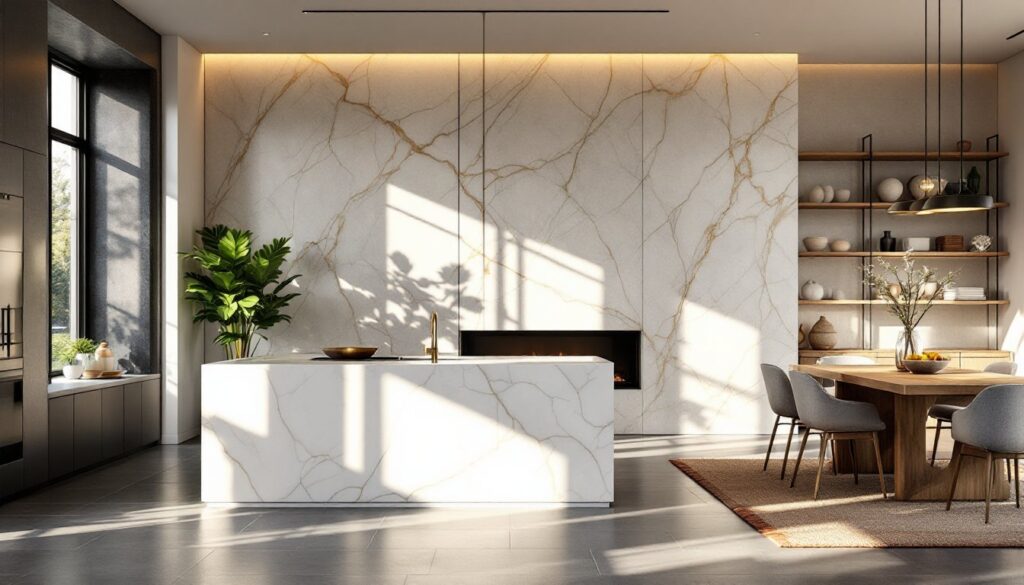
Marble remains the gold standard for luxury interiors, prized for its soft veining and luminous finish. Common varieties include Carrara (white with gray veining), Calacatta (white with bolder, gold-toned veins), and Statuario (bright white with dramatic gray veining).
Marble works beautifully for bathroom vanities, fireplace surrounds, and statement countertops, but it requires realistic expectations. It’s a calcium carbonate-based stone, which means it etches on contact with acidic substances, lemon juice, vinegar, wine, and even some cleaning products will leave dull spots. Sealing helps with staining but won’t prevent etching.
For kitchen countertops, marble is best reserved for baking zones (pastry chefs love the cool surface for rolling dough) or in homes where patina is embraced rather than feared. In bathrooms, where acidic spills are less common, marble performs better. Honed finishes hide etching better than polished surfaces and offer a softer, more contemporary look favored by many designers at luxury interior showcases.
Granite and Quartzite: Durable Beauty for Kitchens and Bathrooms
Granite remains a workhorse for countertops, offering excellent scratch and heat resistance along with a wide range of colors and patterns. It’s an igneous rock formed from cooled magma, making it denser and more durable than marble. Standard slab dimensions are typically 56-60 inches wide and 10-12 feet long, with a thickness of 2 cm or 3 cm (about ¾ inch or 1¼ inch).
Granite requires periodic sealing, usually once a year for kitchen counters, but daily maintenance is straightforward: mild soap and water. Avoid harsh cleaners or acidic products, which can degrade the sealer over time.
Quartzite (not to be confused with engineered quartz) is a metamorphic rock that offers marble’s aesthetic with granite’s toughness. It starts as sandstone and transforms under heat and pressure into an incredibly hard, dense stone. Popular varieties like Taj Mahal and Sea Pearl mimic Carrara marble’s soft veining but resist etching far better. Quartzite does still need sealing and costs more than most granites, but for homeowners who want the look of marble with better durability, it’s worth the premium.
Slate and Limestone: Rustic Charm with Versatile Appeal
Slate brings texture and earthy tones, charcoal, green, rust, purple, to floors, backsplashes, and accent walls. It’s a metamorphic rock with natural cleft surfaces that provide slip resistance, making it ideal for mudroom floors, shower pans, and outdoor-to-indoor transition spaces. Slate tiles are commonly available in 12×12-inch, 16×16-inch, and large-format 24×24-inch sizes.
Slate’s layered structure means it can flake or chip along its grain if struck hard, so it’s less suitable for countertops in high-use kitchens. For floors, choose a calibrated slate (ground flat on the back) to simplify installation and create a more even surface. Sealing is recommended, especially in wet areas.
Limestone offers a softer, warmer alternative to marble and granite. Its muted tones, beige, cream, gray, taupe, work well in farmhouse, transitional, and Mediterranean interiors. Limestone is a sedimentary rock that’s more porous than granite or slate, so it requires diligent sealing and isn’t recommended for heavy-use kitchen counters. It excels as flooring (especially in low-traffic areas), bathroom surrounds, and feature walls that add texture.
Both slate and limestone develop a patina over time. If you prefer a lived-in, organic look, these stones deliver. If you want a pristine, unchanging surface, consider granite or quartzite instead.
Where to Incorporate Stone in Your Home
Kitchen Countertops and Islands: This is stone’s most common application. Granite, quartzite, and soapstone handle daily wear, heat, and moisture. Expect to pay $50–$150 per square foot installed for granite, $70–$200+ for quartzite, and $70–$120 for soapstone, depending on rarity, thickness, and edge detail. Costs vary significantly by region and availability.
Bathroom Vanities and Shower Surrounds: Marble and limestone excel here. For shower walls, use 12×24-inch or larger slabs to minimize grout lines, which are prone to mildew. Always apply a penetrating sealer before grouting. In steam showers, consult with your installer about expansion joints and proper waterproofing membranes behind the stone.
Fireplace Surrounds and Hearths: Stone adds fireproof durability and visual weight. Limestone, slate, and granite are common choices. If installing around a wood-burning fireplace, confirm your stone can handle thermal expansion and check local code requirements for hearth extension dimensions (typically 16–18 inches in front and 8–12 inches to the sides of the firebox opening).
Flooring: Stone floors work well in entryways, kitchens, and bathrooms but require proper substrate preparation. Install over a minimum ¾-inch plywood subfloor with ½-inch cement backer board for tile or flagstone. For large-format slabs, you may need thicker underlayment or a mortar bed to prevent flexing and cracking. Radiant heat systems pair beautifully with stone but must be installed before the stone goes down.
Accent and Feature Walls: A stone accent wall adds texture without overwhelming a space. Thin veneer stone (½ to 1 inch thick) installs more easily than full-thickness material and works on standard stud walls without additional structural support. Use a polymer-modified thinset mortar and follow manufacturer instructions for any mesh backing on the veneer.
Backsplashes: Stone backsplashes tie countertops to cabinetry. You can match the counter material for a seamless look or introduce a contrasting stone for visual interest, pairing honed marble subway tiles with a granite counter, for example. Install backsplash stone after countertops are in place and caulk the seam rather than grouting it, since countertops can shift slightly over time.
Design Tips for Balancing Stone with Other Materials
Stone can anchor a room or dominate it, depending on how much you use and where you place it. A single stone feature, a waterfall island, a floor-to-ceiling fireplace, or a textured accent wall, creates a focal point without overwhelming other finishes. When stone appears on multiple surfaces (floors, counters, and walls), keep the rest of the palette simple: white or light-toned cabinetry, minimal hardware, and natural wood or metal accents.
Pay attention to finish. Polished stone reflects light and feels formal. Honed or matte finishes soften the look and hide wear better in high-traffic areas. Leathered or textured finishes add grip and dimension, working especially well on darker granites where polished surfaces show fingerprints and water spots.
Scale matters. Large-format slabs (sometimes called “book-matched” when two slabs are mirrored) create fewer seams and a more dramatic effect. Smaller tiles or mosaics add detail and work well in compact spaces or as decorative insets. Mixing stone tile sizes, 12×24-inch field tiles with 2×2-inch accent borders, for instance, adds visual rhythm without clutter.
Warm stone up with wood and textiles. A slate floor paired with reclaimed wood beams, linen drapery, and wool rugs feels grounded and inviting. Cold or sterile spaces often result from pairing stone with too much glass, chrome, or stark white without enough textural contrast.
Finally, lighting transforms stone. Under-cabinet lighting highlights the translucency in lighter marbles and quartzites. Recessed or track lighting grazes textured stone walls to emphasize shadows and depth. Natural light shifts throughout the day, bringing out different tones in the stone, another reason to request samples and view them in your actual space before committing to a full order.
Stone isn’t a passing trend. It’s a material with proven longevity, both structurally and stylistically. Installed correctly and maintained appropriately, it delivers decades of performance and becomes part of your home’s story rather than something you’ll want to rip out in five years.