
A room’s walls set the tone for everything else. Paint color matters, but so does texture, material choice, and how you layer different finishes. Interior wall design isn’t just about aesthetics, it affects perceived room size, lighting quality, and even acoustics. Whether working with drywall, plaster, or exposed brick, the right approach can turn a flat, forgettable space into something with character and function. This guide covers proven styles, materials, color strategies, and practical DIY projects that deliver real visual impact without requiring a general contractor.
Table of Contents
ToggleKey Takeaways
- Interior wall design affects spatial perception, natural light distribution, and acoustics—making thoughtful treatment essential for both functionality and aesthetic impact.
- Accent walls, textured finishes, and material choices like shiplap or board-and-batten offer budget-friendly ways to add character without overwhelming a room.
- Light Reflectance Value (LRV) and undertones are more important than color names; test paint samples in different lighting conditions before committing to a shade.
- DIY wall projects like half-wall paint treatments, peel-and-stick wallpaper, and plank accent walls deliver high visual impact in just a weekend with common tools.
- Material costs range dramatically—paint offers the best value at $60–80 per gallon for premium quality, while reclaimed wood and natural stone require higher investment but add unique depth.
Why Interior Wall Design Matters More Than You Think
Walls occupy the largest visual surface in most rooms, yet they’re often an afterthought. A well-designed wall influences how natural light moves through a space, how furniture reads against it, and whether a room feels cramped or open.
Spatial perception changes with wall treatment. Dark, matte finishes absorb light and pull walls inward, making large rooms cozier but shrinking small ones. High-gloss or reflective surfaces bounce light and expand perceived square footage. Horizontal lines, shiplap, board-and-batten set lengthwise, make narrow rooms feel wider. Vertical elements like floor-to-ceiling paneling add height.
Acoustic control is another factor. Bare drywall reflects sound, creating echo in open-concept layouts or rooms with hardwood floors. Textured finishes, fabric wall panels, or wood planking dampen sound without dedicated acoustic treatment.
Resale value gets a bump from thoughtful wall design. Neutral, well-executed treatments appeal to buyers. Bold color or pattern on a single accent wall shows personality without overwhelming. Structural changes, adding wainscoting or removing non-load-bearing walls, may require permits depending on jurisdiction, but cosmetic updates like paint, peel-and-stick wallpaper, or lightweight trim don’t.
Popular Wall Design Styles to Consider
Accent Walls: The Foundation of Bold Design
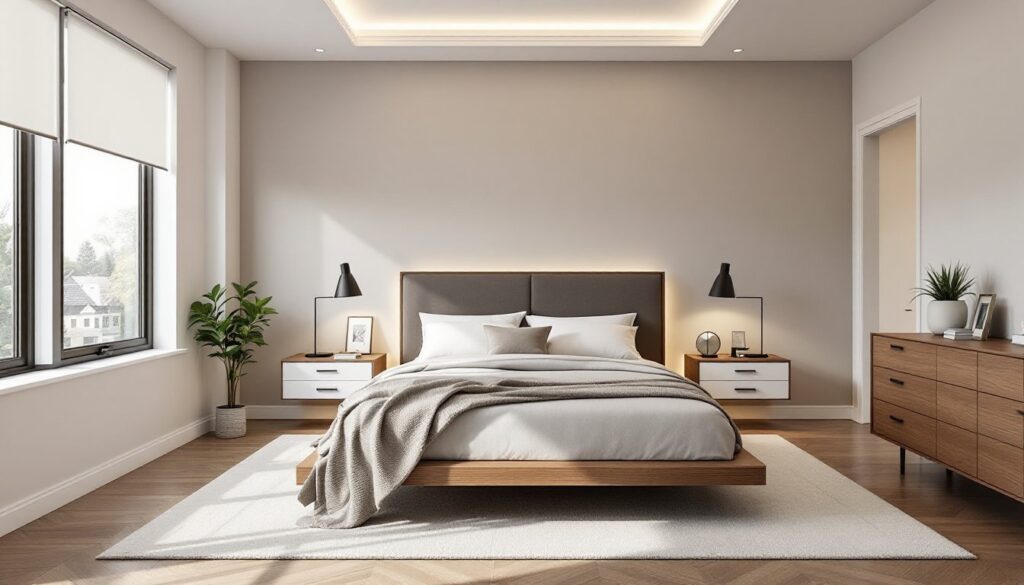
An accent wall focuses attention without committing an entire room to one bold choice. It works best on the wall that naturally draws the eye, behind a bed, opposite the entry, or flanking a fireplace.
Color is the simplest route. Choose a shade two to three steps darker or more saturated than the other walls. For example, if the room is painted in a soft gray (LRV around 60), go with a charcoal (LRV 20-30) for contrast. Avoid going too dark in rooms with limited natural light unless you’re adding task lighting.
Wallpaper adds pattern and texture. Peel-and-stick versions install without paste and remove cleanly, making them renter-friendly. Traditional paste-the-wall or pre-pasted papers offer more durability and pattern variety but require more prep, smooth drywall, primed surfaces, and careful seam alignment. Budget around 250-300 square feet per single roll, though this varies by pattern repeat.
Material accents, reclaimed wood planks, decorative tile, or metal panels, introduce three-dimensional interest. These require more structural planning. Wood planks need furring strips or adhesive rated for the wall substrate. Tile requires backer board on drywall, thinset mortar, and grout. Both add weight, so confirm wall framing can handle it, especially on older lath-and-plaster walls.
Textured Walls for Depth and Dimension
Flat drywall is standard, but texture creates visual interest and hides minor imperfections. Several approaches work for DIYers.
Knockdown texture involves spraying or troweling joint compound onto the wall, then lightly flattening high spots with a trowel once it begins to set. It’s forgiving and adds subtle depth. A hopper gun paired with an air compressor speeds application on large areas, but a roller with a thick nap (3/4 inch or more) works for smaller projects.
Venetian plaster is a lime-based finish applied in thin layers with a trowel, then burnished for a polished, marble-like look. It’s labor-intensive, expect three to five coats, but durable and water-resistant once sealed. Not a beginner project, but manageable with practice on a small accent wall.
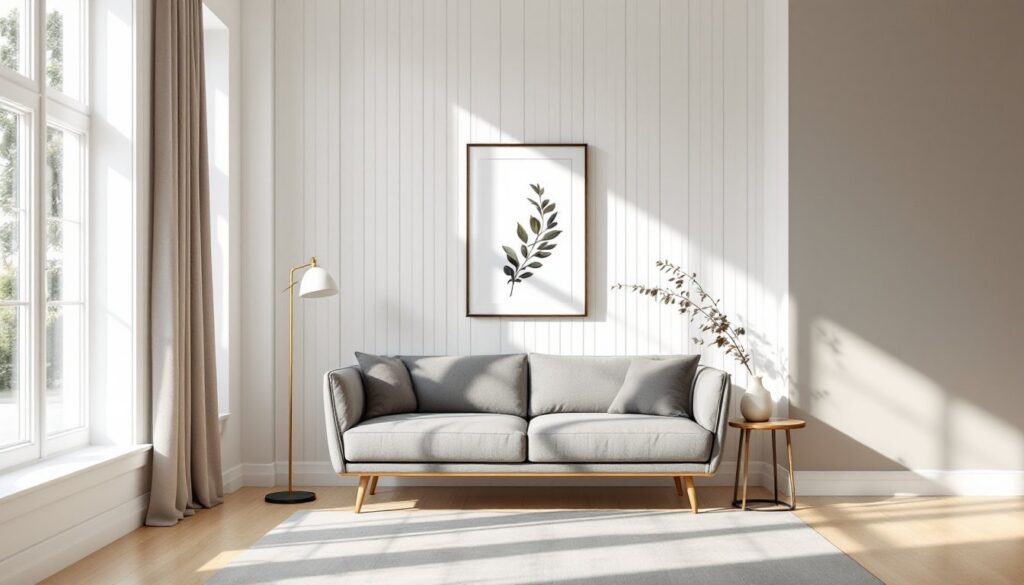
Board-and-batten uses vertical boards (the battens) applied over a flat base, creating a traditional farmhouse or coastal look. Use 1×2 or 1×3 pine for battens, spaced 12 to 16 inches apart, and attach with a brad nailer and construction adhesive. Prime and paint after installation. The whole system adds roughly 3/4 inch of depth, so account for that around outlets and trim.
Shiplap runs horizontally with a small gap between boards, originally used in exterior siding but now popular indoors. True shiplap has a rabbet joint: many DIYers use 1×6 or 1×8 pine with a nickel or spacer for consistent gaps. Attach to studs with finish nails. If installing over existing drywall, you can go directly into studs, but blocking or furring strips help if stud spacing is irregular.
Choosing Colors and Patterns That Work
Color theory isn’t just for designers. A few principles make the difference between a cohesive room and a mismatched one.
Light Reflectance Value (LRV) measures how much light a color reflects, on a scale from 0 (pure black) to 100 (pure white). Rooms with south-facing windows handle lower LRVs (darker colors) better. North-facing rooms benefit from higher LRVs to compensate for cooler, indirect light.
Undertones matter more than the color name. Greige (gray-beige) can lean warm or cool depending on whether it has more beige or gray. Test paint on a 2×2-foot section in different lighting conditions, morning, midday, evening, before committing. Paint samples on poster board so you can move them around the room.
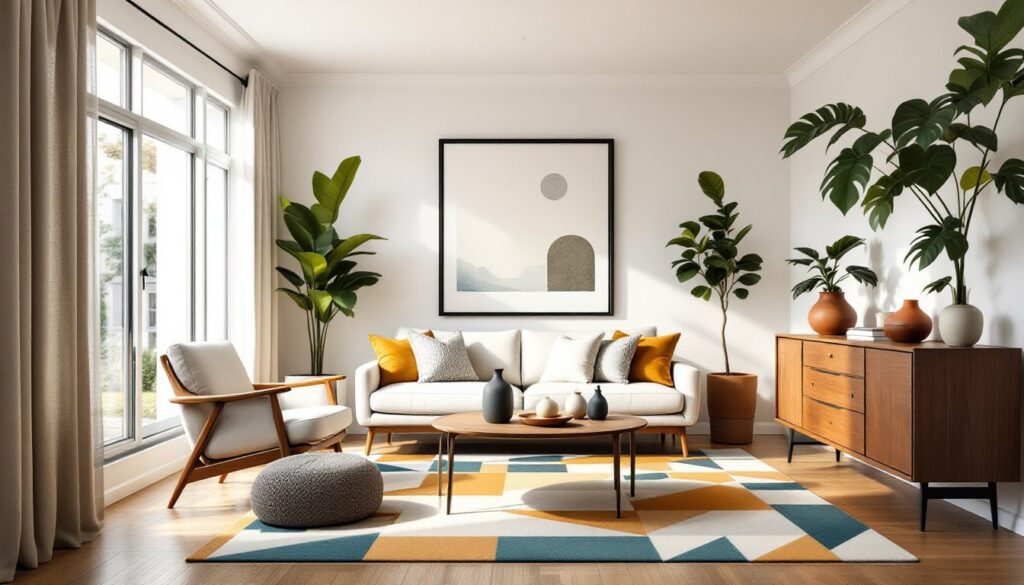
Pattern scale should match room size. Large-scale patterns (bold geometrics, oversized florals) work in spacious rooms with high ceilings. Small-scale patterns (thin stripes, delicate prints) suit compact spaces and read as texture from a distance. Mixing patterns in one room requires a common color thread and varied scale, pair a large floral with a small stripe, for instance.
For those seeking fresh ideas, resources like unique wall designs showcase how different materials and patterns perform in real settings.
Materials and Finishes for Every Budget
Wall treatment costs range from negligible to significant. Here’s what to expect.
Paint is the most cost-effective option. A gallon of quality interior paint covers roughly 350-400 square feet with one coat. Premium paints (Sherwin-Williams Duration, Benjamin Moore Aura) run $60-80 per gallon but offer better coverage, durability, and color retention than budget options at $25-35 per gallon. Use eggshell or satin in living areas for easy cleaning: save flat finish for low-traffic spaces or ceilings.
Peel-and-stick wallpaper costs $30-60 per roll (typically covering 30 square feet), making it pricier per square foot than paint but still DIY-friendly. Traditional wallpaper ranges from $25 per roll for basic designs to $150+ for designer prints.
Wood paneling varies widely. Paint-grade 1×6 pine runs $0.60-1.00 per linear foot at big-box stores: reclaimed barn wood starts around $4-8 per square foot from specialty suppliers. Installation adds labor if hiring out, expect $3-6 per square foot for materials and labor combined.
Tile and stone work well in high-moisture areas or as durable accent surfaces. Ceramic subway tile averages $1-3 per square foot: natural stone (marble, slate) runs $5-15 per square foot. Factor in thinset mortar, grout, backer board, and sealer. DIY installation saves $5-10 per square foot in labor but requires a wet saw, trowels, and spacers.
Fabric wall panels or upholstered walls add luxury and sound dampening. Use 1/2-inch plywood, wrap with batting and fabric, then attach with Z-clips or French cleats. Fabric costs $10-30 per yard: a 4×8 panel needs about 3 yards with waste.
Many of these material options appear in galleries on home design platforms, where room-by-room examples clarify how different finishes perform under various lighting conditions.
DIY Wall Design Projects You Can Tackle This Weekend
These projects deliver high visual impact without extensive experience or specialty tools.
1. Half-Wall Paint Treatment
Paint the lower half of a wall in a darker shade, separated by a chair rail or painter’s tape line at 32-36 inches high. This works especially well in dining rooms or hallways. Tape the line with ScotchBlue painter’s tape, apply two coats of the lower color, remove the tape while the final coat is still slightly wet to avoid peeling.
2. Stenciled Accent Wall
Stencils add pattern without the commitment or cost of wallpaper. Use a foam roller and small amounts of paint to avoid bleeding under the stencil. Secure the stencil with repositionable spray adhesive. Work in sections, aligning the stencil’s registration marks. Budget 4-6 hours for a standard bedroom wall.
3. Simple Board-and-Batten
Mark stud locations with a stud finder. Cut 1×2 pine battens to wall height (floor to ceiling or chair rail to ceiling). Apply construction adhesive to the back, then attach with an 18-gauge brad nailer into studs. Space battens evenly, 16 inches on center is standard. Caulk seams, prime, and paint. A 10-foot wall takes about 3-4 hours once materials are cut.
4. Plank Accent Wall
Use 1×6 or 1×8 tongue-and-groove pine or shiplap. Start at the bottom, level the first board, and nail into studs with a finish nailer. Stack boards upward, checking level every few rows. Cut around outlets with a jigsaw (turn off power at the breaker first). Sand lightly, then apply pre-stain wood conditioner if staining, or prime and paint. A 12×8 wall takes 5-7 hours for one person.
5. Removable Wallpaper Feature Wall
Measure wall height and width. Order 10% extra to account for pattern matching and waste. Clean the wall with TSP substitute: let dry completely. Start in the least visible corner, peel backing a few inches at a time, smooth with a plastic smoothing tool from center outward. Overlap seams per manufacturer instructions (usually butt seams for peel-and-stick). Trim top and bottom with a sharp utility knife. Total time for a 10×8 wall: 2-3 hours.
For additional styling guidance, design blogs often feature room makeovers that break down material choices and color palettes in practical terms.
Safety Notes
- Always wear safety glasses when cutting wood or tile.
- Use a dust mask (N95 or better) when sanding joint compound, wood, or cutting fiber-cement backer board.
- Turn off power at the breaker before cutting into walls near electrical outlets.
- Use a stud finder to locate framing before nailing or screwing into walls, hitting a stud ensures secure attachment and avoids damaging hidden plumbing or wiring.
Most of these projects use common tools: a drill/driver, level, tape measure, circular saw or miter saw, and a finish nailer (which can be rented for $20-30 per day if you don’t own one). Take your time with prep, filling nail holes, sanding, priming, since finish quality depends more on preparation than the actual installation.