
Mid century home decor has remained a powerhouse design movement for nearly seven decades, and for good reason. Born in the post-war era (roughly 1945–1965), this aesthetic combines clean lines, functional beauty, and a sense of optimism that still resonates today. Whether you’re drawn to the sleek minimalism or the warm wood tones, mid century modern interior design offers something authentic that trendy styles often miss. The good news: you don’t need a professional designer or a massive budget to bring this timeless look into your home. This guide walks you through the essential pieces, colors, and techniques to create a cohesive mid century space that actually works for how you live.
Table of Contents
ToggleKey Takeaways
- Mid century home decor is built on clean lines, functional beauty, and honest materials like wood, metal, leather, and glass that define the aesthetic without unnecessary ornamentation.
- Anchor your mid century space with signature furniture pieces like a sofa with exposed wooden legs, a walnut or teak credenza, and simple dining chairs that set the foundation for the entire room.
- Use a neutral base color palette with strategic pops of warm jewel tones like mustard yellow, olive green, and teal to add personality while maintaining the restrained, confident look of mid century modern interior design.
- Lighting plays a crucial role in authentic mid century spaces—choose floor lamps with sculptural forms, brass or chrome bases, or statement pieces like Sputnik chandeliers that instantly evoke the era.
- Mix mid century vintage and vintage-inspired pieces with contemporary elements that respect the same design principles of clean lines and functional beauty, ensuring your home feels lived-in rather than like a museum installation.
- Layer textures through natural materials like leather, linen, wool, and ceramics to add warmth and prevent the space from feeling cold, while displaying curated accessories like sculptural vases and indoor plants on shelves and credenzas.
What Defines Mid Century Modern Style
Mid century modern interior design is built on a few non-negotiable principles. First: clean lines and minimal ornamentation. Think tapered legs on furniture, straight edges, and geometric shapes rather than curved Victorian flourishes. Second: form follows function. Every piece should earn its place by actually being useful, not just decorative. A credenza isn’t just a storage box, it’s a sculptural accent.
Third, there’s an emphasis on natural materials. Wood, metal, leather, and glass are the stars. You’ll see teak, walnut, and oak left relatively unadorned to show off their grain. Metal appears as hairpin legs, aluminum frames, or brass accents. The architecture mid century modern movement valued honest materials, they’re shown for what they are, not hidden behind veneers or overwrought finishes.
Color palettes tend toward warm neutrals with strategic pops. Olive, mustard, teal, and burnt orange appear alongside white, gray, and natural wood tones. It’s not overly busy, but it’s not sterile either. Finally, there’s a democratic spirit: mid century designers believed good design should be accessible, not exclusive. This translates to furniture that’s meant to be used, enjoyed, and even mixed with newer pieces without losing its integrity.
Key Furniture Pieces Every Mid Century Home Needs
You don’t need to fill your home with period pieces to get the look. Instead, anchor your space with a few signature items that set the tone, then fill gaps with complementary pieces.
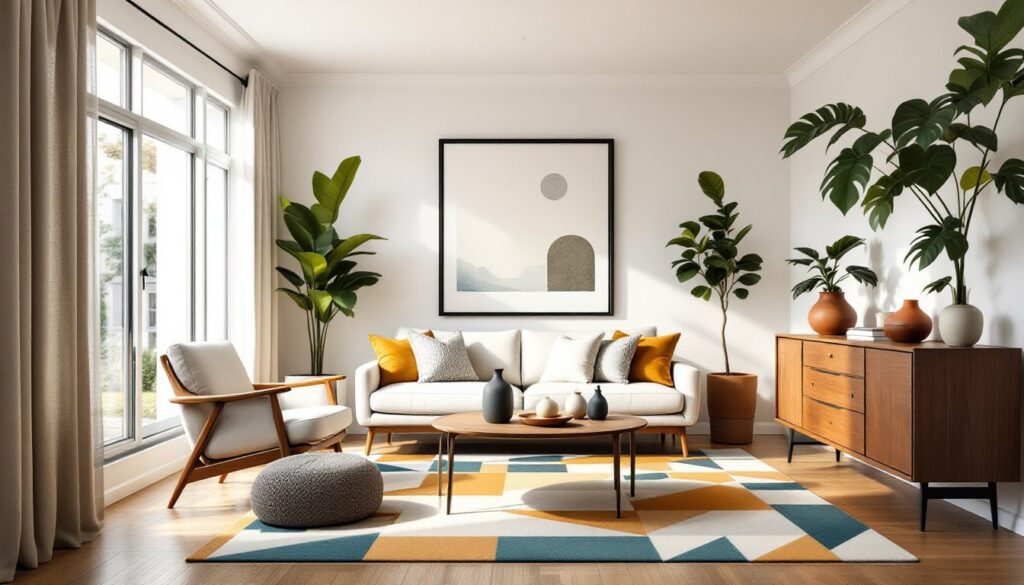
The sofa is your foundation. Look for a piece with exposed wooden legs (typically angled or tapered), minimal back cushioning, and clean upholstery, linen, leather, or a mid-weight cotton blend work best. Avoid heavily rolled arms or tufting. If a full sofa feels like too big a commitment, a sectional with simple lines or a low-profile two-seater paired with a credenza achieves the same vibe.
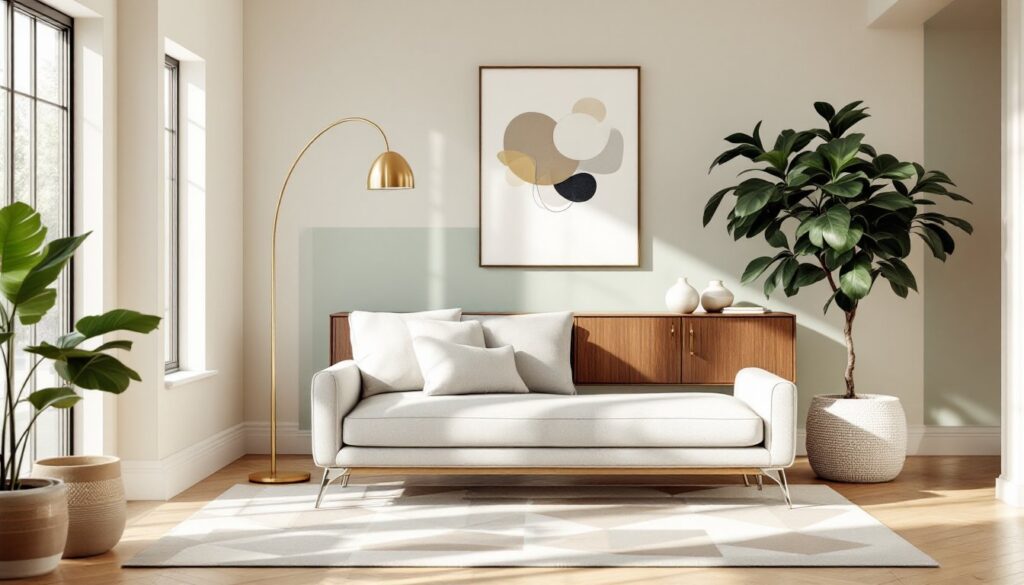
A credenza or console does heavy lifting in mid century spaces. These low, wide storage pieces with sliding doors or open shelving were the TV cabinet’s ancestor, but they work beautifully for displaying ceramics, books, or audio equipment today. Walnut or teak versions are classic, but painted credenzas in soft green or gray also read authentically.
Dining chairs set the tone faster than almost anything else. Look for molded plywood seats (think Eames-style), wooden frames with spindle backs, or metal bases with upholstered seats. Mismatched chairs around a simple wooden table, all from the same era, actually reinforce the aesthetic rather than break it.
Classic Wood and Metal Selections
Wood selection is critical. Walnut and teak dominate mid century pieces because they age beautifully and their grain is striking without heavy staining. If you’re sourcing used furniture, walnut darkens over decades while teak develops a silvery patina. New pieces in these woods are pricier but worth the investment if they’re a major focal point.
Metal accents bridge raw wood and modern living. Brass, chrome, and powder-coated steel appear in legs, handles, and side tables. Don’t mix metals carelessly, stick to one or two throughout a room. Hairpin legs (those characteristic splayed metal legs) appear on tables, plant stands, and console tables. Mix wood and metal deliberately: a walnut credenza with brass handles and chrome legs, for example, checks all the boxes.
Colors, Patterns, and Textures That Work
The secret to mid century color is restraint with personality. Your base should be neutral: white, off-white, soft gray, or natural wood tones. Against this calm backdrop, introduce one or two accent colors in measured doses.
Warm jewel tones feel most authentic. Mustard yellow, olive green, burnt orange, and teal appear in accent walls, upholstered chairs, or throw pillows. The key is saturation, these shouldn’t scream at you, but they should be present and confident. A single accent wall in a softer hue (think sage rather than forest green) anchors a room without overwhelming it.
Geometric patterns are your friend here. Starburst designs, chevrons, and atomic-era motifs appear in wallpaper, textiles, and tile. Keep patterns to one or two focal pieces per room, a patterned curtain panel paired with solid upholstery, or a patterned throw rug anchoring a seating area. Too much competing geometry becomes chaotic.
Texture is where warmth lives. Mix a sleek leather sofa with a shag or wool area rug, linen curtains, wooden beams, and ceramic accessories. This interplay of smooth and tactile finishes prevents the space from feeling cold. Natural materials, wood, leather, linen, wool, develop a patina and character that synthetic materials can’t match, which is very much in the mid century spirit.
Lighting and Accessories for Authentic Appeal
Lighting is where mid century modern interior shines (pun intended). Floor lamps with arc bases, tripod legs, or sculptural forms are iconic. Look for lamps with brass or chrome bases and fabric shades in solid colors or subtle patterns. Sputnik chandeliers, while flashy, read instantly as mid century, but one or two statement lights go a long way. More understated options like simple drum pendants or flush-mount fixtures in brass or wood also hit the mark without the drama.
Accessories should reinforce, not compete. Ceramics and pottery were a big part of mid century decor, so a few pieces, a sculptural vase, a set of stacked bowls, or hand-thrown planters in earthy glazes, feel authentic. Scandinavian and Japanese ceramics pair particularly well with the aesthetic. Display them on a credenza or shelf rather than scattering them throughout the room.
Artwork and wall decor tend toward geometric abstraction or nature-inspired prints from the era. Original pieces are out of reach for most budgets, but mid century-inspired prints and posters are widely available and genuinely handsome. A large abstract piece or a series of smaller framed geometric prints can anchor a wall.
Finally, greenery matters. Mid century design embraced indoor plants as both functional air-purifiers and sculptural elements. Tall plants like rubber figs or snake plants in simple ceramic pots add height and life to corners. Hanging plants in macramé holders (yes, macramé is very mid century) drape naturally and soften hard lines.
Mixing Mid Century With Modern Elements
A lived-in mid century home doesn’t look like a museum installation. The best rooms blend vintage or vintage-inspired pieces with contemporary elements you actually use. This is where you get permission to own your space.
Start by being honest about what works for your life. If you have young kids, a light-colored mid century sofa will frustrate you daily. Choose durable upholstery in colors that age gracefully (darker neutrals, jewel tones) and don’t sacrifice livability for aesthetics. Similarly, if you work from home, a simple wooden desk with clean lines slots beautifully into a mid century room, no need for a chunky modern gaming setup.
When sourcing pieces, sites like Dwell showcase modern design ideas that share mid century’s love of good proportions and honest materials, making it easy to spot contemporary pieces that fit your aesthetic without being period-specific. Design Milk explores contemporary furniture and design product reviews that often reference mid century principles, so you can shop with confidence.
New materials can work if they respect the principles. A concrete side table, a sleek steel bookshelf, or a modern pendant light with a minimalist design all coexist peacefully with vintage pieces because they share the same language: clean lines, functional beauty, no fuss.
One practical tip: this mid-century modern style guide explains core traits including clean lines and sculptural approaches, which helps you vet new pieces. Does it have unnecessary ornamentation? Skip it. Does it solve a real need with honest materials? Add it to your list.
Don’t shy away from mixing metals (a brass lamp with a steel shelving unit) or wood tones (walnut furniture with a light oak floor). The cohesion comes from the design principles, clean lines, minimal ornamentation, and respect for materials, not from matching everything perfectly.
Conclusion
Building a mid century home doesn’t require stripping your space bare or spending a fortune on vintage finds. Start with one anchor piece, a sofa, credenza, or dining set, and build thoughtfully from there. Layer in colors and textures, choose lighting with intention, and don’t apologize for mixing eras or styles if they serve your life. The beauty of mid century modern design is its honesty and restraint. Stay true to that philosophy, and your space will feel both timeless and genuinely yours.