
Mid-century modern architecture represents one of the most enduring design movements of the 20th century, and its influence shows no signs of fading as we move deeper into 2026. Emerging between the 1930s and 1960s, this style revolutionized how homeowners and architects thought about functional, beautiful living spaces. If you’re drawn to clean lines, authentic materials, and the promise of a home that feels both warm and uncluttered, understanding the fundamentals of mid-century modern design isn’t just about chasing a trend, it’s about adopting principles that genuinely improve how you live. This guide walks you through what makes mid-century modern architecture tick, how to spot its defining features, and practical ways to bring these timeless ideas into your own home.
Table of Contents
ToggleKey Takeaways
- Mid-century modern architecture emerged from post-war optimism and principles that prioritize function and form working together seamlessly, making it a practical design philosophy that improves how you live.
- Clean lines, minimal ornamentation, and visible furniture legs define mid-century modern design, with neutral wall colors allowing furnishings and architecture to become the focal points.
- Open floor plans and sliding glass doors that blur indoor-outdoor boundaries were revolutionary mid-century modern innovations that make homes feel larger and let natural light penetrate deeper into spaces.
- Incorporating mid-century modern elements into your home doesn’t require a complete renovation—start with furniture featuring tapered legs and clean lines, add statement walls in soft colors, and maintain clear surfaces to achieve the aesthetic.
- Iconic architects like Richard Neutra, Charles and Ray Eames, and Florence Knoll designed problem-solving spaces using honest materials and sculptural forms that have outlasted trends because they address fundamental human needs.
- Mid-century modern endures because it solves real design problems: making spaces feel lighter and more connected while prioritizing function, which means its principles translate to any home regardless of architectural style.
What Defines Mid-Century Modern Architecture
Mid-century modern architecture emerged from a post-war optimism and a genuine belief that good design should be accessible to everyday people, not just the wealthy. The movement rejected ornate Victorian and Art Deco excess in favor of honesty, buildings and interiors that expressed their materials and structural purpose rather than hiding them behind applied decoration.
At its core, mid-century modern philosophy prioritized function and form working together seamlessly. Architects like Eero Saarinen and Richard Neutra weren’t designing for show: they were solving real problems: how to create efficient, pleasant homes that responded to their climate and landscape. This practical mindset made the style work whether you were building in Southern California or the suburbs of Illinois.
The style also reflected the era’s technological optimism. New manufacturing techniques, availability of steel and glass, and advances in insulation made possibilities that weren’t feasible decades earlier. Plywood, Formica, and molded plastics weren’t viewed as cheap substitutes, they were celebrated as honest expressions of modern materials. When you understand that context, you see why mid-century modern decor style still resonates: it’s fundamentally unpretentious and real.
Key Design Elements and Characteristics
Clean Lines and Minimalist Forms
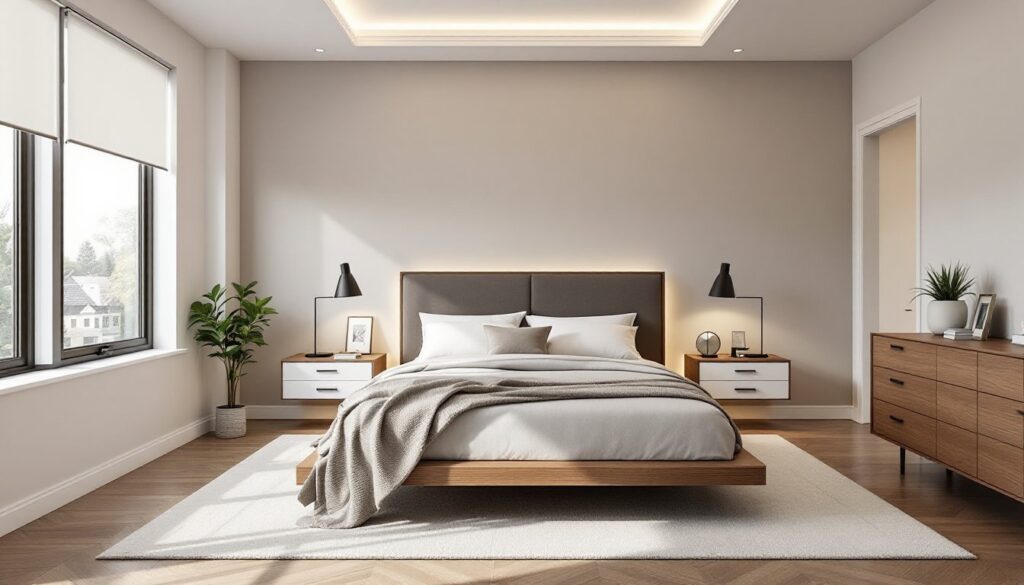
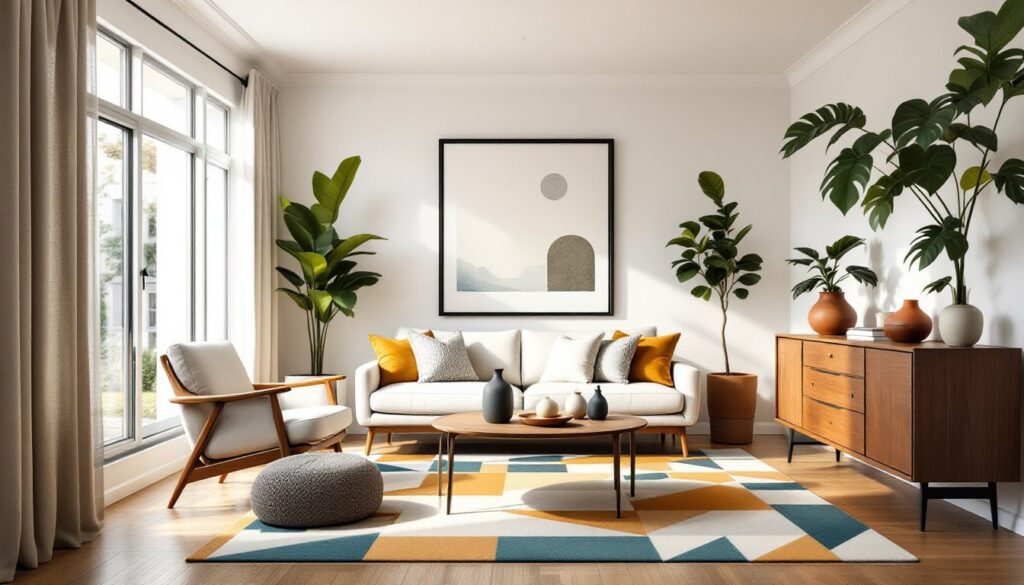
Walk into any mid-century modern interior, and the first thing you’ll notice is restraint. There’s no fussiness. Furniture legs are tapered and visible rather than hidden in skirts. Case goods (dressers, sideboards, media stands) sit elevated on splayed legs, creating visual lightness and making floors easier to clean, a practical detail that became iconic.
Walls are typically painted in soft neutrals or warm whites, allowing the architecture and furnishings to be the focal points. When color appears, it’s usually as an accent through upholstery or a single statement wall. Trim is minimal or absent entirely. The goal is visual clarity, and every element, from doorways to shelving, follows clean, geometric proportions without curves or applied embellishment.
Geometric patterns do show up, but they’re disciplined: think chevrons, hexagons, or simple grids. You’ll rarely see the kind of busy florals or swirling patterns that dominated earlier styles. Even mid-century modern interior design that feels warm and inviting achieves that through texture (natural wood grain, woven upholstery, concrete) rather than surface ornamentation.
Open Floor Plans and Indoor-Outdoor Living
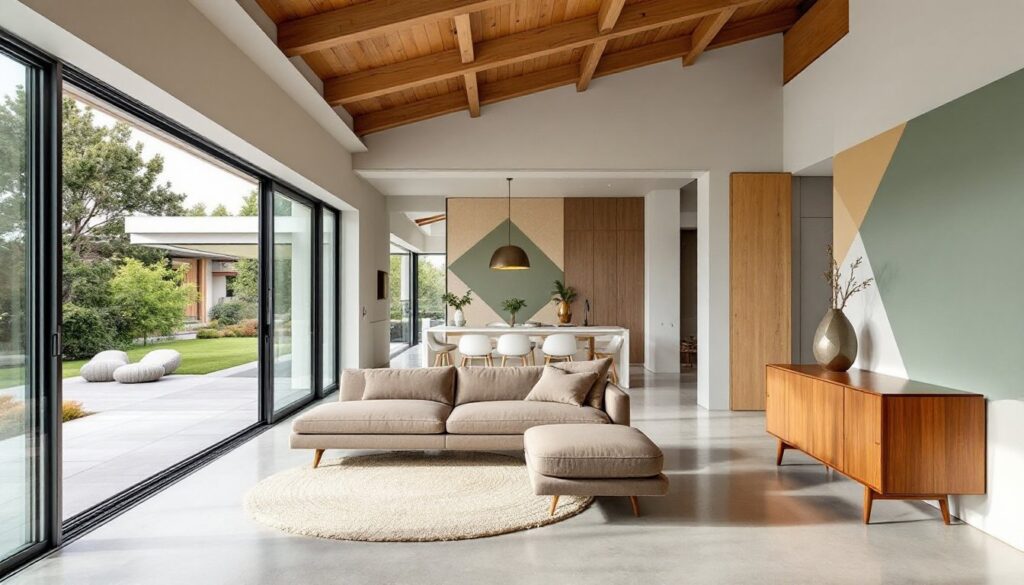
One of the most practical innovations of mid-century modern design was the open floor plan. Instead of formal separate rooms, living, dining, and kitchen areas flowed into one another. This wasn’t just aesthetic, it made homes feel larger, simplified cleaning (fewer walls to work around), and let natural light penetrate deeper into the house.
Sliding glass walls and doors became signature elements, blurring the boundary between interior and exterior spaces. In warmer climates, this meant living rooms could expand onto patios. Overhanging eaves provided shade and weather protection, extending the usable outdoor season. Carports replaced closed garages, maintaining sight lines and reducing visual bulk.
This approach to indoor-outdoor living required honest material choices. Concrete floors, exposed wood beams, and large glazed areas aged gracefully and didn’t demand constant fussy maintenance. The philosophy was that your architecture should complement nature, not compete with it.
How to Incorporate Mid-Century Modern Into Your Home
You don’t need to gut your house or own a Neutra original to live with mid-century modern principles. Start by identifying which elements of the style resonate with your space and your lifestyle.
Assess your existing architecture. If you have large window banks, clear sight lines between rooms, or original wood flooring, you’re already partway there. If your home has formal walls dividing rooms, opening them up (or simply removing a doorway and installing a wider opening) creates that flow without structural work that requires permits. A professional can advise whether a wall is load-bearing.
Furniture and furnishings are the easiest entry point. A well-chosen sofa with tapered legs, a credenza with clean lines, or a sculptural dining table immediately shifts the visual language of a room. Vintage and reproduction options abound: look for pieces with visible wood frames, minimal upholstery, and proportion that feels generous but not bulky. Resources like Dwell magazine showcase authentic modern furnishings and design inspiration that can guide your selections.
Layer in color through upholstery and textiles. A single statement wall in warm gray or sage green, paired with mid-century modern interior design principles, adds character without overwhelming a space. Throw pillows in geometric prints or solid jewel tones, wool area rugs with subtle patterns, and natural fiber curtains (linen, cotton canvas) all reinforce the style while keeping things livable.
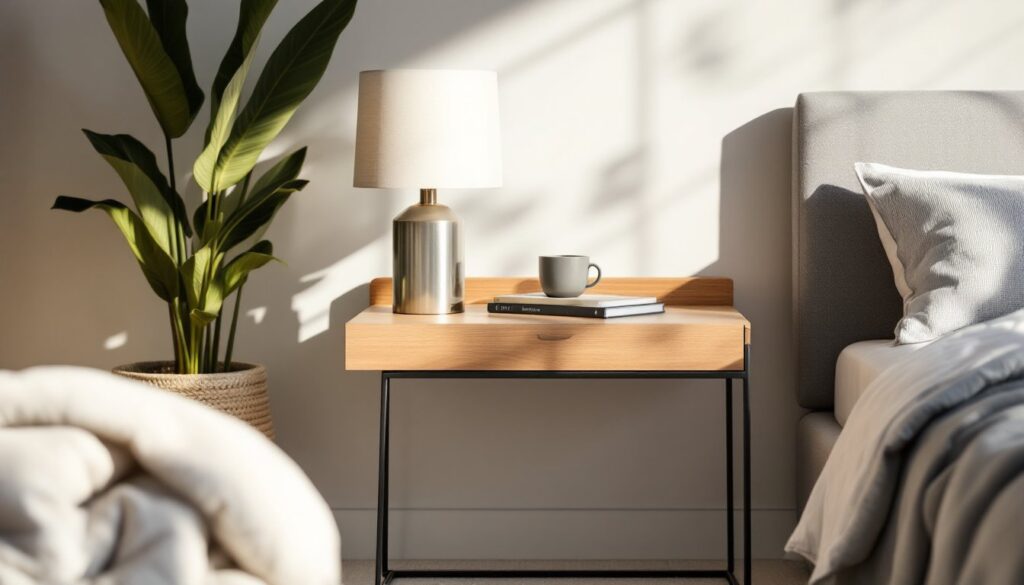
Lighting matters enormously. Arching floor lamps, pendant lights with metal shades, and table lamps with thin wooden bases are both functional and sculptural. Avoid anything with applied ornament or fussy finials.
Keep surfaces clear. Collections and photos belong on floating shelves (metal frames, wood brackets) rather than crowded tabletops. Clutter erases the clean-lined aesthetic instantly. Built-in storage, shelving in living room alcoves, cabinetry integrated into walls, accomplishes the same function while maintaining visual order.
Iconic Mid-Century Modern Homes and Architects to Know
Understanding the architects and landmark homes that shaped mid-century modern design helps you recognize what makes the style work. Richard Neutra, a Viennese-born architect, became synonymous with California mid-century modern living through elegant residential designs that opened homes to landscape views while managing sun exposure through careful roof overhangs and screens. His Kaufmann House (1947) in Palm Springs remains a masterpiece of site-responsive architecture.
Charles and Ray Eames pushed furniture and spatial design into sculptural territory. Their own home in Los Angeles, built in 1949, was an experiment in prefabricated steel-frame construction that influenced decades of residential thinking. The Eameses’ furniture designs, the Lounge Chair and Ottoman, the Aluminum Group chairs, remain benchmarks for proportions and comfort.
Eero Saarinen brought sculptural forms to the movement, designing the TWA Flight Center at JFK Airport and the Gateway Arch, but his residential work (and his influence on domestic interiors) centered on creating spaces where form and function were genuinely inseparable.
Interior designer Florence Knoll revolutionized workplace and residential design by treating every element, from wall color to case goods to lighting, as part of a cohesive system. Her approach to space planning and material selection became the template for modern interior design that felt coherent without being rigid.
These weren’t designers chasing fashion: they were problem-solvers whose work has outlasted trends because it addresses fundamental human needs: clarity, comfort, and connection to your surroundings. Curbed’s architecture features explore and continue influencing new construction and renovation work today. If you want to deepen your knowledge, sources like Architectural Digest’s coverage of modern design document how contemporary homes are building on these principles.
Conclusion
Mid-century modern architecture endures because it solves real design problems: how to make spaces feel larger, lighter, and more connected to the outdoors without sacrificing function or introducing clutter. Whether you’re living in an original mid-century home, a newer house that echoes its principles, or a completely traditional space you’re gradually updating, the core ideas, clean lines, honest materials, open layouts, and purposeful furniture, translate anywhere. Start small, choose pieces and finishes thoughtfully, and let the rest follow. Good design shouldn’t require explanation: it should simply make your life easier and more pleasant to live in.