
Mid-century modern decorating style has made a lasting comeback, and it’s easy to see why. Born in the 1945–1969 period, this design movement emphasizes clean lines, functional form, and a blend of natural and manufactured materials that still feels fresh today. Whether you’re drawn to mid century modern interior design for its warmth, practicality, or timeless aesthetic, this guide walks you through the essentials of creating that iconic look in your own home. Unlike trendy styles that fade fast, mid-century modern interior pieces and principles adapt to modern living without feeling dated. We’ll break down what defines the style, which furniture pieces to prioritize, and how to blend them with your existing decor for a cohesive, lived-in look.
Table of Contents
ToggleKey Takeaways
- Mid-century modern decorating style is built on the principle of form follows function, emphasizing clean lines, natural materials, and purposeful simplicity that transcends temporary trends.
- Anchor your space with quality pieces like a tapered-leg sofa, credenza, or solid wood dining table, then layer in supporting furniture rather than starting from scratch with a complete redesign.
- Choose neutral wall colors and wood tones as your foundation, then apply one or two bold accent colors sparingly through upholstery or a single accent wall to maintain authentic restraint.
- Invest in real materials—solid wood frames, natural fabrics, and quality veneers—rather than mass-produced retro furniture, as craftsmanship directly impacts durability and visual authenticity.
- Mix mid-century pieces confidently with contemporary elements like modern artwork, minimalist rugs, and current appliances to create a cohesive, lived-in look that feels fresh without being a museum display.
- Treat lighting as functional art by choosing fixtures with clean geometry like sputnik or arc lamps, which highlight wood textures and material details while supporting the overall design aesthetic.
What Defines Mid-Century Modern Design
Mid-century modern design is rooted in a specific philosophy: form follows function. After World War II, designers rejected ornamental excess in favor of honest materials, geometric shapes, and purposeful construction. This mid modern century decor movement valued craftsmanship and simplicity equally, a sleek credenza wasn’t just beautiful: it was built to store and display.
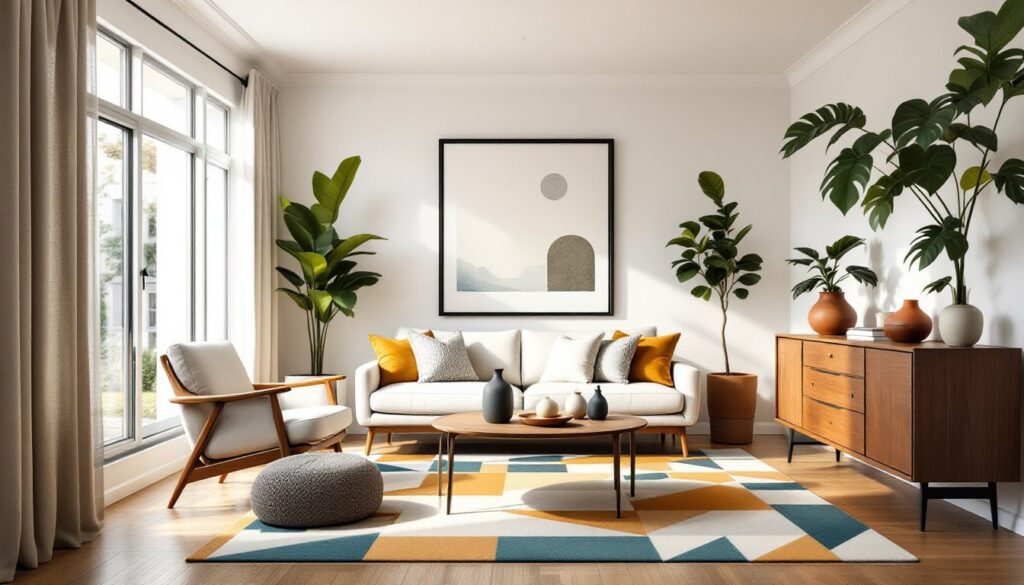
The style’s core principles include tapered legs on furniture (typically splayed or angled), use of natural wood, minimal ornamentation, and an embrace of both metal and glass. Color palettes tend toward warm neutrals, teak, walnut, and natural oak, paired with accent colors like mustard, teal, or burnt orange. Curves are deliberate and sculptural, not frilly. Think an arc-legged sofa or a kidney-shaped table, not fussy details.
One hallmark is the integration of form with function: a bookshelf doesn’t just hold books: its open design becomes part of the room’s visual architecture. Walls stay relatively uncluttered, allowing key pieces to breathe. This restraint is what separates true mid-century modern interior from merely retro-styled decor that leans too heavy on nostalgic trinkets.
The style also emerged from a democratic ideal, designers wanted good design accessible to average families, not just the wealthy. That practical mindset still underpins the aesthetic: pieces are durable, layouts maximize small spaces, and everything has a reason to be there.
Key Furniture and Pieces to Master the Look
Building a mid-century modern interior starts with anchor pieces: a sofa, a credenza, a dining table, and accent chairs. These don’t all need to be vintage originals, excellent reproductions exist, and mixing eras is part of modern decorating.
Iconic Furniture Styles and Where to Find Them
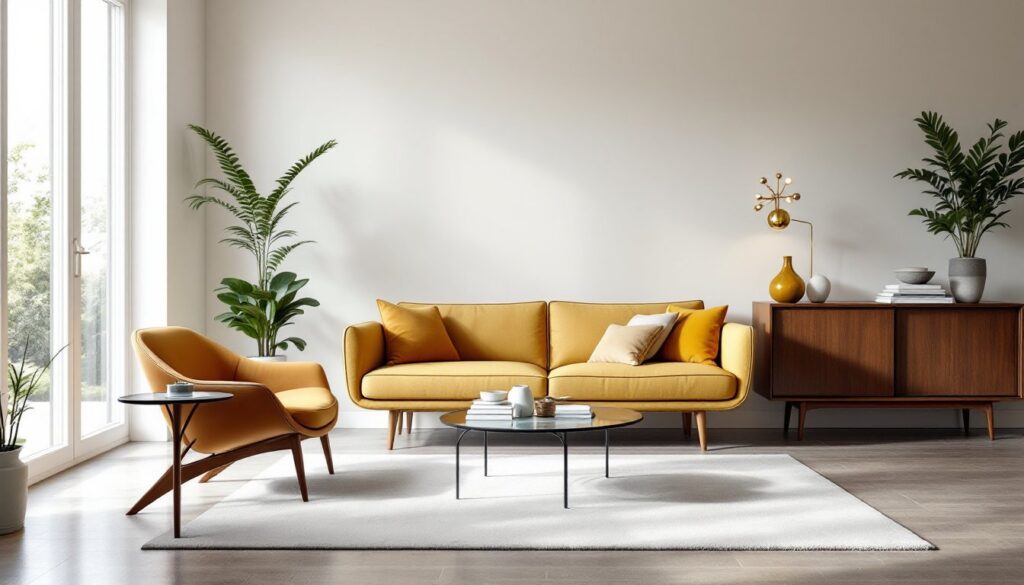
The mid-century sofa typically features a low profile, tapered wooden legs, and clean lines. Look for designs with minimal arms and tight, angled backs, think Charles and Ray Eames or Florence Knoll silhouettes. Credenzas, low-profile cabinets with sliding doors and open shelving, became symbols of the style: they’re functional and sculptural simultaneously. A good dining table pairs a solid wood base (often teak or walnut) with a simple top, sometimes walnut with butterfly leaves for occasional expansion.
Accent chairs are where personality shines: the Eames lounge chair and ottoman, the molded plastic chairs (like tulip-based designs), or simple upholstered wingbacks with tapered legs. These pieces aren’t just seating: they’re design statements that anchor a room’s visual weight.
For sourcing, explore local vintage dealers, online marketplaces like eBay and Facebook Marketplace, and mid-century specialist retailers. Reproductions from brands like Herman Miller and Knoll, and contemporary makers like West Elm offer quality at varied price points. Avoid mass-produced “retro” furniture that copies the look without the craftsmanship, cheap veneers and flimsy joinery won’t last. Invest in real wood veneers, hardwood frames, and solid construction details like mortise-and-tenon joints.
Color Palettes and Materials That Work
The mid-century modern color palette walks a fine line between bold and restrained. Walls typically stay neutral, whites, soft grays, or warm taupes, allowing furniture and accent pieces to be the focus. Wood tones form the foundation: natural oak, walnut, or teak provide warmth without competing for attention.
Accent colors were carefully chosen and applied sparingly. Mustard yellow, burnt sienna, forest green, and teal show up in upholstery, small accessories, or a single accent wall. These weren’t random, they reflected the era’s new synthetic dyes and paint technologies. Today, stick to one or two accent colors per room to maintain that authentic restraint.
Materials are where mid-century design shines. Natural fibers like wool, linen, and leather appear in upholstery. Metals, brass, steel, chrome, show up in hardware, light fixtures, and furniture frames. Ceramics, particularly sculptural pieces, complement the aesthetic. Glass-topped tables, leather seats, and open wooden shelving all coexist without feeling chaotic because each material has visual weight and purpose.
Wood selection matters. Real teak and walnut show grain and patina: avoid dark stains that hide the wood’s character. If working with plywood or particle board (common in affordable reproductions), look for good veneer work and solid edge banding, this is where quality shows. Upholstered pieces should feature natural fabrics in solid colors or simple geometric patterns: busy florals and synthetic sheens break the style’s honesty.
Practical Tips for Incorporating Mid-Century Style Into Your Home
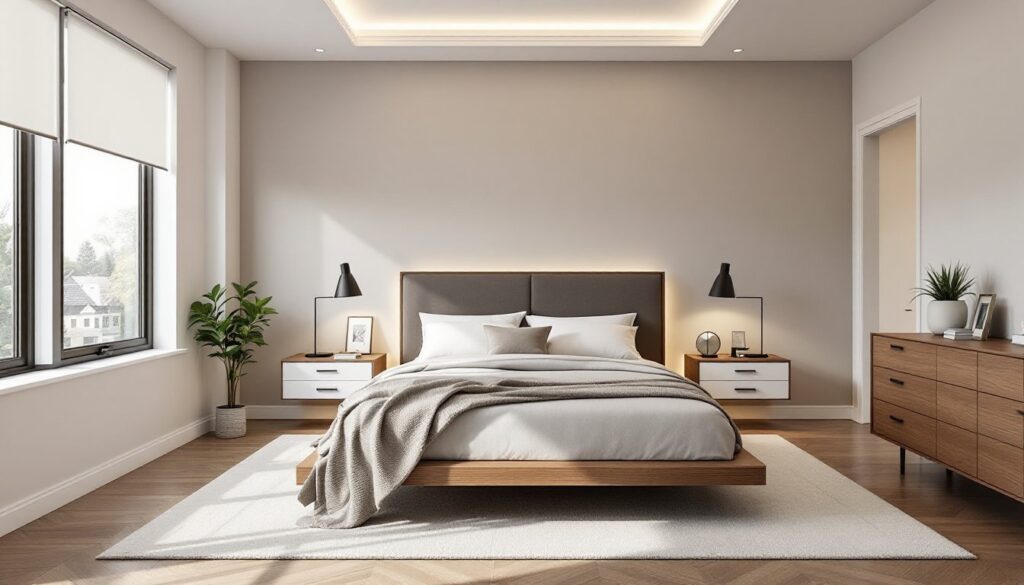
You don’t need to gut your home and start fresh to embrace mid-century modern decorating. Begin by identifying your room’s anchor piece, the sofa, bed, or dining table, and build around it. One authentic mid-century credenza or dresser paired with more modern or transitional pieces often feels more intentional than a room trying too hard to stay 100% period-accurate.
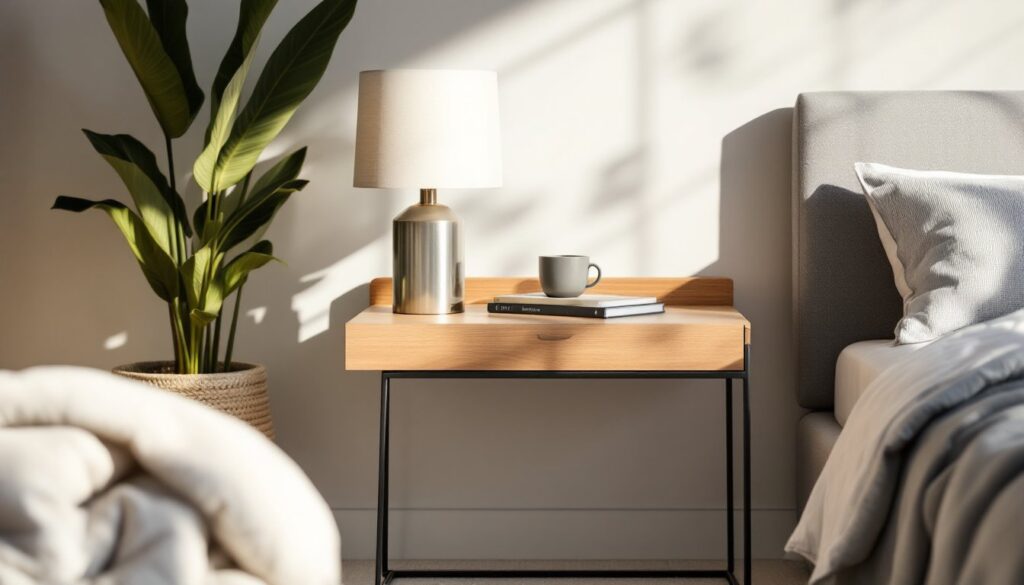
Layering is key. Start with clean architectural bones (neutral walls, good lighting), then add furniture with clear lines. Accessories come last: keep them minimal. One or two sculptural ceramic pieces, a few good books, a simple table lamp. Avoid cluttering shelves with trinkets, that defeats the style’s core principle of purposeful simplicity.
Lighting deserves special attention. Mid-century designers treated light fixtures as functional art. Sputnik fixtures, arc floor lamps, and molded plastic pendants are signature pieces. If budget is tight, even a simple brass or chrome floor lamp with clean geometry supports the aesthetic. Proper lighting also makes wood tones and material textures shine.
Mixing Mid-Century Pieces With Modern Elements
Modern decorating doesn’t mean abandoning contemporary comfort. A minimalist approach to mid-century modern interior design bridges vintage and today’s living. Pair a 1960s credenza with a contemporary sofa in a neutral tone. Use modern artwork alongside mid-century pieces. A sleek, modern floor rug complements vintage furniture beautifully, the contrast actually highlights each piece’s design merit.
Contemporary elements that work well include: minimalist wall art, simple geometric rugs, potted plants in clean ceramic pots, and modern kitchen appliances in stainless steel or matte finishes. Avoid overstyling with too many periods at once: if a room feels confused, step back and remove the newest or oldest piece that’s competing visually.
One practical approach: source primary pieces (sofa, dining table, bed) from the era or quality reproductions, then fill in with modern or transitional items. This keeps costs manageable and feels authentic without being a museum display. Design inspiration from a Palm Springs-inspired mid-century modern approach shows how contemporary comfort and vintage style coexist, think updated kitchens inside 1950s homes, modern lighting with period furnishings, and current textiles mixed with original pieces.
Conclusion
Mid-century modern decorating endures because it’s rooted in design principles, not trends. Clean lines, honest materials, and purposeful restraint create spaces that feel both warm and sophisticated. Start with one quality anchor piece, layer in supporting furniture with good bones, and resist the urge to fill every surface. The goal isn’t a time capsule, it’s a home that’s beautiful, functional, and genuinely yours.