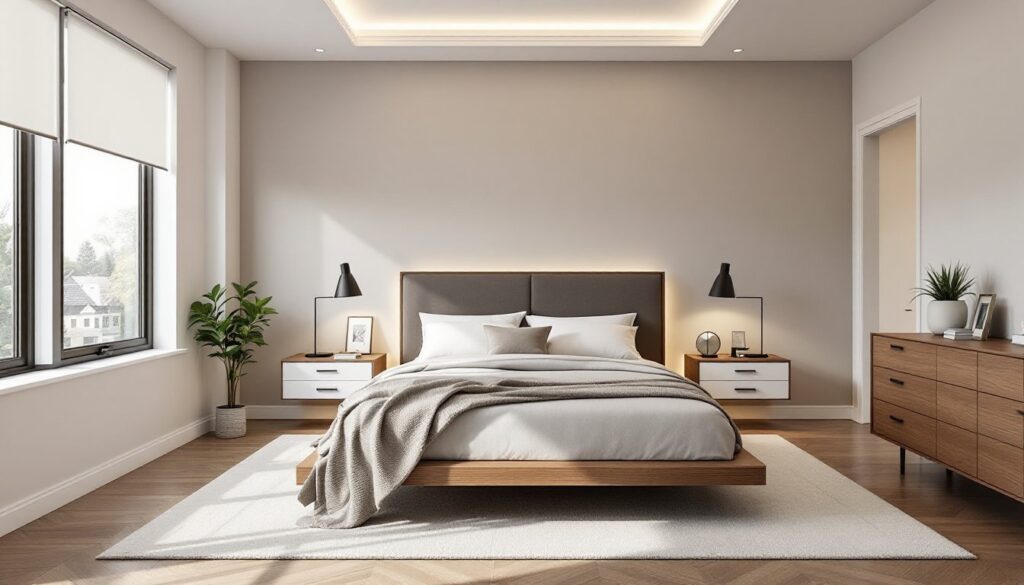

Modern room decor ideas don’t need to feel cold or sterile, they’re about creating intentional, functional spaces that reflect who you live now. Whether you’re refreshing a bedroom, living room, or home office, contemporary design emphasizes clean aesthetics, purposeful choices, and rooms that actually work for daily life. This guide walks you through practical modern room design ideas, from minimalist foundations to budget-friendly swaps that bring 2026’s freshest looks into your home without requiring a full renovation.
Table of Contents
ToggleKey Takeaways
- Modern room decor ideas prioritize clean lines, minimalist foundations, and functional spaces that eliminate visual clutter while maintaining warmth and personality.
- A neutral color palette of soft whites, light grays, and muted earth tones creates the perfect canvas for textures, lighting, and accent pieces without requiring expensive renovations.
- Smart storage solutions—floating shelves, under-bed organizers, and multi-functional furniture—keep contemporary spaces visually open while maximizing usable space.
- Layered lighting (ambient, task, and accent) with LED bulbs and dimmers defines atmosphere and transforms modern room design from clinical to inviting.
- Natural materials like wood, stone, linen, and plants add warmth and tactile appeal, preventing modern decor from feeling sterile or cold.
- Budget-friendly swaps like fresh paint, DIY shelves, thrifted furniture, and strategic decor minimization deliver contemporary aesthetics without costly furniture replacement.
Minimalist Aesthetics and Clean Lines
Minimalism is the backbone of modern room decor, it strips away visual clutter and lets intentional pieces breathe. Clean lines mean furniture with straight edges, unadorned frames, and geometric shapes rather than ornate curves or heavy detail work.
Start by evaluating what’s actually in your room. Do you have five throw pillows when two would do? A bookshelf stuffed end-to-end that could feel calmer with intentional spacing? Minimalist design isn’t sparse emptiness: it’s the absence of unnecessary items. Keep surfaces clear except for a few chosen objects, a plant, a lamp, a small ceramic piece, so each item gets attention rather than disappearing into visual noise.
Furniture selection matters here. Look for pieces with tapered legs (exposing floor space visually), low profiles, and neutral finishes like walnut, whitewashed oak, or matte black. A platform bed without a bulky frame, a sideboard with simple handles, or a desk with no back panel all reinforce that clean-line aesthetic. Avoid ornamental elements: textured veneers, applied trim, or tufted upholstery work against modern minimalism.
The payoff is a room that feels larger, less fatiguing, and easier to maintain, no dust-collecting corners or visual distractions competing for your attention.
Neutral Color Palettes That Work
Modern design typically builds on a neutral base: whites, grays, beiges, soft blacks, and muted earth tones. These colors aren’t boring, they’re the canvas that lets texture, lighting, and accent pieces stand out.
For walls, consider soft white (slightly warmer than pure white to avoid clinical coldness), light gray (55–65% reflectance for balance), or warm greige (gray-beige hybrid). These remain timeless backdrops. Paint two coats using a quality eggshell or satin finish, avoid flat, which shows footprints and dust, and high-gloss, which reads commercial. Benjamin Moore, Sherwin-Williams, and Behr all offer modern-appropriate neutrals: test samples on your walls in different lighting before committing.
Floors set the tone too. Medium-to-dark gray, light oak, or whitewashed finishes pair naturally with modern decor. Concrete, polished or matte, works brilliantly in lofts and contemporary spaces.
Accent colors enter through small doses: a deep charcoal accent wall, navy throw, forest green plant corner, or terracotta ceramic. The rule is restraint, one or two accent colors max, occupying maybe 10–15% of the room’s visual real estate. This prevents overwhelming the calm foundation while adding personality and visual interest.
Smart Storage and Functional Design
Modern rooms eliminate visual clutter by hiding what doesn’t need to show. Smart storage is built-in, integrated, and intentional, not afterthought shelves crammed with stuff.
Consider these approaches:
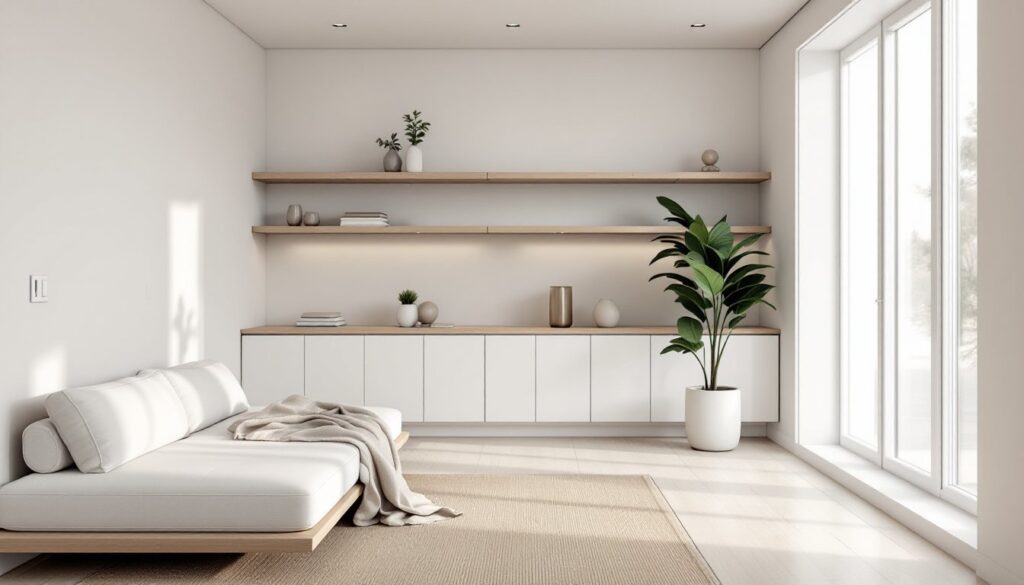
- Floating shelves or wall-mounted cabinets: Provide storage while keeping walls clean. Ensure shelves are level and anchored into studs using appropriate brackets (hollow-wall anchors won’t safely hold books or decor).
- Under-bed storage: Low-profile rolling bins or drawers maximize otherwise wasted space. Measure ceiling height and door swing before purchasing furniture.
- Vertical filing: Wall-mounted desk organizers, pegboards, or shelving pull items off surfaces and into view-controlled zones.
- Multi-functional pieces: An ottoman with interior storage, a console table that becomes a desk, or a murphy-style workspace all compress functionality into single objects.
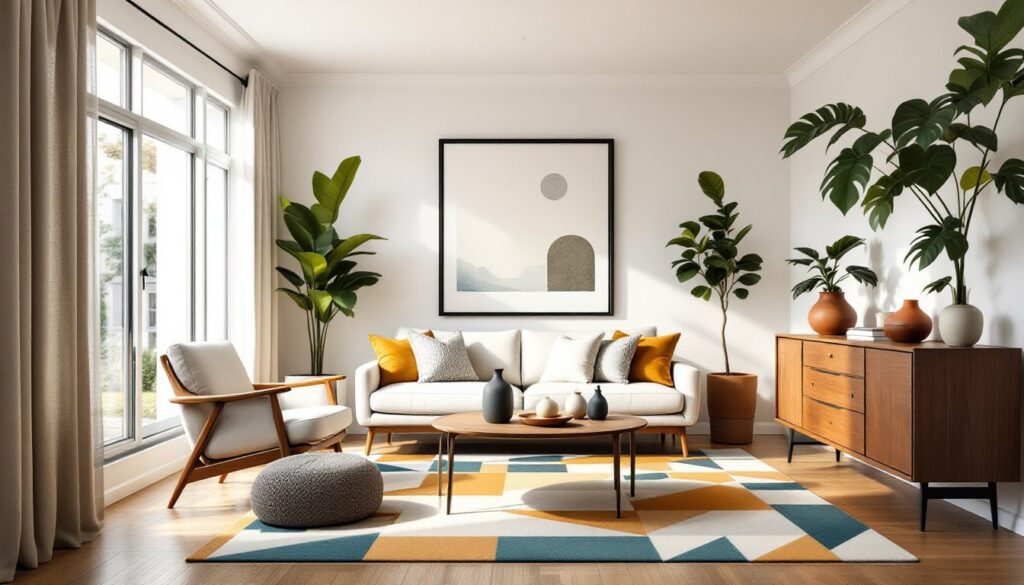
Mid-century modern interior design, which feeds into contemporary aesthetics, often used furniture to create zoning without walls. A sideboard or credenza acts as a room divider while storing linens, games, or files. A simple shelving unit (like a bookcase without a back) divides spaces while remaining visually open.
Before buying storage, audit what actually lives in your room. Does everything earn its space, or are you storing things “just in case”? The best storage is the stuff you don’t need to store.
Lighting Solutions for Contemporary Spaces
Modern lighting isn’t just functional, it defines atmosphere and should layer three types: ambient (overall), task (work-focused), and accent (highlighting).
Ambient lighting typically comes from recessed ceiling fixtures, pendant lights, or a sleek track system. Recessed lights work best on 4-foot centers (8 feet apart if the room is 16 feet wide): install them so they don’t create harsh shadows. Dimmers are essential, they let you adjust mood and save energy. Wire in a smart dimmer or retrofit existing switches with compatible dimmers from brands like Lutron or Leviton.
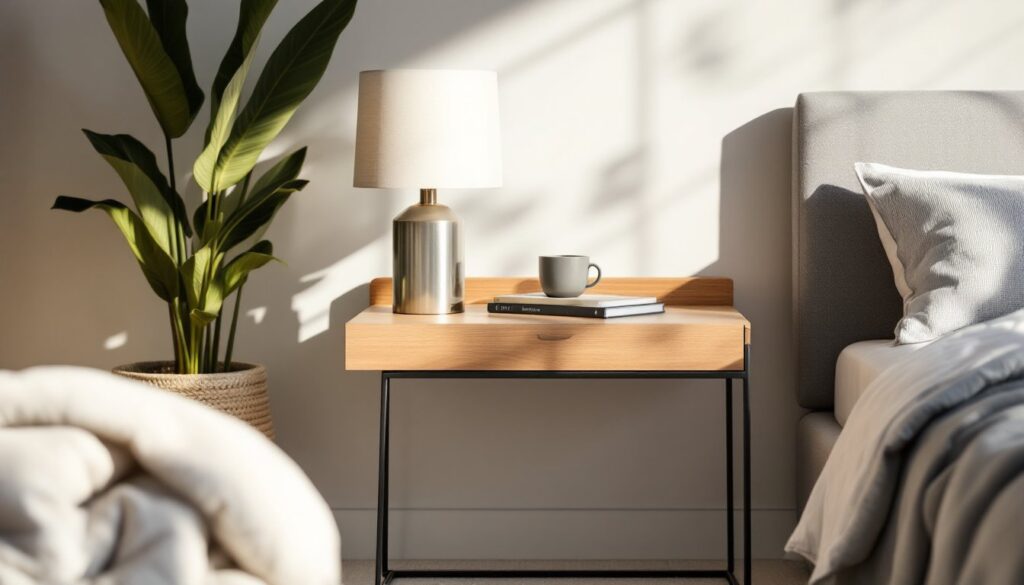
Task lighting means a desk lamp with a focused beam, bedside pendants, or under-cabinet strips in workspaces. Look for lamps with clean forms: cylindrical, minimal shade, matte finishes. Avoid ornate bases or fabric shades that date quickly.
Accent lighting highlights art, plants, or architectural features. A small LED strip behind a floating shelf, a picture light above a print, or a wall-wash light across textured wall paneling creates depth and visual interest.
LED bulbs are now standard: they’re efficient, last 25,000+ hours, and come in warm (2700K) to cool (4000K+) tones. Warm white feels cozy: cool white feels clean and contemporary. Choose one temperature throughout the room for cohesion.
Avoid ornate chandeliers, heavy brass fixtures, or heavily decorated lamp bases, they fight minimalist aesthetics. Instead, select brushed nickel, matte black, or simple ceramic and wood-based designs.
Incorporating Texture and Natural Materials
Modern design isn’t flat or sterile when texture and natural materials enter. They add warmth, visual interest, and tactile appeal without sacrificing clean lines.
Natural materials include wood (walnut, oak, whitewashed), stone (marble, concrete, slate), linen, wool, leather, and jute. These age gracefully and ground a room in authenticity. A live-edge wood shelf, a marble side table, or a jute area rug brings organic character. Homedit showcases modern living rooms that layer natural materials, wood wall paneling, stone accents, and linen upholstery, within minimalist frameworks.
Texture without pattern adds dimension. Consider a concrete accent wall (faux-finish is quicker than actual concrete), a whitewashed shiplap, or raw brick. Upholstery textures matter too: a linen sofa, wool blend throw, or leather chair bring surface interest. Combine textures thoughtfully, pairing rough concrete with soft linen or smooth marble with warm wood creates balance.
Plants are the easiest texture addition. A tall fiddle leaf fig, cascading pothos, or cluster of monstera in modern planters (white, concrete, matte ceramic) softens sharp lines and introduces living color. Group them in corners or on floating shelves for visual impact.
Layered textures prevent a room from feeling cold. The rule: balance smooth (glass, polished metal, ceramic) with rough (linen, concrete, wood) and warm (wood, leather) with cool (stone, metal, plants).
Budget-Friendly Modern Decor Swaps
Modern room design ideas don’t require luxury budgets. Strategic swaps deliver contemporary aesthetics without very costly.
Wall color over furniture replacement: A fresh coat of neutral paint (materials: 1–2 gallons at $15–30 per gallon, plus primer) transforms a room faster and cheaper than new pieces. Dwell’s design experts often point out that paint is the fastest, most affordable refresh.
DIY floating shelves: Buy MDF board (poplar or pine) cut to size at the hardware store ($2–5 per foot), sand lightly, prime, and paint. Anchor into studs with French cleats or floating shelf brackets ($10–20 per pair). Total cost: under $50 for a 48-inch shelf versus $100+ for retail versions.
Thrifted and upcycled pieces: Wooden dressers, nightstands, and cabinets from thrift stores or online marketplaces ($30–80) sand, prime, and paint beautifully. A dated wooden piece becomes a modern sideboard in matte black or soft white with fresh hardware ($3–8 per knob).
Area rugs and throws: Layer inexpensive, high-volume retailers (West Elm, Article, Wayfair) alongside thrift finds. A neutral jute or sisal rug ($40–80) anchors a space. Affordable linen throws ($15–25) add texture and warmth.
Lighting upgrades: Swapping out dated fixtures for budget modern options from IKEA, Article, or Wayfair (pendant lights $25–50, simple floor lamps $30–60) modernizes instantly without rewiring.
Decor minimization: Remove 30% of current decor and redisplay the remainder with intentional spacing. Free swap that immediately feels contemporary.
Conclusion
Modern room decor ideas are eventually about intentionality: choosing pieces that work, eliminating what doesn’t, and building rooms around function first and aesthetics second. Whether you embrace mid-century modern interior touches, adopt minimalist foundations, or blend contemporary style with natural warmth, the goal is a space that feels fresh, calm, and genuinely livable in 2026. Start with one section, paint walls, declutter surfaces, upgrade lighting, then expand. Small, deliberate changes compound into completely transformed rooms.