
Classical interior design draws from centuries of European tradition, think Greek columns, Roman arches, and the refined proportions of Renaissance architecture. It’s not about recreating a museum: it’s about borrowing the symmetry, craftsmanship, and enduring details that make a room feel grounded and intentional. Unlike trends that come and go, classical design relies on materials and techniques that age well: hardwood trim, plaster moldings, natural stone, and furniture built to last. For homeowners tackling renovations or refreshing a space, understanding these principles helps distinguish between thoughtful design and surface-level decoration. This guide breaks down what classical design actually means, how to execute it without turning your home into a period piece, and where DIYers can make an impact.
Table of Contents
ToggleKey Takeaways
- Classical interior design is built on symmetry, proportion, and quality materials like hardwood, natural stone, and plaster—not about recreating a museum or period piece.
- Essential architectural details for classical interiors include crown molding (3–6 inches depending on ceiling height), baseboards, wainscoting, and columns that follow historical proportions and mathematical ratios.
- Furniture in classical design should feature solid wood construction, carved details, and traditional silhouettes (camelback sofas, wingback chairs, pedestal tables) rather than particle board or metal frames.
- Successful classical interior design relies on warm lighting (2700K–3000K), neutral color palettes with deep accent colors, and layered light sources like chandeliers and sconces—not modern recessed cans.
- Common mistakes to avoid include overloading ornament, ignoring proportion relative to room size, using cheap imitations instead of real materials, and neglecting symmetry in furniture and architectural placement.
- You can incorporate classical design into modern homes by starting with affordable upgrades like crown molding and baseboards, mixing statement classical pieces with simpler contemporary furniture for a balanced, livable aesthetic.
What Defines Classical Interior Design?
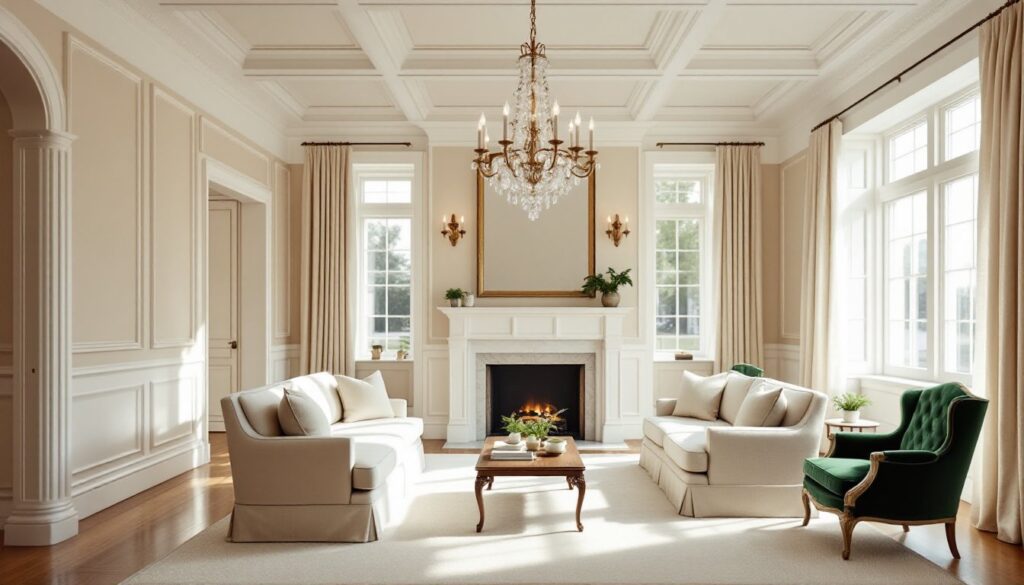
Classical interior design stems from Ancient Greek and Roman architecture, later refined during the Renaissance and Neoclassical periods. It’s rooted in proportion, symmetry, and a respect for structural clarity. Unlike eclectic or modern styles that embrace asymmetry, classical design centers on balance, matching sconces flanking a fireplace, evenly spaced windows, furniture arranged in symmetrical pairs.
Key architectural features include columns and pilasters (often Doric, Ionic, or Corinthian orders), coffered ceilings, wainscoting, and crown molding with Greek key or egg-and-dart detailing. These aren’t arbitrary decorations: they’re derived from load-bearing structures and mathematical ratios like the Golden Ratio. In practical terms, this means ceiling heights matter. Classical proportions work best in rooms with 8-foot ceilings or higher: anything lower can make heavy moldings feel oppressive.
Materials lean traditional: hardwood floors (oak, walnut, cherry), natural stone (marble, limestone, travertine), and plaster walls. Avoid vinyl plank or laminate if authenticity matters, classical design prizes the tactile quality of real materials. Paint finishes tend toward matte or eggshell rather than high-gloss contemporary looks.
It’s also worth noting that classical design often overlaps with formal living spaces, dining rooms, libraries, entryways, rather than casual family rooms. The style’s formality comes from its historical roots in estates and public buildings, not everyday cottages.
Key Elements of Classical Interior Style
Furniture and Architectural Details
Classical furniture emphasizes carved wood, upholstery with natural fabrics, and silhouettes borrowed from 18th and 19th-century European design. Look for:
- Camelback sofas and wingback chairs with exposed wooden legs (often cabriole or tapered styles)
- Pedestal dining tables in solid hardwood, typically oval or rectangular
- Case pieces like secretaries, armoires, and sideboards with inlay or veneer work
- Benches and settees with tufted upholstery or cane backing
Avoid particle board or metal frames. Classical pieces were built with mortise-and-tenon joinery and dovetailed drawers, construction methods still used by quality furniture makers today. If you’re refinishing vintage furniture, test finishes in an inconspicuous spot: many antique pieces have shellac or lacquer that reacts poorly to modern polyurethane.
Architectural details define the bones of classical interiors. Crown molding should be proportional to ceiling height: 3–4 inches for 8-foot ceilings, 5–6 inches for 9–10-foot ceilings. Install with a miter saw for clean corner joints: a coping saw works for inside corners if you’re proficient. Baseboard typically runs 5–7 inches tall, often with a cap molding.
Wainscoting or paneling adds formality. A classic layout uses chair rail at 32–36 inches from the floor, with raised panels or beadboard below. If installing from scratch, use 1×4 or 1×6 pine or poplar for stiles and rails, and route a profile on the edges with a router and Roman ogee bit. Paint-grade MDF works for painted finishes and costs less than hardwood, but it’s heavier and requires a pneumatic nailer or pre-drilling to avoid splits.
Columns and pilasters can be added as non-structural trim. Hollow PVC or wood columns are available in diameters from 6 to 12 inches: install them plumb using a level and secure to blocking between studs. These elements work best framing doorways or dividing open spaces, not randomly placed.
Color Palettes and Materials
Classical palettes borrow from natural pigments and historical paints. Expect:
- Neutrals: Ivory, cream, taupe, soft gray, warm white
- Accent colors: Deep reds (Venetian red, burgundy), navy, hunter green, gold, ochre
- Trim and moldings: Often painted in contrasting white or off-white, even when walls are neutral
Avoid neon, pastels, or ultra-saturated hues, they read as modern. If you’re matching historical colors, companies like Farrow & Ball and Benjamin Moore’s Historical Collection offer researched palettes, though any quality paint will work if you match the LRV (Light Reflectance Value) to classical ranges (typically 50–80 for walls).
Floor materials matter. Hardwood is traditional: if installing new floors, use ¾-inch solid oak or maple in 2¼-inch or 3¼-inch widths. Wider planks (5+ inches) read rustic, not classical. Finish with oil-based polyurethane in satin for durability, or hard wax oil for a more European feel. Parquet or herringbone patterns add formality but require professional installation due to precision cutting.
Natural stone works for entryways, bathrooms, and fireplace surrounds. Marble is classic but porous, seal with a penetrating sealer and avoid acidic cleaners. Limestone or travertine offer similar looks with less maintenance. Tile should be 12×12 inches or larger: small mosaic reads cottage-style, not classical.
Fabrics lean traditional: linen, silk, velvet, damask, and brocade. Upholstery often features tone-on-tone patterns or small-scale florals. Drapes should be floor-length, ideally with pinch-pleat or goblet-pleat headers, not grommets. Use drapery lining to add body and protect fabric from sun damage. If sewing panels yourself, allow for 2.5x fullness (for a 60-inch window, use 150 inches of fabric width) for proper drape. Many interior design enthusiasts emphasize the importance of high-quality textiles in achieving an authentic classical aesthetic.
How to Incorporate Classical Design in Modern Homes
You don’t need a Georgian manor to use classical principles. Start with architectural details that add permanence without requiring structural changes.
Add crown molding and baseboards. These are the easiest upgrades. Use pre-primed MDF or finger-jointed pine for painted finishes: stain-grade work requires solid hardwood. Measure carefully, inside corners get coped, outside corners get mitered at 45 degrees. A compound miter saw simplifies angled cuts. Nail with a brad nailer and fill holes with spackle or wood filler, then caulk gaps with paintable acrylic caulk. Two coats of semi-gloss paint give a traditional look.
Install wainscoting or picture rail. Even a simple flat-panel wainscot (1×4 frame with 1/4-inch plywood or MDF insert) adds classical structure. Picture rail sits 12–18 inches below the ceiling and lets you hang art without damaging walls, a period-correct detail that’s also functional.
Upgrade doors and hardware. Swap hollow-core doors for solid-core or five-panel doors (six-panel is more Colonial than Classical). Replace builder-grade lever handles with backplates and knob sets in oil-rubbed bronze, polished nickel, or brass. Traditional hinges are 3.5-inch or 4-inch butt hinges in matching finishes.
Use symmetry in furniture placement. Flank a sofa with matching end tables and lamps. Center a dining table under a chandelier. Hang sconces or artwork in pairs. This doesn’t require buying new furniture, just rearranging what you have with balance in mind.
Layer lighting with intention. Classical interiors use chandeliers (crystal, brass, or wrought iron) as focal points, supplemented by table lamps and sconces. Avoid recessed cans as primary lighting, they’re modern and create uneven illumination. If you’re installing a chandelier, it should hang 30–34 inches above a dining table or 7 feet above the floor in an entryway. Always turn off power at the breaker and use a voltage tester before touching wiring.
Select a few statement pieces rather than theming every room. A classical interior doesn’t mean wall-to-wall antiques. Mix in modern upholstery or simpler furniture to avoid a stagey effect. Many designers highlight classical design elements as anchors in otherwise contemporary spaces for a layered, livable result.
Common Mistakes to Avoid When Creating a Classical Interior
Overdoing ornament. Classical design uses detail strategically, on moldings, furniture, and focal points, not smeared across every surface. Too much carving, gilt, or pattern reads as Victorian or Rococo, not classical. If every piece of furniture is heavily carved, the eye has nowhere to rest. Balance ornate elements with simpler forms.
Ignoring proportion. Installing 8-inch crown molding in a room with 8-foot ceilings makes the space feel cramped. Oversized furniture in a small room has the same effect. Classical design is about mathematical relationships, use the rule of thirds or the Golden Ratio when planning layouts. Measure twice, install once.
Using cheap imitations. Plastic “wood” beams, foam moldings, and vinyl columns undermine the material honesty central to classical design. If budget is tight, use less, but use real materials. One well-made chair beats three particle-board reproductions. Paint-grade MDF molding is acceptable because it’s a substrate, not a fake finish, and it takes paint well. But vinyl or foam reads as fake up close.
Skipping symmetry. Asymmetrical layouts clash with classical principles. This doesn’t mean everything must mirror perfectly, but major elements, windows, doors, furniture groupings, should balance visually. If a room has an odd number of windows, center the middle one and flank it evenly with furniture or drapery.
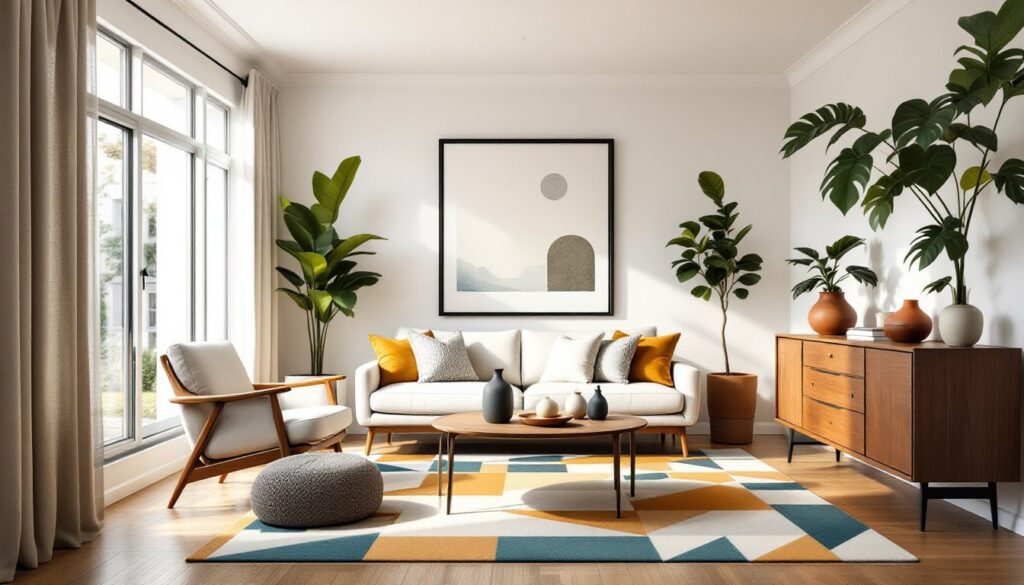
Mixing too many styles. Classical interiors pair well with transitional or traditional pieces, but struggle alongside industrial, mid-century modern, or Scandinavian minimalism. Those styles emphasize different values (raw materials, organic curves, stark simplicity) that compete rather than complement. Pick a primary style and let others play supporting roles.
Forgetting function. Classical design evolved for formal entertaining, not modern family life. If you have kids or pets, white silk upholstery and fragile antiques aren’t practical. Use performance fabrics (like Crypton or Sunbrella) in classical patterns. Choose harder stone like granite over soft marble for high-traffic floors. Enduring design trends often succeed because they adapt historical aesthetics to contemporary durability standards.
Neglecting lighting temperature. Classical interiors rely on warm white (2700K–3000K) light to enhance wood tones and rich colors. Cool white or daylight bulbs (4000K+) make traditional finishes look washed out. Use LED Edison-style bulbs in chandeliers or sconces for energy efficiency without sacrificing warmth.
Conclusion
Classical interior design isn’t about recreating the past, it’s about applying time-tested principles of proportion, symmetry, and craftsmanship to spaces that function today. Whether you’re adding crown molding, sourcing antique furniture, or rethinking a room’s layout, the goal is coherence, not costumes. Start with one or two architectural upgrades, invest in quality materials over quantity, and let the bones of the design do the work. Done right, classical interiors age gracefully and improve with use, a rare quality in any style.