
A cabin should feel like an escape, somewhere you can unplug, exhale, and sink into a chair without checking your phone. But nailing that cozy-without-trying-too-hard vibe takes more than throwing a flannel blanket over the sofa. Whether you’re building from scratch, renovating a fixer-upper, or freshening up a weekend getaway, cabin interior design is about balancing rugged materials with livable comfort. This guide walks through the core elements, materials, color, furniture, lighting, and details, that turn a cabin into a retreat you’ll actually want to spend time in.
Table of Contents
ToggleKey Takeaways
- Cabin interior design balances rugged materials with livable comfort by incorporating exposed structural elements like beams, stone fireplaces, and wood paneling as visual anchors.
- Natural materials—wide-plank hardwood flooring, soapstone countertops, wrought iron accents, and quality textiles in wool and linen—create authentic cabin character that ages gracefully.
- Warm, grounded color palettes using soft neutrals as bases with deep accent colors like forest green or navy prevent spaces from feeling flat while letting wood and stone shine.
- Cabin furniture should be sturdy and proportional to the space, prioritizing quality hardwood frames and comfortable seating that can handle wear and patina over time.
- Layered lighting with dimmers, ambient fixtures, task lighting, and accent lights creates flexibility to adjust mood throughout the day without sacrificing rustic character.
- Modern comfort systems like high-efficiency wood stoves, ductless mini-splits, and heated floors can blend seamlessly with cabin interior design when kept restrained and hidden from view.
Essential Elements of Cabin Interior Design
Cabin design isn’t one-size-fits-all, but certain elements show up consistently, and for good reason. They set the tone, create warmth, and tie the interior to its surroundings.
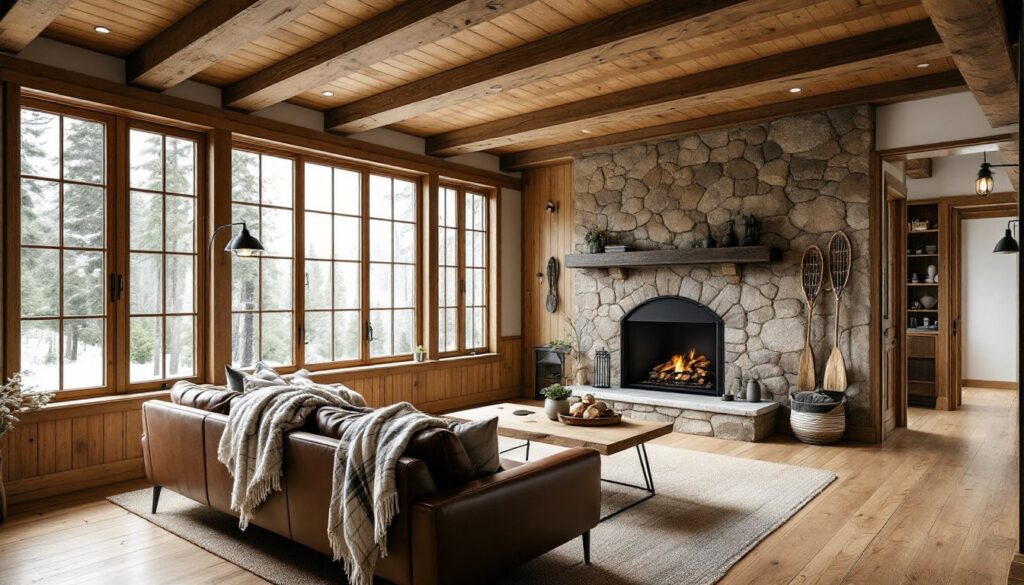
Start with exposed structural elements. Beams, rafters, and posts aren’t just decorative, they’re honest. If you’re framing new construction or opening up a ceiling, consider leaving dimensional lumber or engineered beams visible. A 6×8 beam spanning a living room adds visual weight and anchors the space. If the cabin’s already built and you can’t expose real structure, faux beams (usually pine or fir with a hollow box construction) can work, but make sure they’re sized appropriately. A 4-inch beam on a 20-foot span looks flimsy.
Stone or masonry is another anchor. A floor-to-ceiling fireplace in stacked fieldstone or river rock becomes a focal point and adds thermal mass if it’s a real wood-burning unit. If you’re installing new, check local codes, many jurisdictions require a non-combustible hearth extension of at least 16 inches in front and 8 inches to the sides. For gas inserts, clearances are tighter, but you’ll still want that stone surround for the look.
Finally, wood paneling or board-and-batten walls bring texture without clutter. Tongue-and-groove pine (nominal 1×6 or 1×8, actual ¾” thick) is classic. Run it vertically for height or horizontally for a more relaxed feel. If the cabin’s small, paint it, white or a soft gray, to keep things from feeling like a cave. Raw knotty pine works in larger spaces with good natural light.
Natural Materials That Define Cabin Style
Cabin interiors lean hard on materials that look and feel like they came from the surrounding landscape. Wood is the foundation, literally and figuratively. For flooring, wide-plank hardwood (5 to 7 inches wide) in oak, hickory, or reclaimed barn wood adds character. Skip the glossy polyurethane: a matte or satin finish feels more grounded. If the cabin sees heavy boot traffic, consider a penetrating oil finish instead, it wears more gracefully and can be spot-repaired without sanding the whole floor.
For countertops and accents, natural stone works better than engineered quartz or laminate. Soapstone, granite, or honed slate all age well and handle heat. In bathrooms, a vessel sink in hammered copper or stone beats a builder-grade undermount every time.
Don’t overlook metal accents. Wrought iron brackets, steel stair railings, or a black pipe pot rack in the kitchen add contrast without feeling industrial. Just keep finishes consistent, mixing brushed nickel, oil-rubbed bronze, and matte black in the same room looks indecisive.
Textiles matter, too. Wool, linen, and cotton hold up better than synthetics and bring a tactile quality. A chunky knit throw or a wool camp blanket folded over the back of a sofa does more for warmth than a dozen throw pillows.
Color Palettes for a Warm and Inviting Cabin
Cabin color schemes should feel grounded, not trendy. Think earth tones with enough contrast to keep things from feeling flat.
Neutral bases work best: warm whites, soft grays, taupes, and beiges. These let the wood and stone do the talking. Benjamin Moore’s “White Dove” or Sherwin-Williams’ “Accessible Beige” are safe bets, they read warm in natural light and don’t turn cold at night.
For accent walls or cabinetry, reach for deep greens, charcoal, or navy. A dark accent wall behind a bed or sofa adds depth without closing in the room. If the cabin’s got a lot of natural wood, a painted accent keeps it from feeling monotone.
Avoid stark white or cool grays, they fight the warmth you’re trying to build. And skip the “reclaimed wood” gray-wash trend unless you’re going for coastal, not cabin.
Color temperature matters more than the exact shade. Warm whites (2700K to 3000K) make wood glow: cool whites (4000K+) make it look washed out. Test paint samples on multiple walls and live with them for a few days before committing, morning light and evening light will show different sides.
For textiles and accessories, layering in rust, burnt orange, or mustard adds warmth without going full hunter-lodge. A wool rug in a muted plaid or a set of linen curtains in terracotta can shift the whole feel of a room.
Cabin Furniture Selection and Layout Tips
Cabin furniture should be sturdy, comfortable, and proportional to the space. Overstuffed sectionals work in a great room with vaulted ceilings: in a 12×14 bedroom, they’re suffocating.
Seating is where you’ll spend most of your time, so don’t cheap out. Look for solid hardwood frames (not particleboard), eight-way hand-tied springs (not sinuous wire), and cushions with high-density foam wrapped in down or a down alternative. Leather ages better than fabric in a cabin, especially if you’re tracking in dirt or dealing with wood smoke.
For dining, a solid wood table with a live edge or plank top feels more cabin than a pedestal base or glass. Make sure it’s sized right, allow 24 inches of table width per person and at least 36 inches of clearance around the table for chairs to pull out. If space is tight, a bench on one side frees up room and adds a casual vibe.
Built-ins are a smart move in cabins where square footage is limited. A window seat with storage underneath, a bench in the mudroom with cubbies for boots, or open shelving flanking a fireplace all add function without eating floor space.
Avoid furniture that’s too precious. A cabin’s not a showroom, things will get scuffed, scratched, and sat on with muddy jeans. Embrace the patina.
Lighting Strategies for Cabin Ambiance
Lighting in a cabin needs to be layered and flexible. You’re not designing for a 9-to-5 office: you’re setting a mood.
Start with ambient lighting. If you’ve got exposed beams, consider recessed cans (4-inch or 6-inch, depending on ceiling height) spaced 4 to 6 feet apart. Use dimmable LEDs in warm white (2700K). Recessed lighting alone can feel sterile, so supplement with fixtures that add character, a wagon wheel chandelier (if you’re leaning rustic) or a wrought iron pendant over the dining table.
Task lighting matters in the kitchen and at reading nooks. Under-cabinet LED strips (hardwired, not adhesive battery packs) give you functional light for prep work. Swing-arm sconces next to a bed or reading chair beat table lamps for saving space and directing light where you need it.
Accent lighting is where you can have fun. Use track lighting or picture lights to highlight a mounted fish, a piece of folk art, or a stone fireplace. A couple of cabin interior design ideas include uplighting beams with small LED pucks to create drama without glare.
Don’t forget natural light. If you’re replacing windows, go bigger than you think, especially on south-facing walls. A pair of casement or awning windows flanking a fixed picture window gives you ventilation and views. Just make sure to spec Low-E glass in cold climates to cut heat loss.
Finally, dimmers are non-negotiable. Install them on every switch, you’ll want full brightness when you’re cooking or cleaning, and a soft glow when you’re winding down.
Decorative Touches That Bring Cabin Character to Life
Decoration in a cabin should feel collected, not curated. Skip the matchy-matchy and lean into things with history or function.
Vintage gear makes great decor. Old snowshoes, wooden skis, a canoe paddle, or a pair of antique oars mounted on the wall add texture and backstory. Hit estate sales, antique shops, or online marketplaces, but make sure it’s real, not reproduction. There’s a difference between a 1940s Hudson Bay blanket and a knockoff from a big-box store.
Antlers, hides, and taxidermy are classic cabin touches, but they’re also polarizing. If you go this route, keep it tasteful, a single mounted deer head or a small collection of sheds on a mantel works: a wall full of trophy heads can feel aggressive. Faux options (resin or carved wood) are available if you want the look without the real thing.
Open shelving is a chance to display practical items that double as decor, stoneware mugs, a stack of enamelware plates, a row of cast iron skillets, or a collection of vintage thermoses. Keep it functional: if it’s just for show, it’ll collect dust.
Textiles add warmth fast. Layer rugs (a jute or sisal base with a smaller wool rug on top), hang quilts as wall art, or drape a woven throw over a ladder-style blanket rack. Avoid anything too fussy, no ruffles, no tassels, no “Live Laugh Love” pillows.
Artwork should reflect the surroundings. Local landscape paintings, black-and-white nature photography, or vintage national park posters fit better than abstract prints or beach scenes. Frame simply, black wood or natural wood, no ornate gilt.
Blending Modern Comfort with Rustic Charm
You don’t have to choose between a wood stove and radiant floor heat. The best cabins mix old-school character with modern livability.
Start with climate control. A fireplace is romantic, but it’s not a primary heat source. Install a high-efficiency wood stove (EPA-certified) or a ductless mini-split system for real comfort. Mini-splits are quiet, efficient, and don’t require ductwork, ideal for cabins without a basement or crawl space. Place the indoor units high on walls (at least 7 feet up) to maximize airflow.
In the kitchen, go for modern appliances in classic finishes. A matte black or stainless steel range looks at home in a cabin, while a panel-ready dishwasher keeps sightlines clean. Open shelving or glass-front cabinets show off dishes and keep things from feeling too built-in.
For bathrooms, heated floors (electric mat systems under tile) are a splurge worth considering, especially in a cold climate. Pair that with a walk-in shower with a rain head and handheld combo, and you’ve got a spa-like setup that still feels rustic if you use subway tile and matte black fixtures.
Smart home tech can coexist with cabin style. A programmable thermostat, dimmable smart bulbs, or a whole-home generator (if you’re off-grid or prone to outages) all add convenience without cluttering the aesthetic. Just hide the gear, no visible routers or charging stations on the mantel.
The key is restraint. Add modern comforts where they improve daily life, but don’t let them dominate. A cabin with underfloor heating, a Viking range, and reclaimed barn wood still feels like a cabin. A cabin with floor-to-ceiling glass, white lacquer cabinets, and a floating staircase doesn’t.
Cabin design is about balance, honoring the past without living in it. Use natural materials, keep the palette warm, choose furniture that’ll last, layer your lighting, and don’t overthink the details. The best cabins feel lived-in from day one, and that comes from making intentional choices that prioritize comfort over trends. Whether you’re working on a full renovation or freshening up a few rooms, these principles will steer you toward a space that feels timeless and genuinely yours.