
Modern bedroom design isn’t about following a rigid aesthetic, it’s about creating a clean, functional space that feels intentional. The style strips away excess, focusing on quality over quantity, with an emphasis on natural materials, simple geometry, and purposeful choices. Whether someone’s renovating a cramped secondary bedroom or reimagining a primary suite, understanding the core principles helps avoid the common trap of ending up with a cold, impersonal room. The difference between “minimalist” and “modern” often comes down to warmth, texture, and how light interacts with the space throughout the day.
Table of Contents
ToggleKey Takeaways
- Modern bedroom interior design prioritizes clean lines, natural materials, and functional simplicity rather than ornamentation, creating intentional spaces that feel warm and curated rather than cold or minimalist.
- A neutral color foundation (whites, grays, taupes) paired with limited accent colors following the 60-30-10 rule ensures visual calm while allowing textures and quality materials to become focal points.
- Furniture selection should emphasize low platform beds with exposed legs, slab-style dressers, and asymmetrical balance rather than matching sets, coordinating pieces through finish and proportion instead.
- Layered lighting combining ambient ceiling fixtures, task-based wall sconces, and accent lighting—all on dimmer switches with warm 2700K-3000K color temperature—is essential for functionality and ambiance.
- Texture and tactile variety prevent modern bedrooms from feeling sterile; incorporate quality linen, natural wood grain, matte metal finishes, and sculptural plants while maintaining a restrained overall palette.
- Thoughtful space planning with 24-36 inch clearances around furniture, 30-36 inch traffic pathways, and appropriate rug sizing (5’×8′ for full/queen beds, 8’×10′ for king) ensures both flow and visual proportion.
What Defines Modern Bedroom Design?
Modern bedroom design emerged from the mid-20th century Modernist movement, emphasizing form following function. It rejects ornamentation in favor of clean lines, open floor plans, and a connection to natural light and materials.
At its core, modern design values simplicity without sterility. That means selecting fewer, higher-quality pieces rather than filling every surface. Furniture sits low to the ground with exposed legs (no skirted bed frames or heavy drapery puddling on floors). Walls stay mostly bare or feature single statement pieces rather than gallery walls.
Key characteristics include:
- Horizontal and vertical lines that emphasize room geometry
- Neutral base palettes with selective accent colors
- Minimal window treatments or simple roller shades and linen panels
- Integration of natural materials like wood, stone, and metal
- Concealed storage to maintain visual calm
Unlike contemporary design, which refers to what’s current right now, modern design references a specific historical aesthetic that remains relevant. It’s not about chasing trends: it’s about timeless restraint. That said, 2026 interpretations incorporate warmer wood tones and organic textures that earlier iterations often lacked.
Essential Elements of a Modern Bedroom
Color Palettes That Create Modern Serenity
Modern bedrooms typically anchor around a neutral base: whites, grays, taupes, or warm beiges. These aren’t builder-grade flat whites, look for complex neutrals with undertones that shift in different light (greige, warm gray with violet undertones, or creamy off-whites).
Paint coverage runs about 350-400 square feet per gallon for quality interior paints, so a standard 12′ × 14′ bedroom with 8-foot ceilings needs roughly one gallon for two coats on walls. Don’t skip primer, especially when going from darker to lighter shades or covering new drywall.
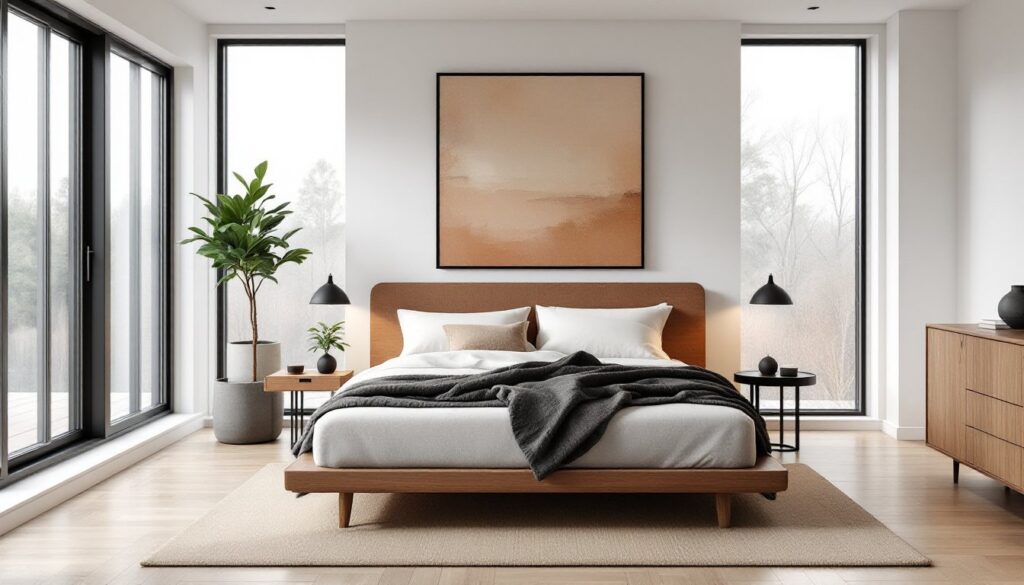
Accent colors work best when limited to one or two hues used sparingly, a terracotta throw, deep charcoal bedding, or muted sage in artwork. The 60-30-10 rule applies: 60% dominant neutral, 30% secondary color, 10% accent. Black accents (light fixtures, frames, hardware) add definition without overwhelming.
Avoid: Busy patterns, high-contrast stripes, or anything that competes with the architectural lines of the room. Many designers reference modern bedroom palettes that emphasize natural light and restrained color choices.
Furniture Selection for Clean, Contemporary Lines
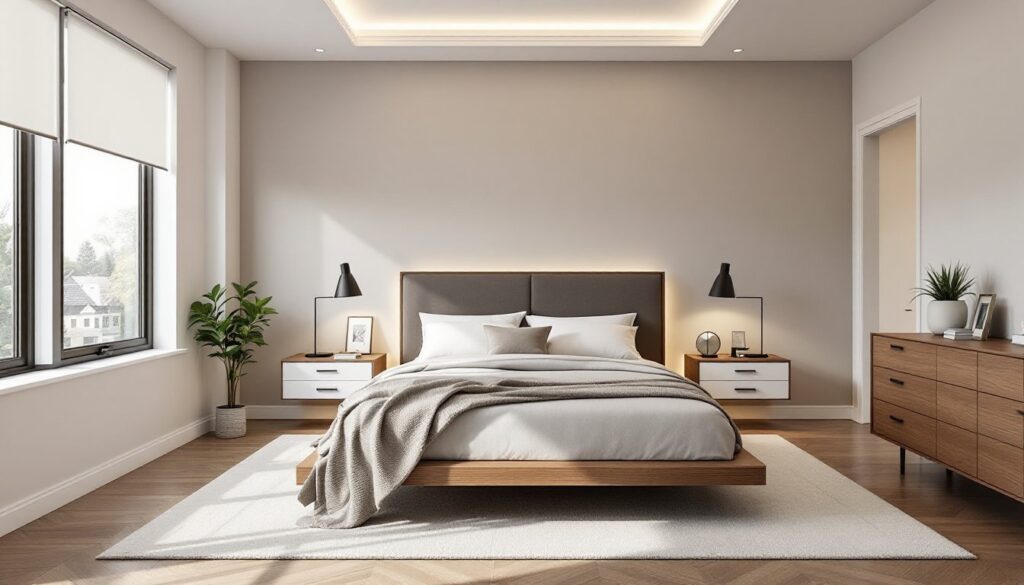
Platform beds define modern bedrooms, they sit low, often without a footboard, and emphasize horizontal lines. Look for solid wood or upholstered frames with legs visible underneath (typically 4-6 inches of clearance). Avoid storage beds with heavy drawer bases: they visually anchor the room too much.
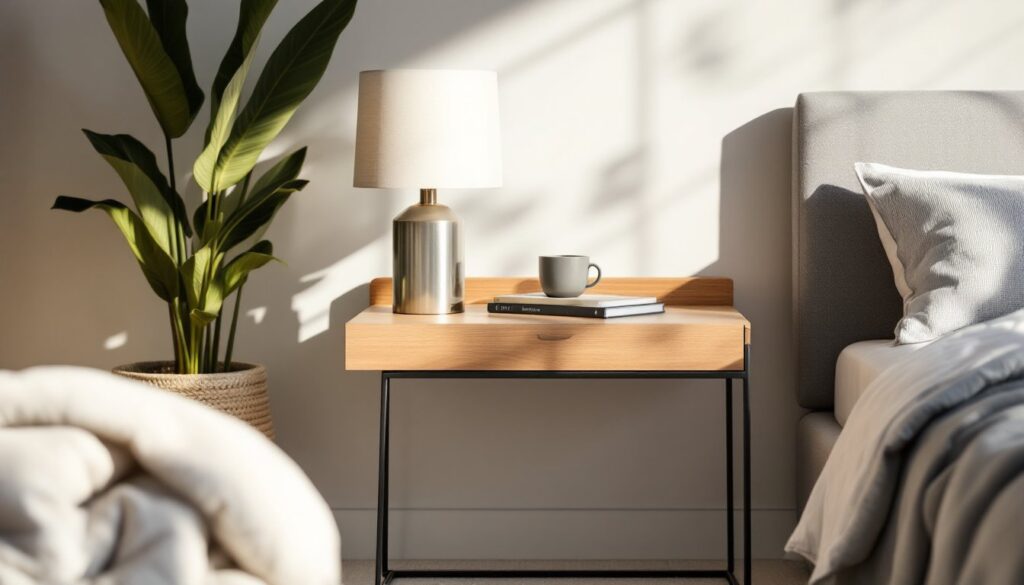
Nightstand height should align with the top of the mattress (usually 24-28 inches for standard bed heights). Choose pieces with simple drawer pulls or push-to-open mechanisms rather than ornate hardware. Floating nightstands work well in tight spaces and reinforce the weightless aesthetic.
Dressers and case goods should have flat, slab-style drawer fronts without raised panels or decorative molding. If the bedroom layout allows, consider a low, horizontal dresser (60-72 inches wide) rather than a tall chest: it emphasizes room width and provides surface area for a mirror or artwork.
Material choices matter: solid walnut, white oak, or maple in natural or lightly stained finishes align better with modern aesthetics than cherry or mahogany. Metal frames in matte black or brushed nickel work for mixed-material pieces.
Skip matching bedroom sets entirely. They read dated. Instead, coordinate through finish and proportion, different pieces in the same wood tone with similar leg styles.
Layout and Space Planning Tips
Start by identifying the room’s focal wall, usually the one you face when entering. In most bedrooms, that’s where the bed goes, centered if possible. Leave at least 24-36 inches of clearance on each side for nightstands and easy access.
Avoid pushing all furniture against walls. Floating the bed a few inches from the wall (if space allows) adds dimension and lets you tuck cords behind without drilling. For rooms under 120 square feet, keeping the bed against the wall maximizes usable floor space.
Traffic flow requires clear pathways at least 30-36 inches wide. Measure from bed edges to dresser fronts, closet doors to ensure drawers and doors can fully open without collisions. This is especially critical in shared bedrooms where two people navigate simultaneously.
Modern design favors asymmetrical balance over rigid symmetry. Instead of matching nightstands, consider one nightstand and a small reading chair, or offset wall art above the bed rather than centering it precisely.
For furniture placement near HVAC vents or baseboard heaters, maintain at least 12 inches of clearance to avoid blocking airflow or creating fire hazards. Check local building codes if modifying built-ins near electrical outlets, most jurisdictions follow the International Residential Code (IRC) requiring outlets every 12 feet along walls.
Rug sizing matters: a 5′ × 8′ rug fits under a full or queen bed with the bottom two-thirds covered, while an 8′ × 10′ rug works for king beds with nightstands partially on the rug. Avoid small accent rugs that look like bath mats: they fragment the floor visually.
Lighting Strategies for Modern Bedrooms
Modern bedrooms require layered lighting: ambient, task, and accent. Relying on a single overhead fixture creates harsh shadows and limits functionality.
Ambient lighting provides overall illumination. Flush-mount or semi-flush ceiling fixtures work better than chandeliers in modern spaces. Look for geometric shapes (spheres, cylinders, angular forms) in matte black, brushed brass, or white finishes. For an 8-foot ceiling, the fixture bottom should hang at least 7 feet from the floor to meet code and avoid head strikes.
Recessed LED cans (4-6 inch) spaced 4-6 feet apart provide even, unobtrusive light. Dimmer switches are non-negotiable, install ones rated for LED loads to avoid flickering. Most quality LEDs offer 2700K-3000K color temperature for bedroom warmth: anything above 3500K reads too clinical.
Task lighting includes bedside reading lights. Swing-arm wall sconces mounted 15-20 inches above mattress height save nightstand space and direct light precisely. Hardwiring requires cutting into drywall and running Romex, this may need a permit and should follow National Electrical Code (NEC) Article 210 for bedroom circuits. Plug-in versions offer easier installation.
Floor lamps work beside reading chairs: choose arc lamps or tripod designs with fabric or metal shades. Avoid torchieres that bounce light off ceilings, they create glare.
Accent lighting highlights architectural features or artwork. Picture lights or narrow-beam track lighting work for wall art. LED strip lighting under floating nightstands or behind headboards adds subtle ambiance without visible fixtures.
Natural light control matters as much as artificial. Blackout roller shades in neutral colors provide privacy and light blocking without bulky drapes. Layer with sheer linen panels if softness is needed. Motorized options integrate with smart home systems but require low-voltage wiring or battery packs.
Textures and Materials That Elevate Modern Style
Modern doesn’t mean cold. Texture prevents minimalist spaces from feeling sterile. The key is varying tactile elements while maintaining a restrained color palette.
Textiles provide the easiest texture layering. Linen bedding introduces subtle slubs and wrinkles that soften crisp lines. Wool or cotton-blend throws add weight without pattern. Avoid synthetic fabrics: they don’t age well and often look cheap under natural light.
For window treatments, 100% linen or linen-cotton blends drape naturally without stiffness. Expect to pay $30-60 per yard for quality fabric. If sewing custom panels, use drapery weights in hem corners to improve hang.
Wood finishes should show natural grain, clear-coated oak, oiled walnut, or whitewashed ash. Flat-cut veneer (also called plain-sliced) displays cathedral grain patterns: quarter-sawn veneer shows straighter grain and costs more but resists warping better. For floors, engineered hardwood (3/8″ to 1/2″ thick) works over concrete slabs or radiant heat: solid hardwood requires a wood subfloor and 3/4-inch thickness to allow sanding over decades.
Metal accents in matte black, aged brass, or brushed nickel appear in light fixtures, drawer pulls, and bed frames. Mixing metals works if finishes share similar warmth, pairing cool chrome with warm brass usually clashes.
Stone or concrete surfaces add weight and permanence. A honed marble shelf or concrete side table introduces industrial texture. Avoid high-gloss polished stone: it reads formal rather than modern. Enthusiasts often browse interior design resources for material pairings and finish combinations.
Rugs anchor texture underfoot. Wool, jute, or sisal in solid colors or subtle geometric patterns work best. High-pile shags contradict modern aesthetics, stick to low-pile (under 0.5 inches) or flat-weaves. Natural fiber rugs need rug pads to prevent slipping and protect floors.
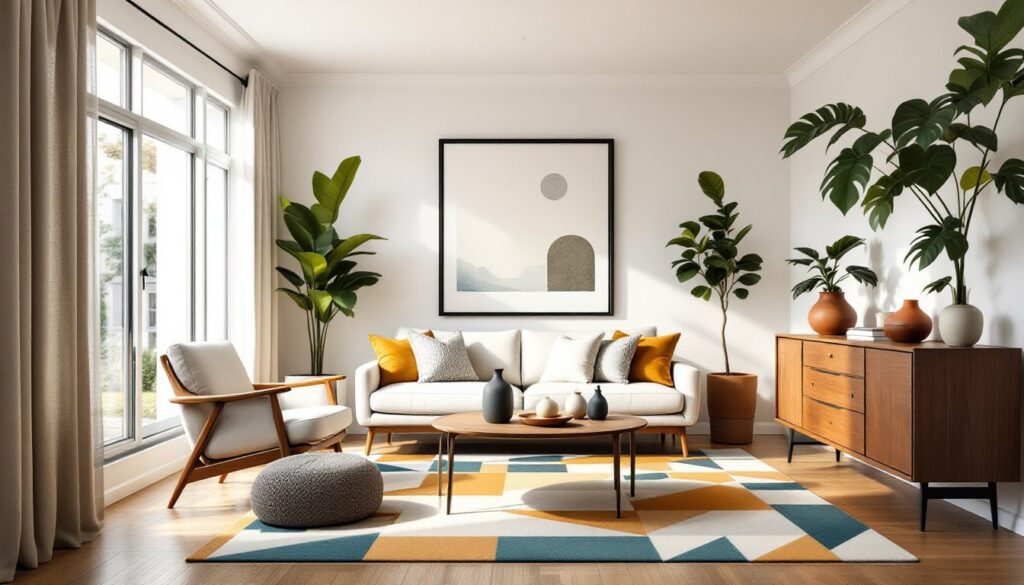
Plants soften hard surfaces. Choose sculptural varieties like snake plants, fiddle-leaf figs, or rubber trees in simple ceramic or concrete planters. Avoid fussy arrangements or decorative cachepots with patterns. Those seeking home decorating inspiration will find that greenery adds life without clutter.
Safety note: When introducing new textiles, check for flame-retardant treatments if required by local codes, especially for window treatments near heating sources.