
A bedroom shouldn’t feel like a furniture showroom or a hotel room someone forgot to personalize. Modern bedroom design in 2026 leans into restraint, warm materials, and smart layouts that actually serve how people sleep, dress, and decompress. Think clean lines without coldness, tech that hides itself, and storage that earns its square footage. Whether someone’s gutting a primary suite or just refreshing a guest room over a long weekend, the principles below cover what’s working right now, and the practical choices that hold up beyond a Pinterest scroll.
Table of Contents
ToggleKey Takeaways
- Modern bedroom design in 2026 emphasizes quiet warmth with low-profile furniture, natural materials, and matte finishes rather than stark minimalism or cold contemporary styles.
- Choose a calming color palette using warm neutrals like bone, oat, mushroom, and clay paired with wood tones, following the 60-30-10 rule to avoid overwhelming the space.
- Proper bedroom layout requires the bed on the longest uninterrupted wall with at least 24 inches of clearance on each side, and at least 36 inches between the bed foot and any dresser.
- Layer three types of lighting—ambient, task, and accent—using 2700K–3000K warm white bulbs and dimmers to avoid the clinical feel of overhead lights alone.
- Integrate smart storage solutions like built-in under-bed drawers, floating nightstands, and floor-to-ceiling wardrobes to maintain a clutter-free modern bedroom retreat.
- Hide technology or eliminate it entirely by using recessed outlets, USB-C ports in drawers, and hidden-track blackout shades to preserve the room’s calm aesthetic.
What Defines Modern Bedroom Design Today
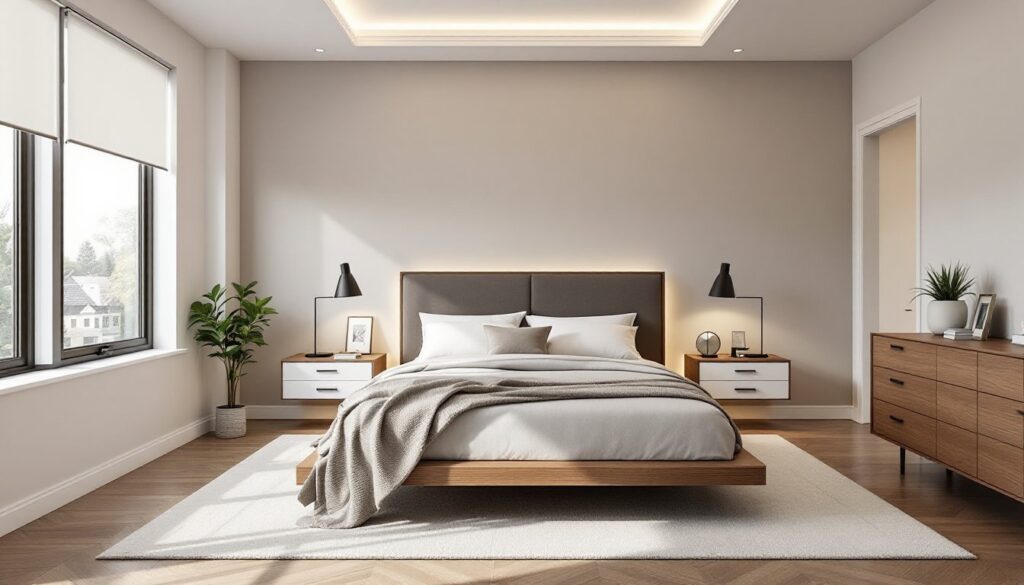
Modern bedroom <a href="https://mintterrace.com/penthouse-interior-design/”>design in 2026 is less about stark minimalism and more about quiet warmth. The look favors low-profile furniture, natural materials, neutral palettes punctuated by one grounding color, and lighting layered for mood rather than brightness alone.
Key markers to watch for:
- Horizontal lines and platform beds that sit 10–14 inches off the floor
- Matte finishes over high gloss (less fingerprints, more depth)
- Mixed materials: oak, linen, plaster, brushed brass
- Negative space treated as a design element, not a budget gap
This is where modern bedroom decor diverges from sterile contemporary styles. The goal is a room that reads calm at 7 a.m. and cocooning at 11 p.m.
Choosing a Color Palette That Feels Calm and Current
Color sets the nervous system of the room. For 2026, warm neutrals, bone, oat, mushroom, clay, are replacing the cool grays that dominated the 2010s. They pair well with wood tones and don’t fight natural light.
A reliable approach is the 60-30-10 rule: 60% dominant wall and large furniture color, 30% secondary (bedding, drapery), 10% accent (art, throw, lamp base). Editors at room-by-room design guides consistently recommend testing paint on at least two walls before committing, since north-facing rooms cool down warm hues considerably.
For paint, expect roughly 350–400 square feet of coverage per gallon on primed drywall. Most bedrooms need two coats. Eggshell or matte finishes hide wall imperfections better than satin, useful in older homes with skim-coated plaster.
Furniture and Layout Essentials for a Streamlined Space
Layout decides whether a bedroom feels like a retreat or a Tetris board. The bed should anchor the longest uninterrupted wall, ideally with at least 24 inches of clearance on each side for nightstands and walking room. Doors and closets need their full swing radius respected, a common mistake in tight rooms.
A few layout rules that hold up:
- Keep the bed out of direct line with the door when possible
- Leave 36 inches between the foot of the bed and any dresser
- Avoid blocking HVAC vents with upholstered headboards
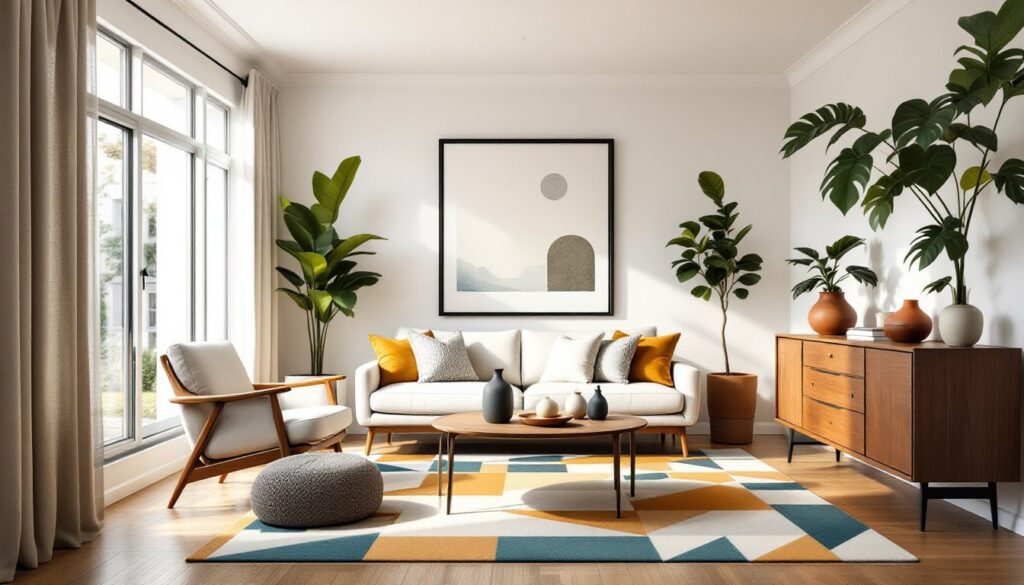
Mid century modern interior design principles translate well here: low furniture, tapered legs, and a deliberate sense of openness underneath pieces. That visual lift makes smaller bedrooms breathe.
Selecting a Statement Bed and Functional Nightstands
The bed frame is the single biggest visual decision. Platform beds with integrated headboards in wool bouclé, channel-tufted linen, or solid white oak dominate current catalogs. Standard mattress dimensions to plan around: queen (60″ × 80″), king (76″ × 80″), California king (72″ × 84″).
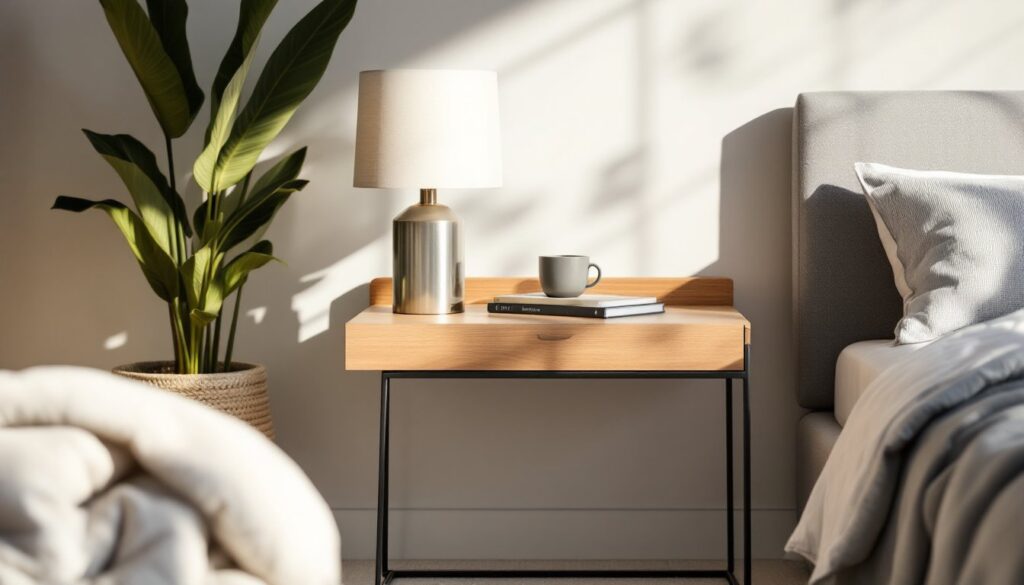
Nightstands should hit within 2–3 inches of the mattress top, too low and reaching for water becomes a nightly stretch. Drawers beat open shelves for anyone who doesn’t want to dust a charging cable weekly. Dwell’s roundup of contemporary bedroom layouts shows asymmetric nightstand pairings working well when storage needs differ between sleepers.
Lighting, Textures, and Materials That Add Warmth
Overhead lights alone make any bedroom feel like a dentist’s office. A proper modern bedroom interior uses three layers: ambient (ceiling or cove), task (reading sconces or nightstand lamps), and accent (a floor lamp or picture light).
Bulb temperature matters more than fixture price. Stick to 2700K–3000K for warm white in bedrooms: anything above 3500K reads clinical. Dimmers on every circuit, no exceptions, wall dimmers run about $15–$25 and install in 20 minutes if the existing box has a neutral wire (required by current NEC for most smart dimmers).
Safety note: Always shut off the breaker and verify with a non-contact voltage tester before swapping any switch. Use safety glasses when working overhead.
For texture, layer three to five materials: a wool rug, linen duvet, leather bench, ceramic lamp base, oak nightstand. Inspiration galleries at home design resources are useful for seeing how those combinations photograph in real rooms versus staged ones.
Smart Storage and Tech Upgrades for a Clutter-Free Retreat
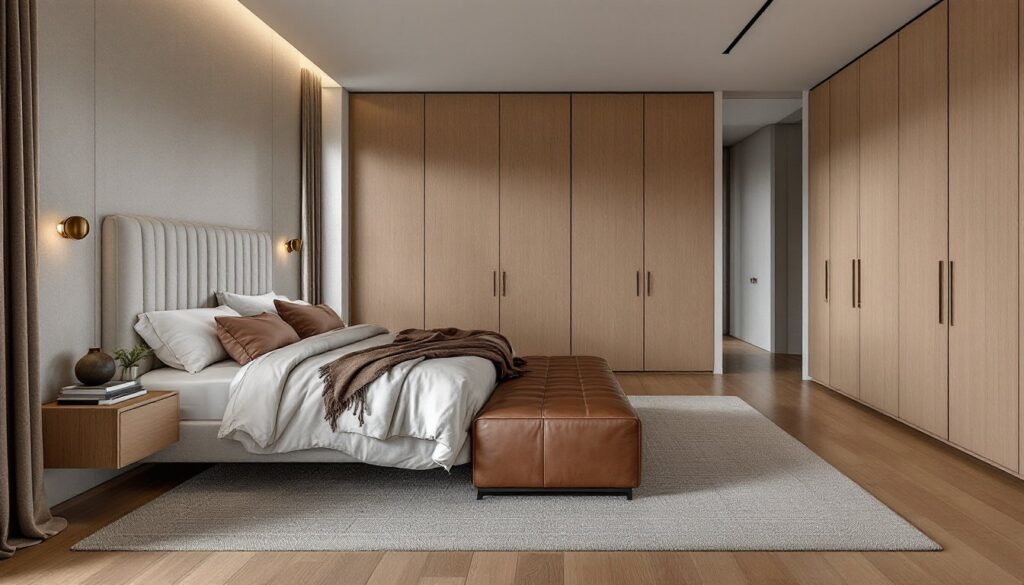
Clutter undoes good design faster than any color mistake. Built-ins, under-bed drawers, and floor-to-ceiling wardrobes give a modern bedroom its disciplined look.
Practical storage moves:
- Under-bed drawers on platform frames (need ~3 inches floor clearance to roll)
- Wall-mounted floating nightstands free up floor space and read cleaner
- IKEA Pax or custom closet systems with 24-inch deep cabinets fit standard hanger widths
- A bench at the foot of the bed handles the inevitable clothing pile
For tech, the rule is hide it or skip it. Recessed outlets behind the headboard, USB-C ports inside nightstand drawers, and blackout roller shades on hidden tracks make the room work without looking like a gadget showroom. Smart bulbs paired with a bedside scene controller beat fumbling for a phone at midnight.
If running new outlets behind a wall, that’s electrical work governed by local code, a licensed electrician is the right call unless the homeowner is comfortable with romex, box fill calculations, and permit pulls.
Conclusion
A well-designed modern bedroom isn’t about chasing trends, it’s about making deliberate choices in palette, layout, lighting, and storage that compound into a room someone actually wants to spend time in. Start with one zone, get it right, then move to the next. The best retreats are built in stages, not weekends.