
A modern bedroom isn’t just a place to sleep, it’s your personal sanctuary, and getting it right takes more than just throwing trendy furniture at the walls. Whether you’re starting from scratch or refreshing an existing space, the core principles of modern bedroom design blend clean lines, functional pieces, and carefully chosen materials to create an environment that feels both sophisticated and livable. This guide walks you through the essential elements of modern bedroom ideas, from selecting the right foundational pieces to arranging furniture that actually serves your daily routine. You’ll learn how to apply modern bedroom furniture ideas and modern bedroom design ideas that work in real homes, not just Instagram feeds.
Table of Contents
ToggleKey Takeaways
- Modern bedroom design prioritizes clean lines, functional pieces, and intentional material choices that create a sophisticated yet livable sanctuary rather than following trends.
- Invest in a quality platform bed with minimal detailing and 400–600 thread count natural fiber bedding to establish a calm foundation that supports both comfort and aesthetic restraint.
- Select modern bedroom furniture with personality, such as mid-century pieces with tapered legs and visible wood grain, and position them to create visual order and functional zones.
- Use solid wood or honest veneer finishes in warm or neutral tones paired with stone, concrete, or metal accents to connect your space to nature without compromising modern aesthetics.
- Embrace minimalist storage through built-in solutions and curated pieces, keeping only items that earn their place and maintaining a three-color palette to achieve calm sophistication.
- Layer touchable natural textures like linen, wool, and organic cotton while avoiding patterns beyond one accent piece to preserve the visual discipline that defines modern bedroom design.
The Foundation: Choosing the Right Bed and Soft Finishes
Comfort Begins With Quality Bedding
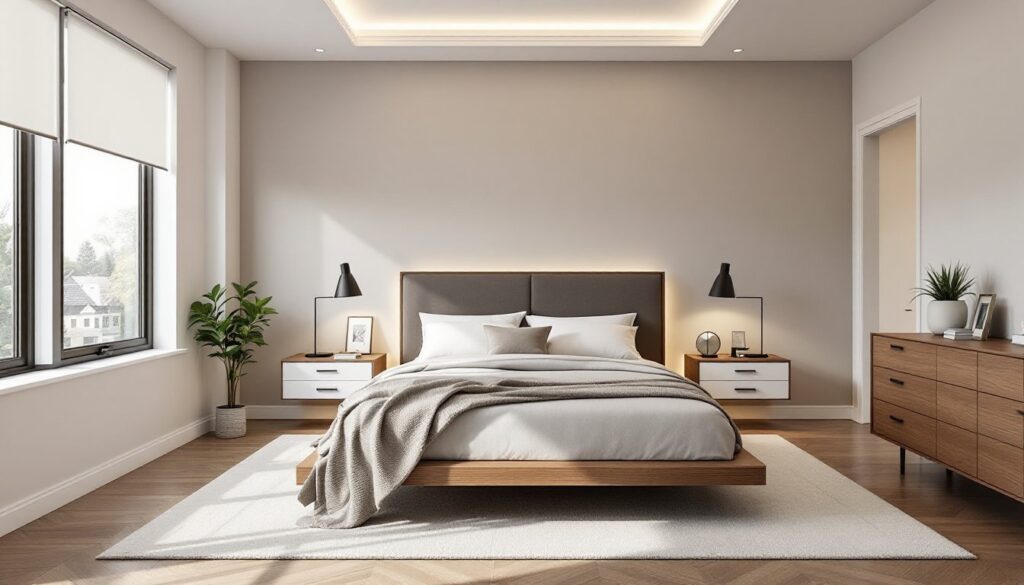
Your bed is the anchor of the room, and in modern design, it should look intentional without screaming for attention. A solid platform bed with clean lines, whether in wood, metal, or upholstered fabric, sets the tone immediately. Avoid ornate headboards or heavy frames: instead, go for designs with minimal detailing that let the proportions speak for themselves.
Quality matters here because you’ll spend a third of your life on this surface. Invest in a cotton or linen duvet cover with a thread count between 400 and 600 (anything higher is often marketing fluff). Natural fibers breathe better and soften with washing, which aligns with the modern emphasis on durability and honest materials. Your mattress should match your sleep style, memory foam, latex, or innerspring all work, but make sure it’s actually rated for your body weight and sleeping position, not just whatever the box says looks sleek.
Layer your bedding deliberately. A fitted sheet, flat sheet, and duvet create visual calm compared to the pile-on approach. Skip the decorative throw pillows if they don’t serve a purpose, modern design values function. If you do add pillows beyond your sleep setup, keep them minimal in color and texture.
Layering Soft Textures and Fabrics
Modern doesn’t mean cold or sparse. It means intentional. Once your bed foundation is solid, add texture through textiles in a restrained palette. A chunky-knit throw blanket in cream or warm gray draped over the foot of the bed adds visual interest and actual utility on chilly nights.
Choose a secondary textile, perhaps a linen pillow cover or a wool area rug, that complements your primary bedding without competing. The goal is a cohesive, calming foundation. If you’re drawn to patterned fabrics, keep them to one accent piece (a rug, a single pillow cover, or a bed runner) rather than layering patterns throughout. This restraint is what separates modern design from eclectic maximalism.
Touchable materials matter psychologically. Linen, wool, organic cotton, and even quality synthetic blends that mimic natural textures all belong in a modern bedroom. Avoid overly processed, plasticky fabrics that feel thin or sound stiff when you move them, they undermine the whole aesthetic.
Furniture and Layout: Modern Pieces That Ground Your Space
Sculptural Furniture and Organic Shapes
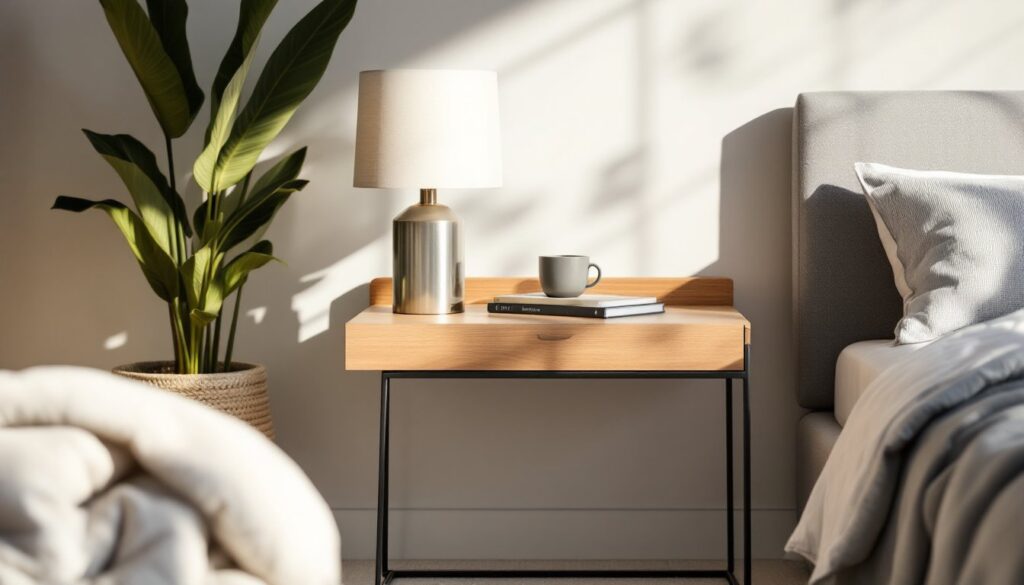
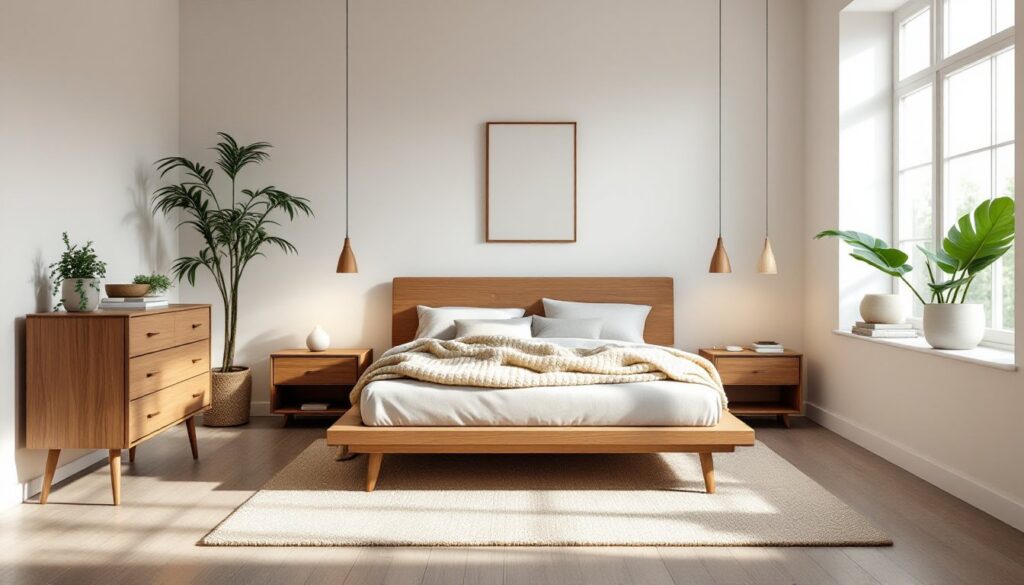
Modern bedroom furniture ideas have shifted away from boxy, flat-pack sameness toward pieces with personality and form. A mid-century modern nightstand, think tapered legs, subtle curves, and honest wood grain, adds sophistication without fussiness. These pieces become focal points because they’re designed, not just functional.
When selecting modern bedroom furniture, look for items that balance visual weight. A low-profile dresser with clean lines grounds the room better than a tall, narrow cabinet that visually fragments the space. Furniture that sits slightly off the floor (legs visible, not skirted) feels lighter and more current. Floating shelves instead of a traditional nightstand work if you have the wall space and don’t need drawer storage.
Layout is where many modern bedroom designs falter. Resist the urge to float the bed in the center unless your room is truly square and spacious. In most cases, a bed against the primary wall, with nightstands flanking it, creates visual order. Leave at least 2 feet of walking space on both sides if possible, this isn’t a storage unit, it’s a room for living. Position your dresser or accent seating to create a secondary zone: in larger bedrooms, a low bench at the foot of the bed or a single chair in a corner gives the space functional depth.
Using Timber and Natural Materials
Wood is the modern bedroom’s best friend because it ages beautifully and connects the space to nature without being rustic or decorative. Contemporary furniture increasingly emphasizes natural materials as a counterbalance to screen time and urban living. Choose solid wood pieces in warm or neutral tones, walnut, oak, ash, or white pine all read modern when finished simply (matte or satin, not high-gloss).
Mix wood tones if they’re in the same warm or cool family. A walnut nightstand and white oak dresser work together: a dark walnut piece next to light ash can feel disjointed. Stone, concrete, and metal accents pair naturally with timber. A concrete or stone nightstand top, metal bed frame legs, or a steel pendant light all complement wood without competing.
When sourcing materials, understand the difference between solid wood and veneer. Veneer over plywood is fine for modern design, it’s honest construction, but cheap veneer over MDF (medium-density fiberboard) lacks durability. Inspect how wood is finished: modern typically avoids heavy stains and protective coatings in favor of natural finishes or light tints that show the wood’s character. This approach also means the piece will patina and improve over time, a fundamental principle of sustainable modern design.
Smart Storage and Minimalist Design
Modern bedroom design thrives on the principle that everything you own should earn its place. Before buying storage furniture, audit what actually lives in your bedroom. Clothes, sure. Books? Only if you’re reading them. Décor? Only if it breathes, not stacks.
Built-in storage is the modern bedroom’s secret weapon. A floor-to-ceiling wardrobe in one corner, a storage headboard with shelves and cubbies, or under-bed drawers keep items hidden without eating floor space. If built-ins aren’t feasible, a single tall cabinet in a matching wood tone anchors the room more elegantly than three separate pieces scattered around.
Closet design deserves attention because most modern bedrooms suffer from visible clutter bleeding into the main space. Invest in matching hangers, storage boxes, and shelf dividers inside your closet. This isn’t aesthetic theater, it’s functional. When you can find things easily, you keep the bedroom itself cleaner. Consider a narrow dresser with deep drawers for folded items rather than a wall of shallow shelves that require styling.
Minimalist design doesn’t mean empty or sterile. It means intentional. A single large piece of art above the bed, a carefully chosen plant in a neutral pot on a shelf, or a small stack of books on a nightstand all belong in a modern bedroom. The difference is they’re chosen, not accumulated. Modern bedroom inspiration from leading design sources consistently shows that restraint, not austerity, defines the aesthetic.
Lighting is functional storage’s invisible partner. Bedside task lighting with a dimmer switch lets you control ambiance without additional décor. Wall-mounted reading lights save nightstand space. A pendant or flush-mount in the center of the ceiling should be simple, not ornate, form follows function.
Color is the final minimalist tool. Stick to a three-color palette: one dominant neutral (white, gray, beige, or warm black), one secondary tone (a warmer or cooler neutral), and one accent color if desired. This doesn’t mean everything matches, textures and materials provide visual depth, but the color discipline keeps the space calm. Explore curated modern home decor ideas that demonstrate how restraint in color creates sophistication. Paint walls in a soft, matte finish: high-gloss reflects light and feels less refined. If you want an accent wall, use a tone only slightly deeper than your primary color, not a bold contrast that visually shrinks the space.