
Mid-century modern decor has stayed relevant for decades, and for good reason. This design movement from the 1940s through 1960s emphasized clean lines, functional beauty, and honest materials. Whether you’re drawn to the minimalist geometry or the warm wood tones, mid-century modern interior design works across homes of any era. The appeal isn’t just nostalgic: it’s practical. The pieces and principles translate to any space, scale, or budget. This guide walks you through the essentials of mid-century style bed selections, color choices, and how to weave authentic elements into what you already own without a complete overhaul.
Table of Contents
ToggleKey Takeaways
- Mid-century modern decor prioritizes clean lines, functional beauty, and honest materials that have remained timeless and work across homes of any era.
- Authentic mid-century modern interior design rests on three pillars: form follows function, minimalism with warmth, and celebration of visible materials like natural wood and exposed metal hardware.
- Essential furniture pieces including low-profile sofas, tapered-leg chairs, platform beds, and credenzas define mid-century spaces while keeping surfaces clear and uncluttered.
- A warm and earthy color palette of whites, creams, warm grays, and muted accents like burnt orange or sage green, combined with geometric patterns, captures the authentic era.
- Sculptural lighting fixtures such as sputnik chandeliers and arc floor lamps are key design elements that solve functional problems while serving as statement pieces.
- You can build a mid-century modern style bed aesthetic affordably by starting with one statement piece, sourcing authentic items from second-hand markets, and refinishing thrifted pieces rather than buying new.
Understanding Mid-Century Modern Design Principles
Mid-century modern interior design rests on three core pillars: form follows function, minimalism with warmth, and celebration of materials. Unlike maximalist styles that layer ornamentation, mid-century thinking strips away the unnecessary. A chair should be beautiful because of its structure, not even though the complexity hiding it.
The movement emerged after World War II when designers embraced mass production and new manufacturing techniques. This meant iconic pieces could be made affordably, a philosophy that still applies today. The best mid-century modern spaces avoid pretension: they feel lived-in and honest.
Key principles include geometric shapes (tapered legs, angular frames), integration of natural materials visible without heavy finishing, and proportions that feel balanced without feeling cramped. Furniture sits low and often floats in the room rather than pushing against walls. Negative space matters as much as the objects themselves. Clutter breaks the aesthetic instantly.
Essential Furniture Pieces For Authentic Mid-Century Modern Spaces
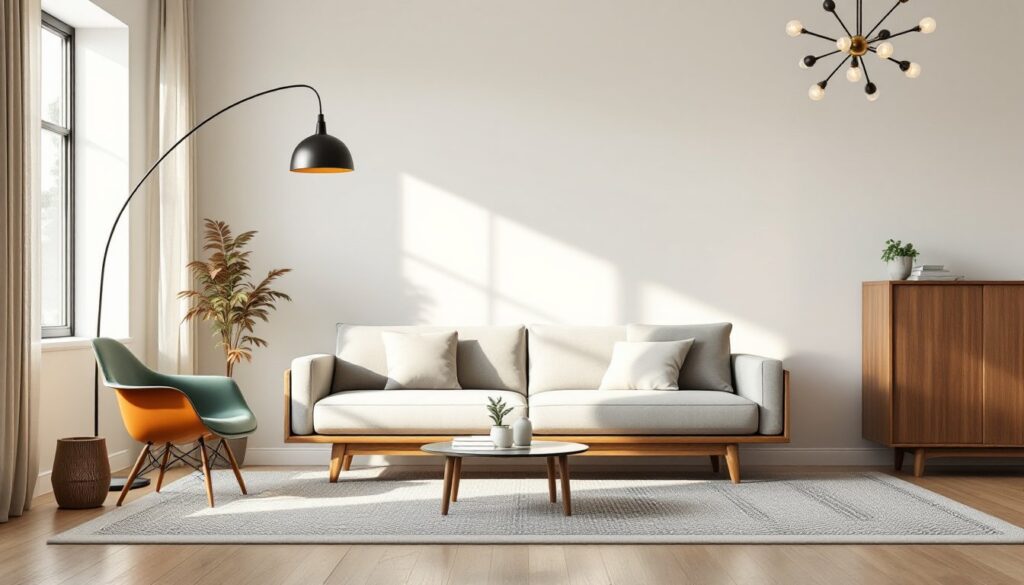
Start with anchor pieces that define the room. A solid sofa with wooden legs, tapered arms, and upholstery in a neutral fabric sets the tone immediately. Avoid oversized sectionals: mid-century scale is more intimate. Look for exposed wood frames where seams show clean joinery, not hidden beneath padding.
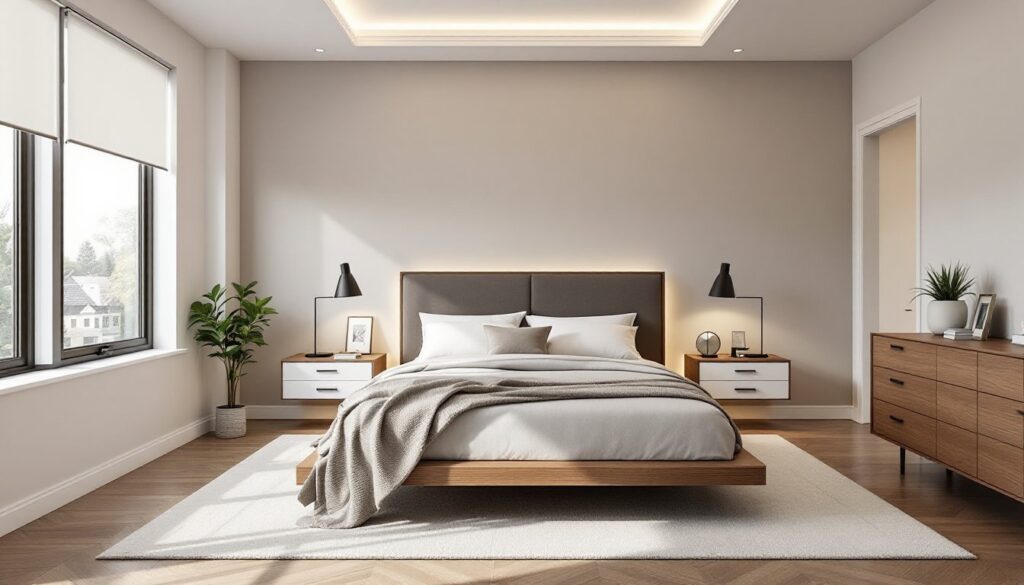
For seating, molded plastic chairs (Eames-style or similar) work alongside wooden dining chairs with spindle or slab backs. A mid-century style bed typically features a low platform frame in walnut or teak with minimal ornamentation, sometimes just a headboard slab. Avoid heavy footboards.
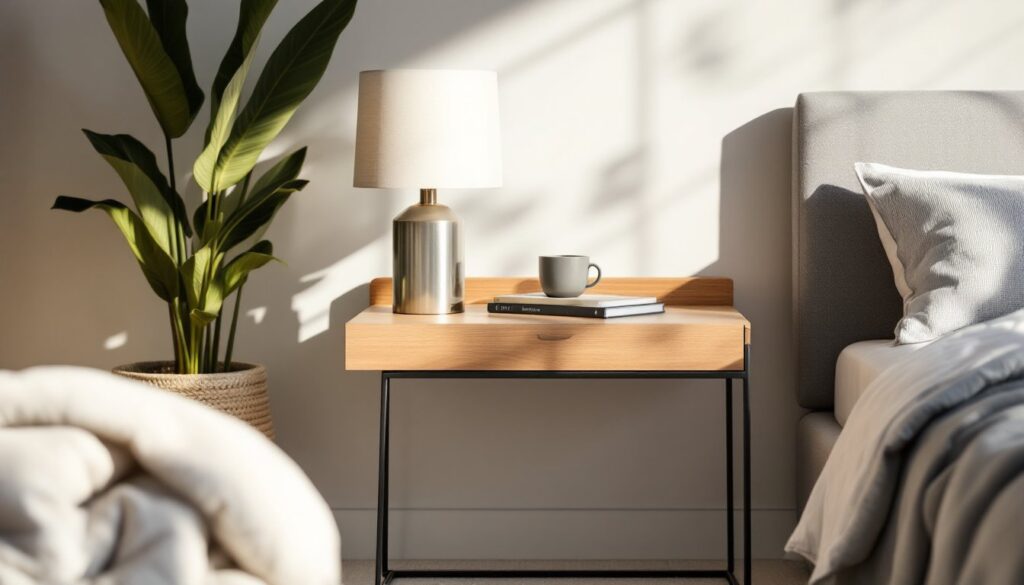
Storage should be functional and beautiful: credenzas with sliding doors, credenzas with open shelving, or bookcases with tapered legs. These pieces anchor a room while keeping surfaces clear. Side tables in wood or metal with clean lines replace ornate end tables. Coffee tables are often sculptural, a single wood slab on angled legs or a glass top on wood supports.
Essential doesn’t mean you need a showroom full of pieces. One or two statement furniture items set the direction: the rest can be everyday pieces styled thoughtfully.
Iconic Materials and Finishes That Define the Aesthetic
Mid-century modern interior design prioritizes visible, honest materials. Wood, walnut, teak, oak, and mahogany, appears in its natural grain without heavy staining or paint. Finishes are typically matte or satin, never high-gloss or lacquered. If you’re refinishing a vintage piece, sand back to bare wood and apply a simple penetrating oil: avoid polyurethane over-coating that hides the material.
Metal appears as hairpin legs (steel, usually black or brass-tone), frame supports, or hardware. These aren’t decorative add-ons: they’re structural and visible. Upholstery fabrics include linen, wool, cotton canvas, and mohair in solids or geometric prints. Avoid velvet or heavily textured fabrics.
Glass tops on tables, tile or stone for surfaces, and concrete accents (in modern interpretations) also fit. The rule: materials should look like what they are. A wood leg is wood, not painted to hide its nature. Joints and seams shouldn’t be concealed, they’re part of the design language. This honesty is what makes vintage mid-century pieces so durable: they weren’t engineered to deceive.
Color Palettes and Patterns That Capture the Era
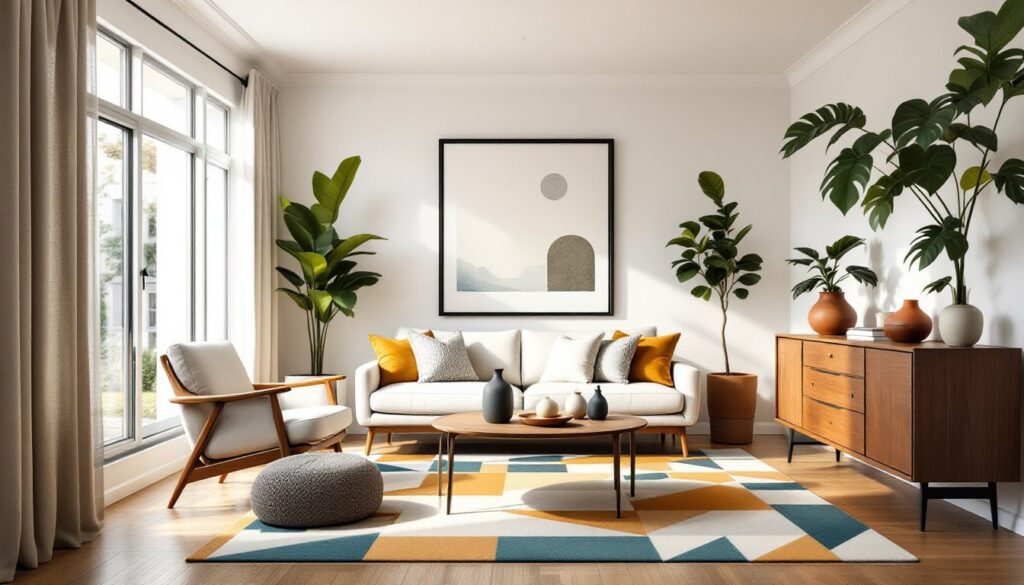
The classic mid-century palette leans warm and earthy: whites, creams, warm grays, warm blacks, and natural wood tones. Accent colors often appear in muted tones: burnt orange, sage green, mustard yellow, teal, or dusty blue. Avoid bright or neon variations: the era favored sophistication over loudness.
For walls, keep backdrops neutral, white, cream, or warm gray, to let furniture shine. Wallpaper is acceptable when it features geometric patterns: chevrons, starburst, atomic sunbursts, or abstract linear designs. Mid-century modern interior decor sources like Eastern European vintage markets often feature bold geometric prints that work as accent walls.
Pattern appears in textiles: throw pillows, area rugs, and curtains. Geometric shapes, boomerangs, triangles, starburst, are more authentic than florals. Keep patterns limited: one statement pattern per room prevents visual chaos. A geometric rug anchors a seating area: keep everything else solid unless the room is genuinely large.
Lighting Design: A Key Element of Mid-Century Modern Interiors
Lighting in mid-century modern interior design isn’t an afterthought, it’s sculptural. A sputnik chandelier with multiple globe arms, an arc floor lamp with a weighted base that sweeps over a seating area, or a simple pendant with a ceramic or fabric shade define the era. Fixtures often feature exposed bulbs (now LED equivalents) or open structures that don’t hide the light source.
Tall arc lamps that reach over sofas became iconic because they solved a functional problem beautifully. Wall sconces should be minimal: a simple cone shade on a thin brass or black metal arm. Avoid chunky or ornate fixtures.
Lighting layers matter: ambient overhead (a statement chandelier or flush mount), task lighting (desk lamp, reading light), and accent lighting (wall sconces). Dimmers aren’t period-accurate but are practical: mid-century spaces benefit from adjustable light levels.
When shopping for vintage or reproduction fixtures, check that wiring is up to code and that shades aren’t hiding poor proportions. Design Milk and similar modern design platforms showcase contemporary mid-century inspired lighting that meets current electrical standards.
Budget-Friendly Ways to Mix Mid-Century Modern Into Your Current Decor
You don’t need to start from scratch. Begin with one statement piece, a mid-century style bed, a credenza, or a sculptural chair. Live with it for a month. Notice what feels out of place: those clashing pieces can go or be reworked.
Second-hand is your best resource. Estate sales, local Facebook Marketplace, Craigslist, and vintage shops often have authentic pieces at a fraction of retail. Learn to spot quality: solid wood construction, real hardware, and visible joinery matter more than labels. Inspect for structural integrity (wobbling legs, drawer sticking) and upholstery condition before committing.
For budget projects, refinish a thrifted wooden chair or side table. Strip paint, sand back to bare wood, and apply penetrating oil (linseed or teak oil work well). A $20 chair becomes a statement piece for $5 in materials and a few hours of work.
Swap out hardware on existing case goods. New drawer pulls and cabinet knobs in brass or black metal instantly read more mid-century. Reupholster a worn chair seat with geometric fabric from a discount fabric store, keeps the frame, updates the look. Mid-century modern style guides outline layering strategies that work with existing pieces, not just starting fresh.
Conclusion
Mid-century modern decor works because it prioritizes honest materials, clean proportions, and purposeful design over decoration for decoration’s sake. Whether you’re integrating a single mid-century style bed, a credenza, or gradually shifting your entire aesthetic, start with understanding the principles. Quality matters more than quantity. One well-chosen piece outweighs a room full of trendy reproductions. The beauty of mid-century design is its durability, it doesn’t age out because it was never chasing trends. Pick authentic elements that fit your space and budget, and build from there.