
A modern style bed frame is the anchor of any contemporary bedroom, it’s where clean lines, intentional materials, and functional design meet. Whether you’re renovating a master suite or upgrading a guest room, the right frame sets the tone for the entire space. Modern bed frames prioritize simplicity and sophistication over ornate details, relying on geometric forms, minimal hardware, and quality materials to create visual impact. This guide walks you through what defines modern design, which frame styles suit your needs, how to install one properly, and how to style the space around it for maximum impact.
Table of Contents
ToggleKey Takeaways
- A modern style bed frame prioritizes clean lines, minimal hardware, and low-profile designs (12–18 inches high) that make rooms feel more spacious while emphasizing quality materials over ornate details.
- Popular modern bed frame options include platform beds, upholstered beds, floating frames, metal frames, and wooden slab headboards, each offering distinct visual and functional advantages for different bedroom styles.
- Proper installation requires assembling frame rails with bolted connections, leveling the frame, securing the platform, and wall-mounting the headboard into wall studs, taking approximately 2–3 hours with two people.
- Modern style bed frame styling should incorporate neutral bedding, coordinated nightstands, geometric lighting fixtures, and an area rug to create a cohesive, intentional bedroom aesthetic without visual clutter.
- Budget ranges for modern bed frames vary from $400–$1,200 for metal frames to $1,000–$3,500 for floating frames, with solid wood options typically costing $600–$2,000 depending on materials and labor.
What Defines a Modern Style Bed Frame
Key Design Elements and Materials
A modern style bed frame strips away unnecessary ornamentation in favor of straight edges, low profiles, and purposeful joinery. The frame typically sits low to the floor, often just 12 to 18 inches high from the floor to the top rail, creating a horizontal emphasis that makes rooms feel more spacious. Materials matter: steel, solid wood (walnut, oak, or maple), upholstered panels, and powder-coated metal are common choices. Hardware is minimal or completely hidden, with joinery relying on dado joints or mortise-and-tenon connections rather than visible corner blocks.
The headboard, if present, is equally restrained. It might be a simple wooden slab, an upholstered panel in linen or leather, or even missing entirely in favor of a floating design. The bed platform, the surface supporting the mattress, is usually solid wood slats or a plywood panel rather than a box spring, reducing bulk. Modern contemporary nightstand pieces that accompany the bed echo these same principles: straight legs, recessed handles or push-catch doors, and neutral finishes.
Key materials in modern frames include:
- Solid wood: Walnut and oak age gracefully and suit minimalist designs
- Upholstered headboards: Usually linen, polyester blend, or faux leather in neutral tones
- Metal frames: Steel or aluminum for industrial-modern hybrids
- Plywood platform: Stronger than slats alone and reduces sagging over time
The finish is equally important. Modern style bed sets favor matte or satin finishes over high-gloss: stained wood over painted: and neutral palettes (whites, grays, taupes, blacks, natural wood tones) over bold colors. This restraint isn’t boring, it’s intentional, letting the architecture of the frame and the quality of materials speak for themselves.
Popular Modern Bed Frame Styles
Modern style bed sets come in several popular configurations, each with distinct visual and functional characteristics.
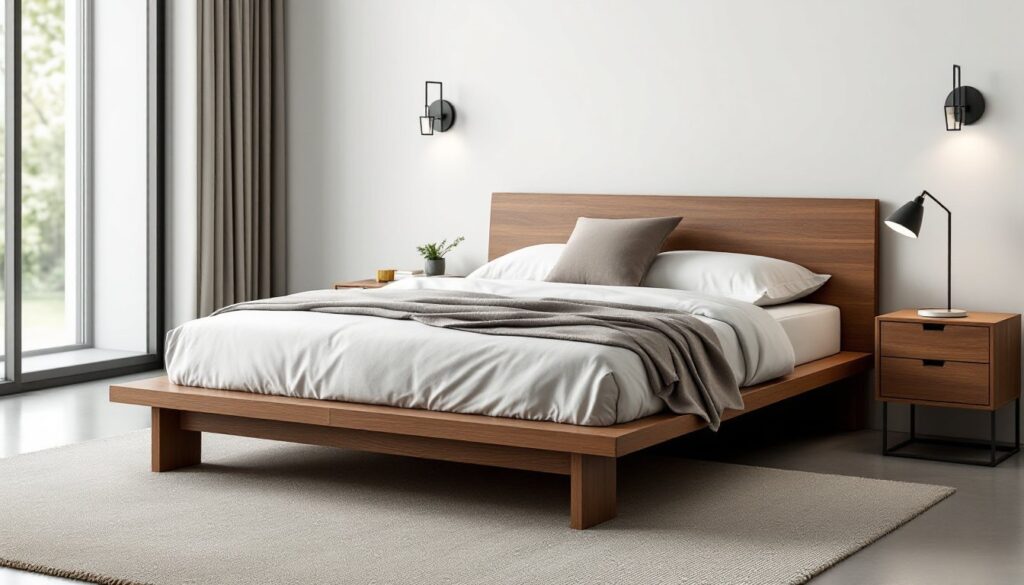
Platform Beds are the most common modern choice. The frame includes a built-in platform (slats or solid panel) that eliminates the need for a box spring. This reduces height, simplifies the assembly, and creates a seamless, low-profile look. A platform bed is ideal if you want maximum floor visibility and a minimal footprint.
Upholstered Beds feature padded headboards and sometimes side rails wrapped in fabric. These soften the hard geometry of the frame and add warmth to a minimalist room. Upholstered beds work well in bedrooms where comfort and softness are priorities, though they require occasional fabric cleaning.
Floating Bed Frames attach to the wall using a heavy-duty bracket system, eliminating visible legs entirely. This creates dramatic visual lightness and makes cleaning the floor underneath effortless. Installation requires locating wall studs (typically 16 inches on center) and using appropriate anchors: floating designs are best suited to master bedrooms where the bed won’t be moved frequently.
Metal Frame Beds combine steel or aluminum rails with a wood or metal platform. These suit industrial-modern aesthetics and are often lighter than solid wood, making them easier to move. Metal frames age well visually and can handle heavier mattresses without flexing.
Wooden Slab Headboards mount directly to the wall behind a low platform frame, creating a sculptural focal point with minimal visual weight. This style pairs beautifully with modern storage solutions like contemporary furniture from leading design retailers, allowing the headboard itself to be the design statement.
Choosing the Right Modern Frame for Your Space
Selecting a modern style bed frame depends on your room’s dimensions, your mattress type, and your aesthetic priorities.
Measure first. Standard mattress sizes in the U.S. are Twin (38″ × 75″), Full (54″ × 75″), Queen (60″ × 80″), and King (76″ × 80″). The frame should be approximately 4 to 8 inches wider than the mattress on each side for visual balance. If your room is tight, a Queen platform bed may be the largest realistic option: in a spacious master suite, a King with a low-profile frame won’t overwhelm the space.
Consider ceiling height. A low-profile modern frame (12–18″ high) works in rooms with 8-foot ceilings and under. If your ceiling is higher, you have more flexibility, but avoid pairing a floating frame with a very high ceiling, the proportion will feel off.
Headboard preference matters. Do you want to sit up in bed and read, or is the frame purely visual? Upholstered or wooden headboards provide back support and a finished look. A frame without a headboard feels cleaner but requires wall styling (art, shelving) to balance the room.
Material and finish should align with your existing décor. If you have warm wood tones elsewhere, a walnut or cherry frame complements them. If your palette is cool (grays, whites, blacks), a white lacquered or matte black frame is more cohesive. Modern style bedroom sets often come as coordinated systems, frame, nightstands, and storage, so choosing a matching set ensures visual harmony, though mixing pieces from different makers is also valid in modern design.
Budget considerations: A solid wood modern bed frame typically runs $600–$2,000: upholstered platforms $700–$2,500: and floating frames (due to installation labor) $1,000–$3,500. Metal frames are usually less expensive ($400–$1,200). These are regional estimates: materials and labor costs fluctuate.
DIY Installation and Assembly Tips
Most modern style bed sets ship partially assembled, requiring you to attach legs, assemble the rails, position the platform, and secure the headboard (if applicable). Before starting, lay out all components in a clear space and read the manufacturer’s instructions thoroughly.
Tools you’ll need:
- Cordless drill or driver
- Adjustable wrench or socket set
- Mallet (for driving dowels or tapping parts together)
- Level
- Tape measure
- Safety glasses and gloves
Assembly steps:
-
Assemble the frame rails. Most modern frames use bolted corner connections. Align the head and foot rails to the side rails, then insert bolts through pre-drilled holes. Tighten snugly, don’t over-torque, which can strip threads. Check that corners are square using a carpenter’s square.
-
Attach legs or feet. Position legs at the corners and use provided bolts or dowels. Ensure the frame sits level on your floor. A mattress and your body weight will stress any high points.
-
Install the platform (if applicable). Lay slats or plywood on the cross-members. Secure slats with clips or small L-brackets if the frame is high: for platform beds, use adhesive and screws to lock the plywood in place, preventing flex and creaking.
-
Mount the headboard. For wall-mounted headboards, locate studs with a stud finder and drive 3.5-inch lag bolts or heavy-duty anchors into the wall. Ensure the headboard is level before tightening. For floating beds, this bracket installation is critical, use at least two studs per side.
-
Final checks. Tighten all bolts and fasteners a second time after 24 hours. Place the mattress and check for wobbling or sagging. Minor squeaks often disappear after a few days of settling.
Common issues:
- Squeaking: Usually from loose bolts or the platform rubbing against the frame. Tighten fasteners and add felt pads between wood and metal contact points.
- Sagging: A sign that your platform needs reinforcement (additional cross-braces) or that the mattress is inadequate for the frame. Platforms should have support points no more than 3 inches apart.
- Misaligned corners: Use shims (thin wood wedges) under legs to level the frame before fully tightening bolts.
Most installations take 2–3 hours with two people. If your room’s layout is complex or you’re installing a floating frame, a second pair of hands is invaluable.
Styling Your Modern Bed Frame for Maximum Impact
A modern style bed frame is the visual anchor, but what you place around it determines whether the bedroom feels complete or sparse.
Bedding choices: Select sheets in solid colors or subtle textures, white linen, gray cotton, or natural linen are quintessential modern. Avoid bold patterns or multiple clashing colors. A single throw pillow or a crisp duvet in a complementary neutral adds softness without clutter. The modern aesthetic favors fewer, higher-quality pieces over a mountain of decorative pillows.
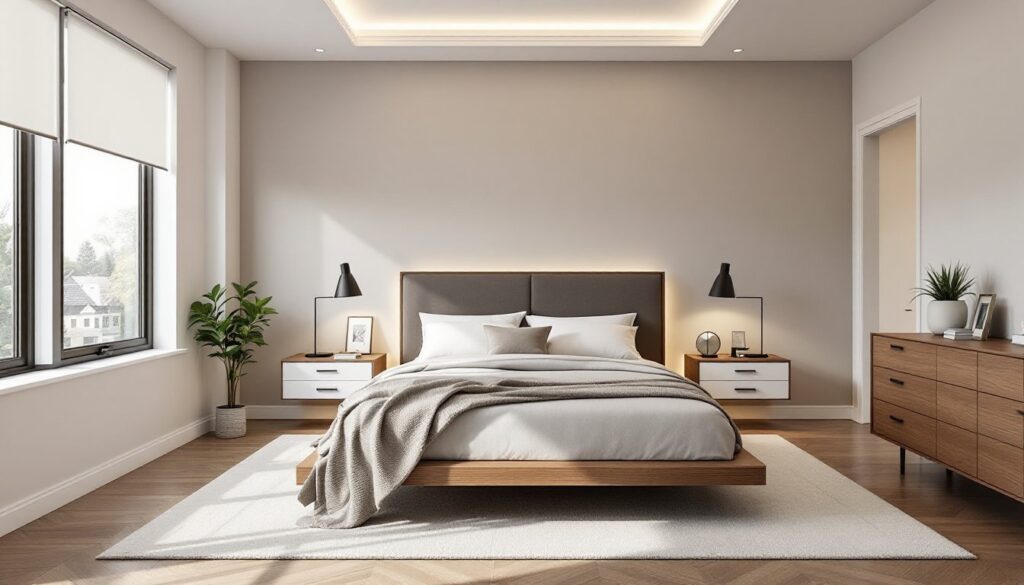
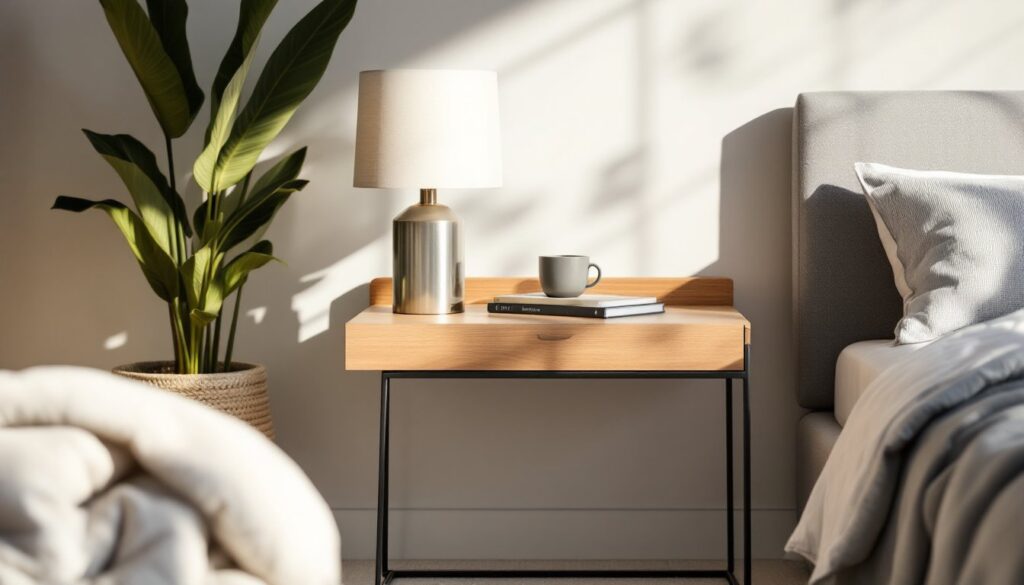
Nightstands: Modern contemporary nightstand designs with clean lines, minimal hardware, and simple geometry are essential pairings. Look for floating shelves, single-drawer tables, or open wood frames that echo your bed’s materials and finish. Coordinate materials, if your bed is walnut, match that wood tone in the nightstands.
Lighting: Install wall sconces flanking the headboard or use slim table lamps on nightstands. Modern fixtures are geometric, often minimalist in silhouette (angular metal shapes, fabric shades in neutral tones).
Wall treatment: A feature wall behind the headboard, painted in a warm white, soft gray, or even a muted accent color, amplifies the bed’s importance. Alternatively, install wood slat walls or textured finishes from modern design collections that add subtle visual interest without breaking the minimalist rule.
Area rug: A large area rug (8′ × 10′ or larger) grounding the bed creates spatial definition. Choose neutral tones, natural fibers (jute, wool), or subtle geometric patterns that align with modern style bedroom sets and don’t compete for attention.
Storage integration: Built-in shelving, under-bed drawers, or a low dresser opposite the bed provides functional display and storage without visual fuss. Modern rooms benefit from concealed storage, prefer closed cabinets and drawers over open shelving to maintain clean sightlines.
Accessory restraint: Limit decorative objects on nightstands to one lamp, a small vessel, or a book. The principle is that every object should earn its place. This restraint is what makes modern design feel intentional and restful rather than minimal and cold.
Conclusion
A modern style bed frame is an investment in both functionality and aesthetic longevity. By understanding the design principles, simplicity, quality materials, geometric clarity, you can select a frame that works for your space, install it correctly, and style it thoughtfully. Whether you choose a low-profile platform, a floating frame, or an upholstered bed, the key is committing to the restraint that modern design demands. Start with the bed frame as your anchor, coordinate modern style bedroom sets or individual pieces that share its philosophy, and let the space breathe. The result is a bedroom that feels both calm and intentional, a restful retreat built on solid design principles.