
Transitional kitchen design has become one of the most sought-after styles in home renovation, and for good reason. It delivers the warmth of traditional design without the fussiness, and the clean lines of modern aesthetics without the cold minimalism. For homeowners planning a remodel or refresh, transitional style offers flexibility, timeless appeal, and a design language that adapts to both formal and casual living. This approach works particularly well in kitchens, where function and form need to coexist every single day.
Table of Contents
ToggleKey Takeaways
- Transitional kitchen interior design balances traditional warmth with modern simplicity, using clean cabinetry profiles, neutral color palettes, and streamlined fixtures that age well without feeling trendy or dated.
- Neutral color schemes featuring whites, grays, and soft earth tones form the foundation of transitional kitchens, with accent colors kept minimal and wood tones restrained to maintain visual cohesion.
- Cabinetry serves as the anchor in transitional design—choose Shaker-style or flat-panel doors with simple hardware finishes like brushed nickel or matte black, and consider two-tone options for added visual interest.
- Layered lighting including recessed ceiling lights (2700K–3000K warm white), pendant lights positioned 30–36 inches above countertops, and under-cabinet LED strips creates functional ambiance without style-specific statement pieces.
- Cost-effective renovation strategies include repainting existing cabinets with quality paint, upgrading countertops and backsplash with quartz or subway tile, and swapping lighting fixtures and hardware for immediate impact.
- Proper surface preparation—cleaning, sanding, priming, and allowing materials to acclimate—is essential for professional results and prevents common DIY failures in transitional kitchen projects.
What Is Transitional Interior Design for Kitchens?
Transitional design sits at the intersection of traditional and contemporary styles. It borrows the best from both: the balanced proportions and craftsmanship of classic design, paired with the simplicity and streamlined forms of modern interiors.
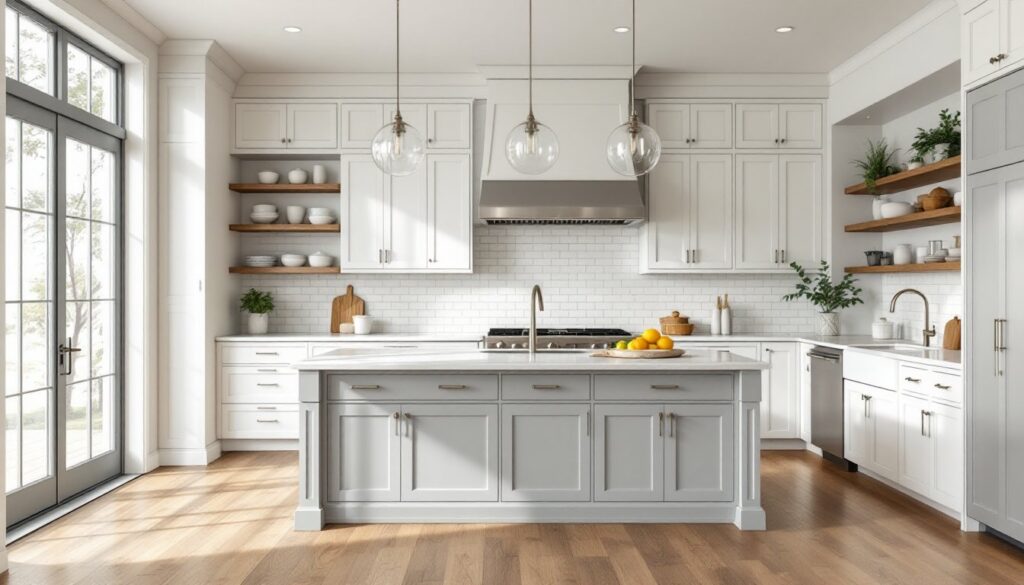
In a transitional kitchen, you won’t see ornate crown molding or heavily carved corbels. But you also won’t find stark white boxes with zero visual warmth. Instead, cabinetry profiles are clean but have subtle detailing, think Shaker-style doors or flat-panel designs with a reveal. Countertops might be neutral stone or quartz, and fixtures lean toward brushed or satin finishes rather than high-polish chrome or oil-rubbed bronze.
The goal is a calm, cohesive space that doesn’t scream a specific decade or trend. Transitional kitchens age well because they avoid both overly trendy elements and dated traditional motifs. They’re designed to feel current without being fashion-forward, and classic without feeling frozen in time.
Key Elements of Transitional Kitchen Design
Color Palettes That Define Transitional Kitchens
Transitional kitchens rely on neutral, grounded color schemes. The palette typically centers on whites, grays, beiges, taupes, and soft earth tones. These hues create a backdrop that’s both calming and versatile.
White cabinetry remains a staple, but not stark or sterile white. Look for warmer whites with cream or gray undertones, think Sherwin-Williams Alabaster or Benjamin Moore White Dove. Gray cabinetry is equally popular, especially in mid-tones like greige (gray-beige blends).
Accent colors are used sparingly. A transitional kitchen might feature a muted blue or sage green on an island, or a soft charcoal backsplash. Bold colors are typically avoided, but subtle contrast, like pairing light cabinetry with a darker countertop or vice versa, adds depth without disruption.
Wood tones are present but restrained. Medium to dark stained wood can appear in flooring, open shelving, or an island base, adding warmth without overpowering the space. Many homeowners explore kitchen design ideas that balance these tones with painted finishes.
Materials and Finishes for a Balanced Look
Material selection is where transitional design shows its range. The style mixes natural and man-made materials, traditional and modern textures, without creating visual chaos.
Countertops often feature quartz or natural stone like marble, granite, or quartzite. Quartz is practical for its durability and low maintenance, while natural stone adds organic variation. Edges are typically eased or beveled, nothing too ornate like an ogee profile, but not completely square either.
Backsplashes lean toward simple, high-quality materials: subway tile in a classic 3×6-inch format, large-format porcelain slabs, or natural stone in a stacked or straight-lay pattern. Grout lines are kept narrow and neutral. Avoid busy patterns or high-contrast designs.
Hardware finishes favor brushed nickel, satin brass, matte black, or brushed stainless steel. These finishes don’t compete for attention but provide subtle punctuation. Cabinet hardware is streamlined, bar pulls, cup pulls, or simple knobs without excessive detailing.
Flooring choices include wide-plank hardwood (often in medium tones), luxury vinyl plank (LVP) that mimics wood, or large-format porcelain tile in neutral tones. The key is a material that feels substantial but not overly rustic or ultra-modern.
Choosing Cabinetry and Hardware for Transitional Style
Cabinetry is the dominant visual element in any kitchen, and in transitional design, it does the heavy lifting of balancing old and new.
Shaker-style cabinets are the go-to choice. The five-piece door with a recessed center panel offers just enough detail to avoid looking flat, but stays clean and unfussy. Flat-panel (slab) doors also work, especially when paired with traditional elements elsewhere in the kitchen.
Avoid raised-panel doors with heavy molding, cathedral arches, or ornate corbels, they skew too traditional. Similarly, skip ultra-modern handleless cabinetry or high-gloss lacquer finishes unless you’re deliberately leaning contemporary.
Most transitional kitchens use painted cabinetry in whites, grays, or greiges. Some homeowners opt for two-tone cabinetry: perimeter cabinets in a light color with a contrasting island in a darker shade or natural wood. This adds visual interest without breaking the cohesive feel.
Hardware should be simple and consistent. Bar pulls in the 3- to 5-inch range work well on drawers and doors. For upper cabinets, small knobs (1 to 1.25 inches in diameter) or matching pulls keep things uniform. Metal finishes should coordinate with faucets and lighting, pick one or two finishes max and stick with them.
If you’re installing cabinetry yourself, remember that nominal dimensions for filler strips and trim pieces matter. A standard cabinet base is 34.5 inches tall (before countertop), 24 inches deep. Wall cabinets are typically 12 inches deep. Always account for these when planning layout and appliance fit.
Lighting Solutions That Enhance Transitional Kitchens
Lighting in a transitional kitchen should be layered, functional, and visually cohesive. You need task lighting where you work, ambient lighting for overall illumination, and accent lighting to highlight features.
Recessed lighting is standard. Use 4- or 6-inch LED recessed cans spaced evenly across the ceiling. Aim for a color temperature between 2700K and 3000K (warm white) to keep the space inviting. Avoid cool white or daylight bulbs, they can make neutral palettes look washed out.
Pendant lights over an island or peninsula are a signature element. Choose pendants with clean lines and simple shapes: clear or seeded glass globes, drum shades in linen or metal, or modern dome pendants in matte black or brushed metal. Avoid overly ornate chandeliers or industrial-style fixtures with exposed Edison bulbs and cages, they’re too style-specific.
Hang pendants 30 to 36 inches above the countertop for proper clearance. If you’re installing them yourself, make sure the electrical box is rated to support the fixture weight, and use a stud finder to locate ceiling joists if you need additional support.
Under-cabinet lighting is essential for task work. LED tape lights or puck lights provide even illumination on countertops. Hardwire them during a remodel for a cleaner look, or use plug-in strips if you’re retrofitting. Dimmable under-cabinet lights give you control over ambiance.
Some homeowners incorporate interior design inspiration when selecting fixtures that balance style with function.
How to Incorporate Transitional Design in Your Kitchen Renovation
If you’re planning a renovation or refresh, transitional style offers a clear framework without being overly prescriptive. Here’s how to approach it practically.
Start with cabinetry. This is your biggest investment and the anchor of the design. If you’re working with existing cabinets, repainting them in a neutral color and swapping hardware can shift the style dramatically without a full replacement. Use a high-quality cabinet paint (like Benjamin Moore Advance or Sherwin-Williams ProClassic) and a mini roller for a smooth, factory-like finish. Lightly sand between coats with 220-grit sandpaper.
Upgrade countertops and backsplash. Laminate or old tile can be replaced with quartz or stone. If budget is tight, focus on the countertop first, it has more visual impact. For a backsplash, 3×6-inch white subway tile is affordable, timeless, and DIY-friendly. Use a 1/16-inch grout line and a neutral grout color (white or light gray).
Replace or refinish flooring. If your current flooring is dated or damaged, consider LVP in a wood-look finish. It’s durable, water-resistant, and easier to install than hardwood. Many LVP products use a floating click-lock system that doesn’t require glue or nails, ideal for a DIY project. Make sure to acclimate the planks in the room for 48 hours before installation.
Swap out lighting and hardware. These are high-impact, lower-cost changes. Replacing builder-grade fixtures with transitional-style pendants and coordinating hardware across cabinets and doors makes a noticeable difference. If you’re comfortable with basic electrical work (and your local code allows), replacing a light fixture is straightforward, just turn off the breaker, confirm power is off with a voltage tester, and follow manufacturer instructions.
Consider paint. Walls in a transitional kitchen should be neutral and complement cabinetry. If cabinets are white or light gray, walls can be a soft greige or warm white. If cabinets are darker, a lighter wall color keeps the space from feeling closed in. Use a satin or eggshell finish for easy cleaning.
Many designers reference modern living ideas when planning renovations that blend timeless and current elements.
Don’t skip prep work. Whether you’re painting, tiling, or installing flooring, surface prep is critical. Clean and degrease all surfaces, fill holes and gaps, sand rough spots, and prime where needed. Most DIY failures come from rushing this step.