
Mid century interior style has proven itself more than a passing trend, it’s a design philosophy that balances form and function in ways that feel as fresh today as they did in the 1950s and 60s. Whether you’re drawn to clean lines, organic materials, or the warm sophistication of mid century modern interior design, understanding the fundamentals helps you build a cohesive look that’s distinctly yours. This guide walks you through the essentials of mid century modern interior decor, from identifying key design elements to adapting the style for contemporary living. You’ll learn how to source authentic pieces, work with color and texture, and merge retro charm with modern comfort, all without turning your home into a showroom.
Table of Contents
ToggleKey Takeaways
- Mid century interior design balances form and function through clean lines, natural materials, and honest construction that remain timeless because they solve real spatial and aesthetic problems.
- Authentic mid century modern interior decor relies on tapered-leg furniture, solid wood (walnut, teak, oak), muted color palettes (warm whites, soft grays, mustard, forest green), and functional lighting that prioritizes usability over ornamentation.
- Build cohesive living rooms by anchoring with a low sofa and credenza, and bedrooms with low-profile platform beds and minimal cabinetry, keeping wall colors neutral to highlight furniture silhouettes.
- Blend modern accessories with mid century pieces by choosing contemporary pendant lights with clean geometry, solid geometric area rugs, and simple-framed abstract art that respect the style’s minimalist principles.
- Layer organic elements like potted plants in ceramic or wooden planters alongside mid century furniture to soften geometry, and integrate technology invisibly through cable management on clean wooden media consoles.
- Start building your mid century interior with one quality anchor piece—a credenza, sofa, or thoughtful color scheme—then layer in complementary elements for a space that feels intentional and livable for years.
Understanding Mid Century Modern Design
Origins and Key Characteristics
Mid century modern interior emerged during the post-World War II era, roughly 1945–1969, when manufacturers and designers embraced industrial efficiency and streamlined production. This wasn’t purely aesthetic nostalgia: it was practical design born from real constraints. Designers like Charles and Ray Eames, George Nelson, and Florence Knoll created furniture and interiors that rejected ornament in favor of honest materials and purposeful construction.
The core characteristics of mid century interior style include straight lines (no fussy curves), exposed wooden legs on furniture, minimal ornamentation, and a mix of natural and engineered materials. Think solid wood frames paired with molded plywood or plastic, metal accents, and upholstery in solid colors or geometric prints. Walnut, teak, and oak are signature woods: brass, steel, and aluminum show up as legs, frames, and hardware. Storage is clean and modular, credenzas, sideboards, and wall-mounted shelving prioritize function over decorative flourish.
Why This Style Remains Timeless
Mid century modern interior design works in 2026 because it solves real problems. A well-designed credenza stores clutter and defines a living room without looking fussy. Tapered wooden legs keep furniture feeling light and open, perfect for smaller spaces. Neutral palettes, charcoal, cream, warm grays, layer effortlessly with accessories and don’t date quickly. The style respects craftsmanship: a solid wood frame with good joinery holds up decades longer than particle board alternatives.
There’s also a practical honesty to the design philosophy. Mid century makers refused to hide construction: they celebrated it. Visible stitching on leather chairs, exposed hardware on cabinets, and natural wood grain aren’t accidents, they’re design statements. That transparency feels authentic and sustainable in an era tired of fast furniture and disposable decor.
Essential Elements for Your Mid Century Home
Building a mid century modern interior requires identifying the non-negotiables and knowing where you can adapt. Start with furniture silhouettes: look for pieces with tapered legs (angled or splayed), low-slung profiles, and minimal visual weight. A sofa shouldn’t sit flat on the floor: it should float on legs. A credenza should feel horizontal and open, not boxy.
Materials are equally important. Prioritize solid wood, walnut, teak, oak, or rosewood, for case goods (dressers, nightstands, sideboards). Plywood and particle board are fine for hidden structures, but visible surfaces should show real grain. Upholstery in wool, linen, or cotton blend, not synthetic velvet, ages better and feels more period-appropriate. Brass, chrome, and brushed steel accents ground the look: avoid shiny gold or ornate hardware.
Color palettes in mid century modern interior design lean warm and restrained. Primary colors are warm whites, soft grays, warm blacks, and rich wood tones. Accent colors include mustard yellow, burnt orange, teal, and forest green, always muted, never neon. A palette of three to four colors throughout your home creates cohesion without monotony.
Lighting is functional first. Sputnik chandeliers, arc floor lamps, and pendant lights with sculptural shades work beautifully, but the goal is task lighting that works, reading light over a chair, ambient light in the entry, directed light over dining tables. Avoid ornate fixtures: look for clean metal or ceramic bases with simple geometric shades. Production designers at sites like Design Milk showcase contemporary mid century pieces that balance form and usability perfectly.
Styling Your Living Room and Bedroom
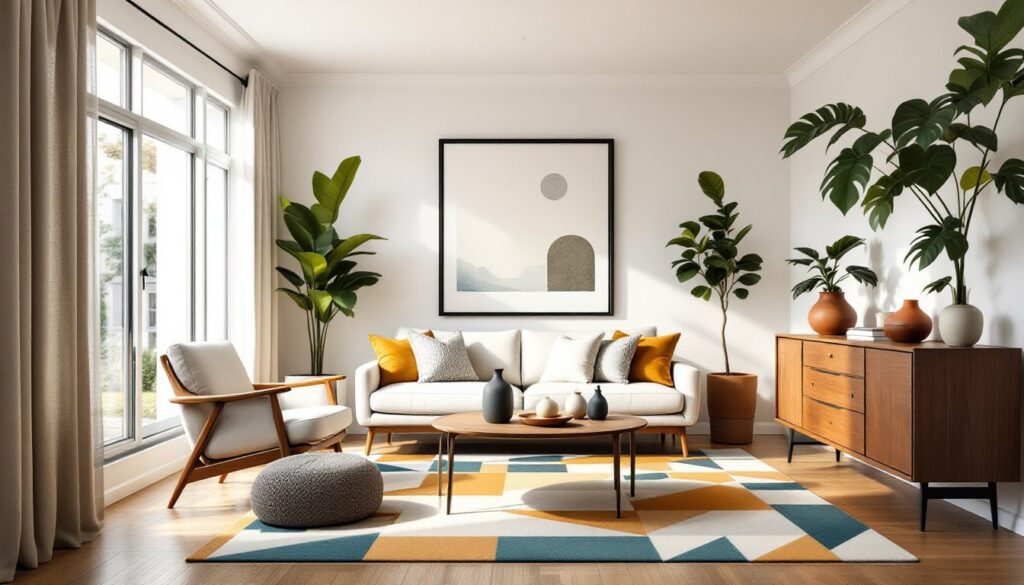
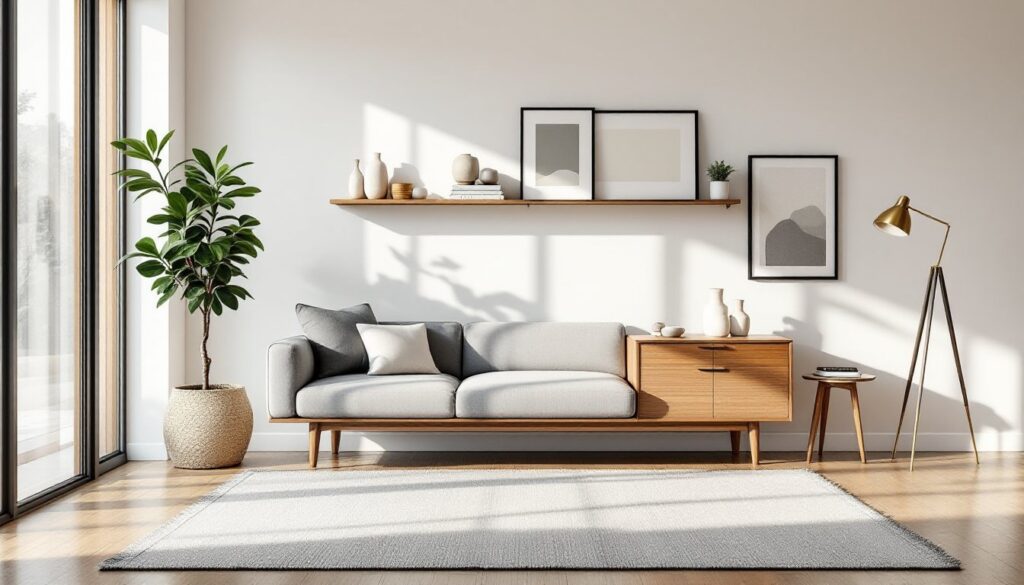
The living room is where mid century interior style shines brightest. A low sofa with wooden legs and neutral upholstery anchors the space: pair it with a floating credenza or wall-mounted shelving behind it. Add a tapered-leg coffee table in wood or metal, and layer in a geometric area rug (wool or natural fiber) to define the seating zone. Side tables should be modest, a tripod-leg accent table or a floating wall shelf works better than heavy nightstands in a living room.
Wall color matters here. Warm white or soft gray keeps the focus on furniture and decor. If you want a feature wall, a deep charcoal or forest green creates drama without overwhelm. Artwork should be geometric, abstract, or mid century photography: avoid large ornate frames. Two or three pieces hung at eye level outperform a gallery wall in this style.
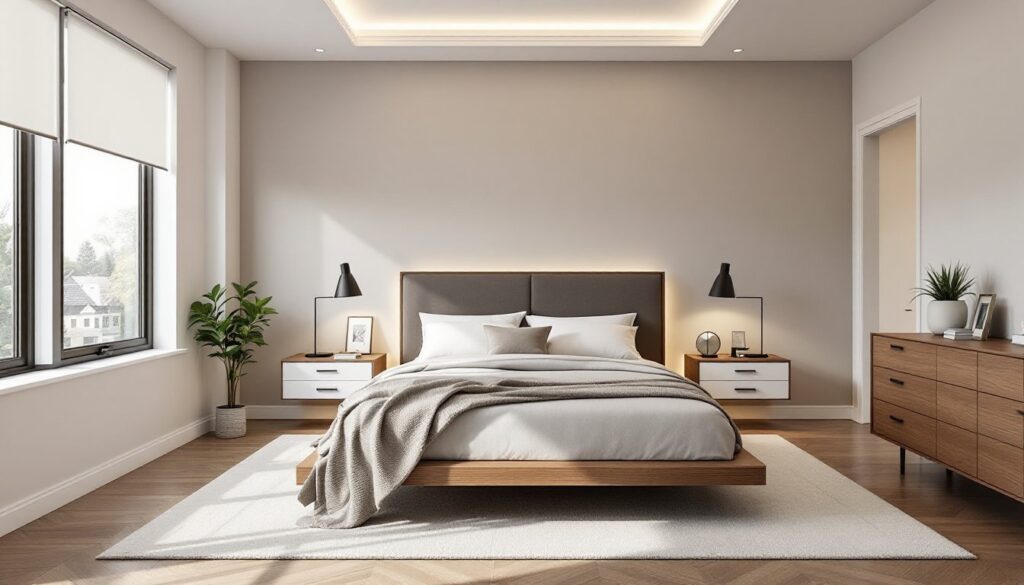
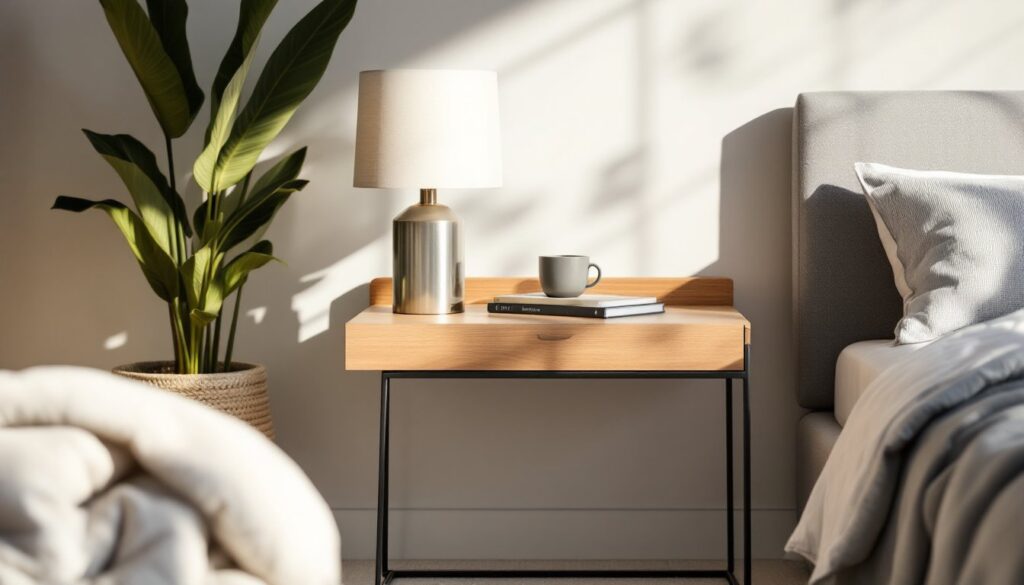
For bedrooms, the mid century modern interior approach is calmer. A platform bed (low-profile with solid wood frame, no visible box spring) anchors the room. Flank it with small wooden nightstands, two to three drawers, tapered legs. Dresser placement should be across from the bed or along a long wall: choose a piece with minimal hardware and clean lines. Headboards, if used, should be upholstered in solid linen or wool, not tufted. Keep bedding simple: a solid duvet or quilt in cream, gray, or soft color, one decorative pillow in a geometric print, minimal throw blankets.
Storage in bedrooms is critical and often underestimated. A low credenza opposite the bed handles off-season clothes and clutter without dominating the room. Wall-mounted shelves above a dresser add interest without visual weight. Avoid overhead storage or glass shelving: closed cabinetry feels more restful in sleeping spaces. Real-world examples, like those featured in 45+ Midcentury Modern Living Rooms, show how balanced furniture placement and neutral palettes create inviting, livable spaces.
Blending Mid Century with Modern Touches
Pure mid century design is rare in contemporary homes. Most people succeed by anchoring rooms with mid century furniture and modern accessories that respect the style’s principles. Here’s how to blend without clashing.
Start with modern lighting where it makes sense. A contemporary pendant light with clean geometry and simple materials (ceramic, metal) complements mid century pieces. Avoid anything overly ornate or trendy. Modern area rugs work if they’re geometric or solid: avoid shag, fringed, or overly patterned styles that distract from furniture lines. A solid linen or wool rug in charcoal, gray, or warm cream ties a room together without competing.
Wall decor is your chance to add personality without period-correctness. Contemporary abstract art, photography, or graphic prints in simple frames fit naturally alongside vintage mid century pieces. Textiles, a modern throw pillow in a solid linen, a contemporary wall hanging, add warmth without sacrificing the clean aesthetic.
Technology integration requires honesty. TVs in mid century rooms should be mounted on a clean media console (low, wooden, tapered legs, exactly mid century) or positioned at eye level on an open wall. Hide cords with cable management, not false panels. Speakers can be modern if they’re compact and dark (black, natural wood, or metal). The goal is invisibility when off, integration when on.
Plant life softens the geometry. Living plants in simple ceramic or wooden planters add organic texture. A tall fiddle leaf fig in a corner, small pothos on a floating shelf, or pots on a credenza feel period-appropriate because mid century designers loved natural forms. Choose planters that complement your color palette, whites, warm grays, natural wood. Modern plant stands with thin metal frames work beautifully if the overall silhouette is minimal. Details and inspiration from articles on Palm Springs midcentury homes show how contemporary homeowners layer greenery, art, and modern textiles with vintage pieces.
Conclusion
Mid century interior decor isn’t about strict historical accuracy or expensive vintage hunting. It’s about embracing a design philosophy that values honest materials, clean lines, and purposeful function. By anchoring your spaces with quality mid century furniture, choosing a warm and restrained color palette, and respecting the style’s principles when adding modern elements, you create a home that feels timeless and livable. Start small, a single credenza, a well-chosen sofa, a thoughtful color scheme, and layer in from there. Your mid century interior will reward you with a space that looks intentional, feels comfortable, and wears well for years.