
Mid-century modern interior design has stayed relevant for over 70 years, and for good reason. Born in the post-war era, this aesthetic combines function with clean geometry, warm materials, and a rejection of fussy ornamentation. Whether you’re refinishing a credenza or redecorating an entire room, mid-century modern interior decorating gives you a framework that works whether your home is a 1952 ranch or a brand-new build. The style’s emphasis on honest construction and quality craftsmanship appeals to DIYers who value both beauty and durability. This guide covers the core principles, practical steps for key rooms, and how to blend retro elements with modern comfort.
Table of Contents
ToggleKey Takeaways
- Mid-century modern interior design combines function with clean geometry, honest materials, and quality craftsmanship, making it adaptable to both vintage and contemporary homes.
- Iconic mid-century modern furniture features exposed legs, angled frames, and minimal ornamentation—choose pieces that show their joinery and materials honestly without fake veneers.
- Warm, earthy color palettes with high-contrast accents paired with mixed materials like wood, leather, chrome, and ceramic create an authentic mid-century modern aesthetic.
- In living rooms, anchor the space with a quality neutral sofa, add a vintage credenza, and layer with minimal accessories; restrained styling defines the era better than abundance.
- Blend mid-century modern elements with contemporary comfort by keeping original architectural pieces as anchors while updating systems and adding modern art that respects the era’s simplicity.
- The golden rule for mid-century modern interior decorating is to choose fewer things of higher quality—every object should serve a purpose and contribute to visual clarity rather than clutter.
Essential Elements of Mid-Century Modern Design
Iconic Furniture and Sleek Lines
Mid-century modern interior design rests on a few non-negotiable elements. Start with furniture that emphasizes exposed legs, angled frames, and minimal ornamentation. A sofa with tapered wooden legs and clean upholstery reads authentically mid-century: a low-profile profile coffee table with a hairpin leg or splayed base says the same. Look for pieces that show their joinery and materials honestly, no fake veneers or heavy skirts hiding the structure.
Sleek lines define the silhouette. Flat-panel cabinet fronts, straight edges on desks, and unadorned shelving create visual calm. Curved elements work too, think kidney-shaped tables or a sofa with a gentle arc, but they’re balanced against geometric precision elsewhere in the room. When shopping or upcycling pieces, check that proportions look intentional, not cramped. A mid-century modern interior should feel spacious and uncluttered: if furniture crowds the room, the whole aesthetic collapses.
Color Palettes and Material Mix
Authentic mid-century modern interior color schemes favor warm, earthy tones with high-contrast accents. Warm woods, walnut, teak, or oak, anchor almost every room. Walls often use soft neutrals: warm gray, cream, or soft taupe. These allow wood and furniture to take center stage without visual noise.
Accent colors come from nature and industry. Mustard yellow, burnt orange, teal, and olive green appear as upholstery, throw pillows, or a single accent wall. Pops of white and black ground the palette and add graphic punch. Materials matter as much as color: leather, wool, linen, and chrome all appear together without looking chaotic because they’re ordered and spare.
Material mixing is the secret. Pair wood legs with a fabric seat, chrome with leather, ceramic with wood. This variety signals quality and craftsmanship, each material is chosen for its function, not for matching. Keep the overall look cohesive by limiting your material palette to three or four high-quality options per room. Too many competing textures scatter the eye and undo the clean aesthetic.
Decorating Key Rooms: Living Room and Bedroom
Creating a Mid-Century Modern Living Room
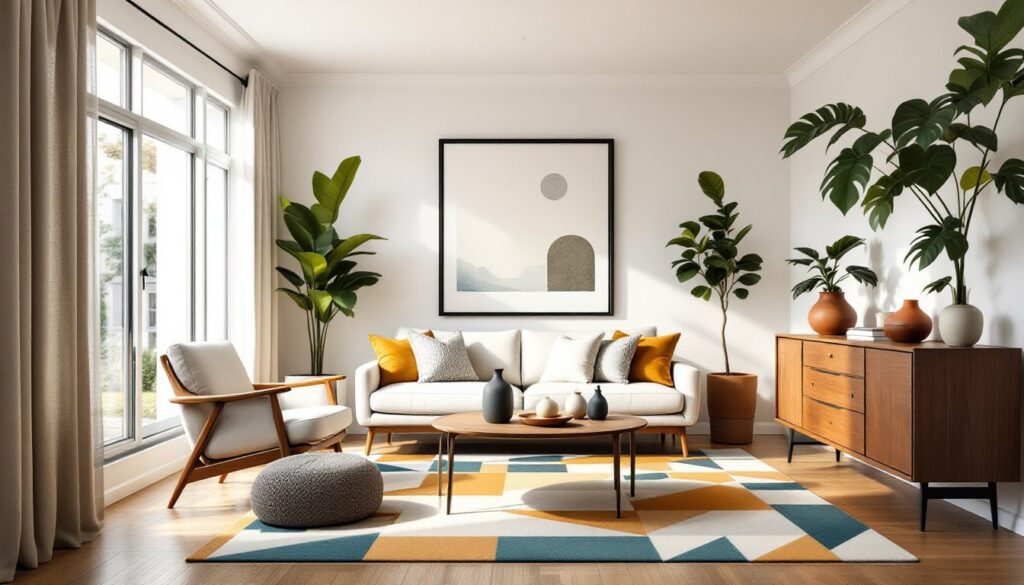
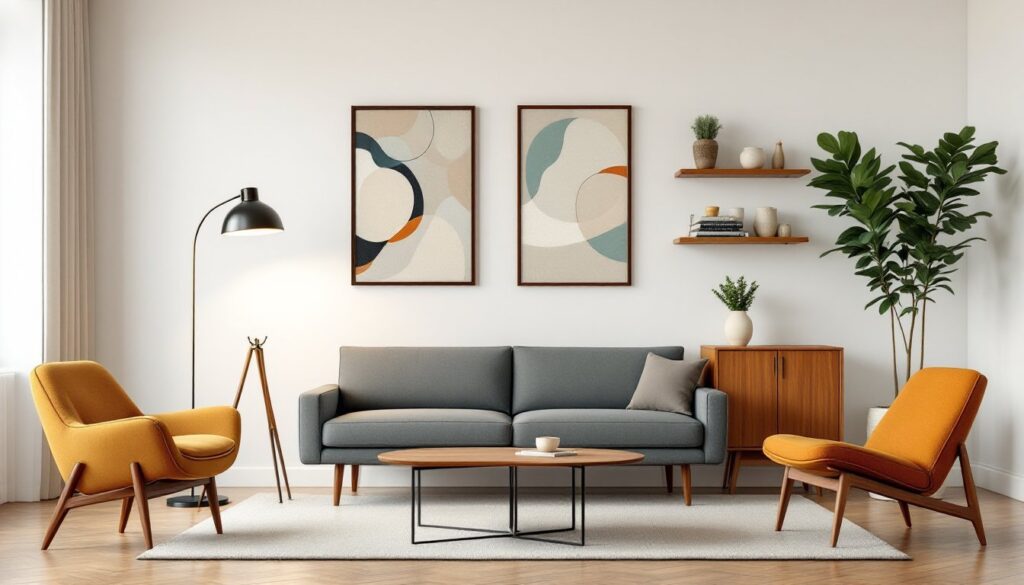
Start with the backbone: a quality sofa in a neutral tone, gray, charcoal, or cream, with clean lines and tapered legs. Pair it with a low-profile coffee table in wood or metal. If the sofa feels new, balance it with a vintage credenza or media console along the opposite wall. These storage pieces are functional anchors and often the most striking focal points in a mid-century space.
Lighting transforms the room. Pendant lights with simple shades, arc floor lamps with weighted bases, and table lamps with ceramic or teak bodies are mid-century staples. Avoid heavy chandelier-style fixtures: the goal is understated. A single bold light fixture, say, a Sputnik-style pendant, can anchor the dining zone without dominating.
Add layered seating with one accent chair in a contrasting color or pattern. A pair of chairs works even better for symmetry. Keep throw pillows minimal: two or three per seating area, and stick to solid colors or subtle geometric patterns. Sources like Dwell showcase how restraint and intentionality define the style better than abundance.
Finish with accessories that serve a purpose. A bookshelf with visible spines, a wooden shelf displaying ceramics, or wall-mounted floating shelves add verticality without bulk. Plants, real ones in ceramic pots, soften hard lines and were beloved in the era. Avoid overstyling: every object should earn its place.
Bedroom Design with Vintage and Modern Touches
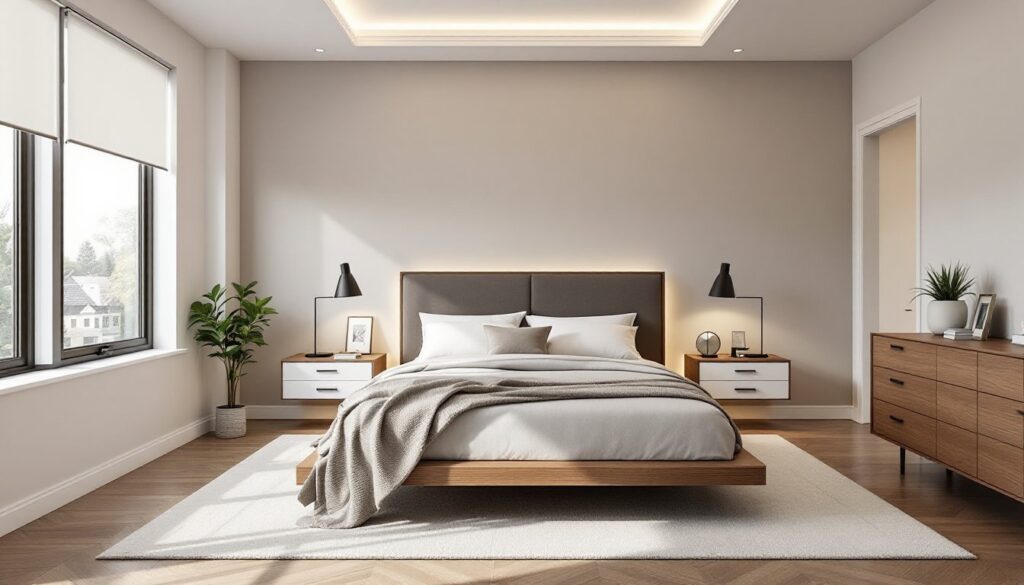
The bedroom is your chance to blend mid-century modern interior decorating with comfort and rest. A wooden bed frame with clean lines and tapered legs sets the tone. Look for frames with a headboard that’s architectural but not ornate, solid panels, simple slats, or even a low platform base work. Avoid upholstered headboards unless they’re flat and tufting-free.
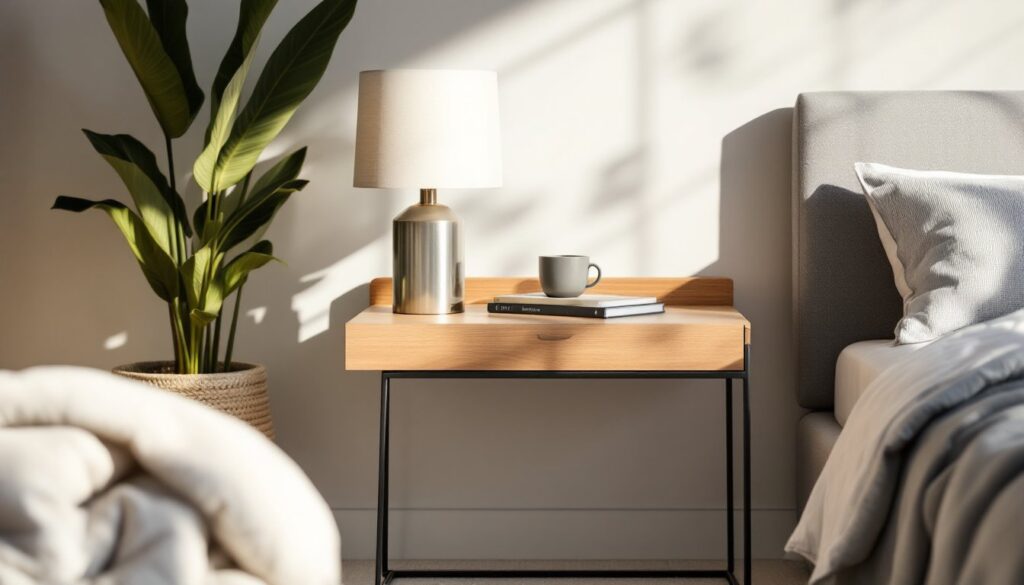
Nightstands matter more than you’d think. Match them to the bed frame in wood tone, or pair walnut with an enameled metal side table for contrast. A single brass or chrome task light on each side provides function without clutter. Store alarm clocks and books inside drawers: keep surfaces clear except for the lamp.
Bedding should be solid or subtly patterned. Solid linen, cotton sateen, or vintage-look wool blankets in warm neutrals or soft jewel tones feel authentic. Layer a simple throw at the foot in a complementary color. One accent pillow in a geometric or abstract pattern (think Design Milk-worthy contemporary picks) adds interest without kitsch.
Wall color sets mood. Consider a warm gray, soft white, or even a muted sage green. If you want an accent wall, make it the wall behind the bed, a solid color or a simple removable wallpaper in a geometric pattern reads authentically mid-century. Keep it subtle: the focus stays on the bed’s architecture and the room’s calm, uncluttered layout.
Storage keeps the space functional. A low dresser with tapered legs, a simple wardrobe, or wall-mounted shelving handles clothes and personal items invisibly. The bedroom should feel restful: visual clutter works against that goal.
Blending Mid-Century Modern with Contemporary Style
You don’t have to live in a time capsule to appreciate mid-century modern interior design. Many homes today blend the era’s design principles with modern convenience and comfort. The trick is respecting the bones while updating the systems.
Start by keeping mid-century furniture and architectural elements prominent, visible wood beams, original cabinetry, or an inherited credenza become your anchors. Then add contemporary touches: modern lighting controls, smart climate systems, and updated appliances. A sleek stainless steel refrigerator sits comfortably next to vintage cabinetry because both prioritize function and honest materials.
Pattern and color can bridge eras too. Pair vintage geometric textiles with modern solid fabrics. Use contemporary art, abstract paintings, bold photography, or modern sculpture, on walls. These pieces echo mid-century modernism’s forward-thinking spirit without literal repetition. Decoist features many homes that weave new and old this way, showing that the aesthetic’s core values (simplicity, function, quality) transcend time.
Digital displays don’t have to clash. Mount a flat-screen TV on a simple mid-century credenza or inside a cabinet with a hinged door. Cable management matters: hide cords behind walls or use cord channels that blend with cabinetry. A modern smart speaker in matte black or white can sit on a shelf without looking out of place if the rest of the space respects the era’s restraint.
The golden rule: when in doubt, choose fewer things of higher quality. A single contemporary chair that respects mid-century proportions (clean lines, tapered legs, honest materials) blends seamlessly. Five trendy accessories do not. Mid-century modern interior decorating wins when you think like the original designers, every choice should have a reason, and beauty comes from clarity, not clutter.