
Modern bedrooms don’t have to feel cold or sterile. Whether you’re drawn to minimalist layouts, Scandinavian warmth, or industrial edges, a well-designed contemporary bedroom balances clean lines, function, and comfort. The key is choosing a coherent aesthetic direction, not just throwing together trendy pieces, then committing to a restrained color palette, thoughtful furniture placement, and layered lighting that actually works for your life. This guide walks through the practical steps to create a modern sleep space that feels both visually open and genuinely relaxing.
Table of Contents
ToggleKey Takeaways
- Choose one coherent modern aesthetic—minimalist, Scandinavian, Japandi, industrial, or luxe-modern—and commit to it throughout your modern bedroom to avoid a muddled, indecisive look.
- Build your color scheme on a 60-30-10 rule: neutral base (white, gray, or greige), secondary depth color (charcoal or navy), and a 10% accent pop to create visual interest without overwhelming the space.
- Select low-profile beds and streamlined furniture with clean lines and minimal ornamentation, then maintain 24–28 inches of walking space around pieces to maximize visual breathing room.
- Layer three types of lighting—ambient, task, and accent—with dimmers to adjust from energetic morning illumination to sleep-friendly dimness throughout the day.
- Combine tactile textures and warm materials like wool, linen, and natural wood with smooth surfaces to prevent modern bedrooms from feeling cold or sterile.
- Curate accessories ruthlessly: limit decor to one or two artworks, a single plant, and hidden storage to maintain the calm, intentional look that defines successful modern bedroom design.
Define Your Modern Aesthetic
Before buying a single piece of furniture, decide which flavor of modern resonates with you. Minimalist design strips everything to essentials: white walls, a low-profile platform bed, one nightstand, maybe a single pendant light. Scandinavian modern adds warmth with light wood, soft neutrals, and natural textures, think pale pine, linen, and wool. Japandi blends Japanese minimalism with Scandinavian comfort, emphasizing craftsmanship and negative space. Industrial modern incorporates exposed metal, concrete, and reclaimed wood. Luxe-modern layers in richer materials and statement pieces, velvet headboards, brass fixtures, or marble surfaces, without clutter.
Pick one direction and stick with it. Your aesthetic choice will guide every subsequent decision: color selections, material pairings, hardware finishes, and lighting style. A muddled mix of minimalist, industrial, and glam reads as indecisive, not eclectic. Write down three words that describe your ideal room, calm, warm, sophisticated, sleek, then reference them when evaluating pieces.
Color Palettes for Contemporary Bedrooms
Modern bedrooms thrive on restraint. Start with a neutral base: white, off-white, warm gray, greige (gray-beige hybrid), or soft taupe cover 60% of the room, walls, larger furniture, and flooring. A secondary color fills 30%: charcoal, black, deep navy, forest green, or muted terracotta adds depth without aggression. Your 10% accent color is the pop, blush, sage green, pale blue, or burnt orange on pillows, throws, or a feature wall.
For softer modern looks, layer pale blues, sage, and greige together with ivory and warm wood. The warmth prevents the space from feeling sterile. If you prefer darker modern spaces, use matte black or charcoal as your secondary, but balance it with light wood tones and off-white textiles so the room doesn’t feel like a cave. Homedit showcases how neutral, demonstrating that restraint creates impact. Avoid more than four wall colors in a bedroom: even one accent wall is often enough.
Furniture Selection and Layout Strategies
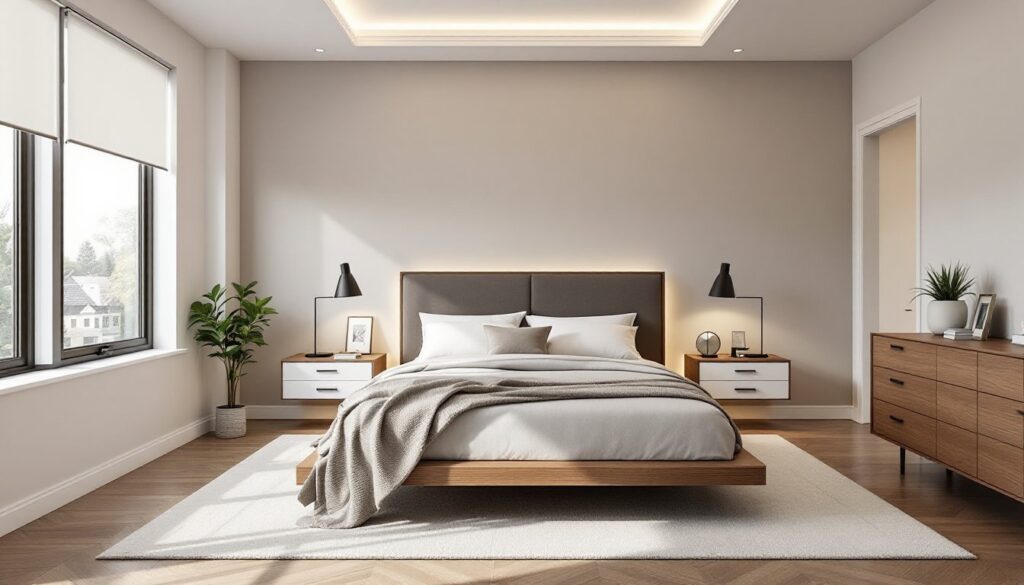
Choose a low-profile bed, platform, upholstered, or simple wood frame, as your room’s anchor. A dramatically tall headboard or ornate frame fights a modern aesthetic. Pair it with streamlined nightstands (no spindle legs or curved edges), a slim dresser, and wall-mounted or built-in storage to keep the floor visually open.
When laying out furniture, maintain walking space of roughly 24 to 28 inches (60 to 70 centimeters) around the bed and major pieces: this isn’t just safety, it’s visual breathing room. Position the bed so it’s not floating in the center of a large room, anchor it to one wall. Avoid symmetrical nightstands if they clutter: one nightstand or floating shelves work fine. Mix materials strategically: light oak with matte black hardware, or walnut with brushed brass, but keep silhouettes cohesive. Chunky carved legs or ornate details contradict modern design. Upholstered beds work well if they have simple frames: metal frames keep things sleeker. Modern bedroom design ideas.
Lighting Design for Modern Spaces
Layered lighting is non-negotiable in modern bedrooms. Install three types: ambient (a dimmable ceiling fixture or recessed lights for overall illumination), task (bedside reading lights or wall-mounted sconces), and accent (LED strips behind the headboard, under the bed frame, or in cove ceilings for soft nighttime glow).
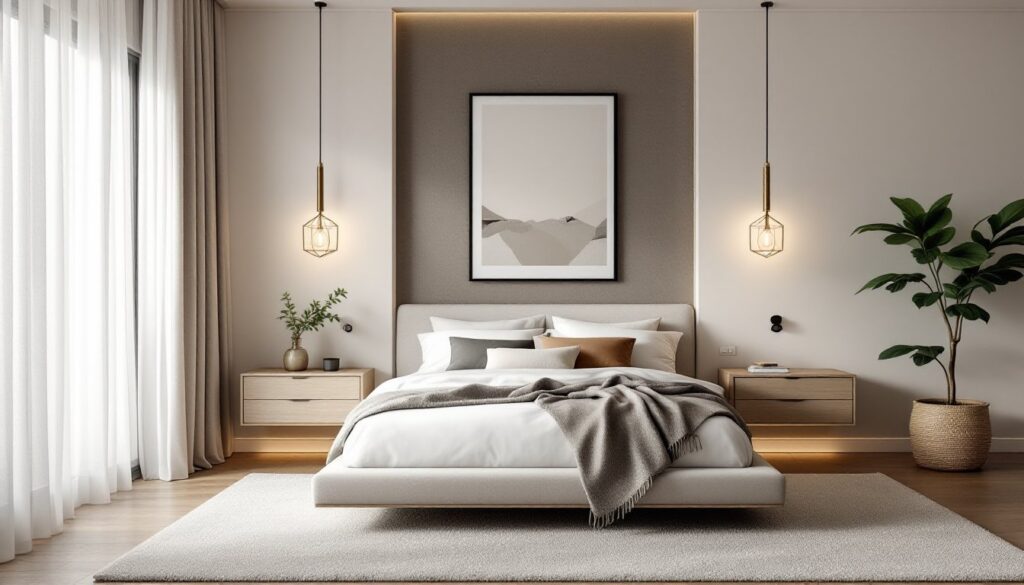
Statement pendants or linear fixtures hung above or flanking the bed add drama without clutter. Opt for clean metal frames, brushed brass, matte black, or polished chrome, in simple geometric shapes. String pendant lights in a row above a floating headboard looks modern: two dome pendants on either side feels balanced. Always install dimmers on key lights so you can adjust mood from energetic morning light to sleep-friendly dimness. Avoid heavy fabric shades that collect dust: go for glass, ceramic, or open-frame designs. Indirect lighting, hidden under floating nightstands, behind crown molding, or in bed underbeds, creates a floating effect and modern luxury feel.
Textures, Materials, and Wall Treatments
Modern doesn’t mean cold hard surfaces everywhere. Combine smooth and tactile: crisp white cotton or linen bedding, a chunky wool area rug, boucle or leather accent pillows, and a soft throw blanket. These textiles add warmth and prevent the room from feeling sterile. Wood, light oak, walnut, or matte-finish plywood, softens metal and gray.
Designate one feature wall to anchor the room visually. Large-scale artwork (a single 4-by-6-foot abstract or a gallery arrangement of 3-4 framed prints) works well. Textured plaster, shiplap, or wood slats (vertical or horizontal) add dimension. Subtle geometric wallpaper in muted tones is fine if it complements your palette: bold prints undermine calm. If the walls are mostly plain, let a textured accent wall or striking artwork do the heavy lifting. Bedding texture matters too, quilted, woven, or linen fabrics add visual interest compared to smooth cotton alone. Bedroom inspiration from Decoist.
Accessorizing Without Clutter
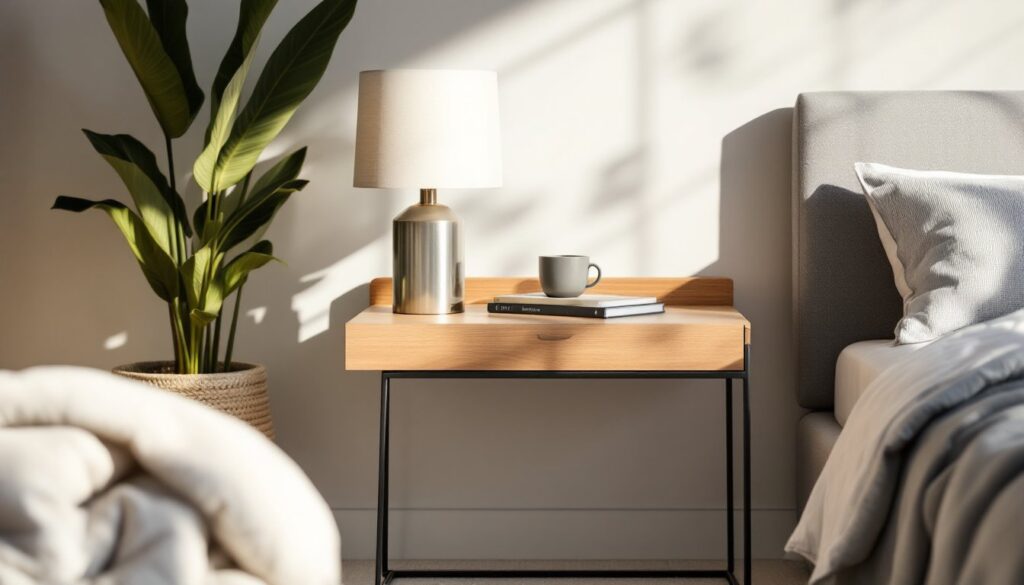
This is where most modern bedrooms fail. Resist the urge to fill every surface. Curate ruthlessly: one or two large artworks, a single potted plant (fiddle leaf fig, snake plant, or monstera), and a small tray on the nightstand for a lamp, phone, and book. That’s it.
Storage is your secret weapon. Use nightstands with drawers or closed shelving to hide everyday items, chargers, and tech. A low dresser with clean lines stores clothing without visual noise. Wall-mounted floating shelves above a desk area keep it functional but minimal. Closet doors, wardrobes, or sliding panels hide clutter: open shelving guarantees messiness. Textiles do the heavy lifting for personality: a patterned throw pillow, a linen throw in a contrasting color, and a quality area rug add softness and character without clutter. If you love books, keep a small stack on one nightstand corner, but don’t line every surface. A modern bedroom should look like someone lives there, not like no one does, but the living should be intentional, not scattered.
Conclusion
A modern bedroom thrives on simplicity, function, and intentional restraint. Start with a clear aesthetic direction, apply a disciplined color palette, choose streamlined furniture, layer your lighting, and edit your accessories ruthlessly. The result is a calm, visually open space where every piece earns its place. Modern design isn’t about austerity, it’s about letting good bones, quality materials, and thoughtful lighting do the work instead of relying on decoration to distract. Your bedroom should feel like a refuge, not a showroom.