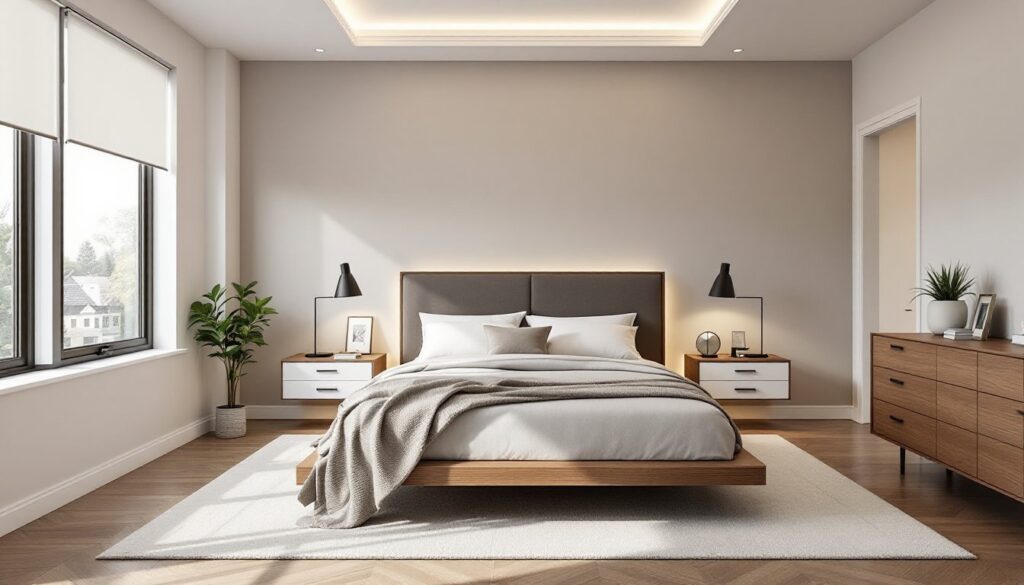

A modern contemporary nightstand isn’t just a place to set your lamp and phone, it’s the punctuation mark on your bedroom design. In 2026, the shift toward clean lines and functional beauty has made nightstands a focal point rather than an afterthought. Whether you’re furnishing a new bedroom or refreshing tired bedside furniture, understanding what defines modern contemporary style helps you make choices that feel both timeless and intentional. This guide walks you through selecting, styling, and arranging a bedside table that actually works for your space and daily routine.
Table of Contents
ToggleKey Takeaways
- A modern contemporary nightstand combines minimalist simplicity with warm materials and craftsmanship, featuring clean lines, geometric forms, and honest finishes that showcase natural textures.
- Standard nightstand height should be 24–28 inches (roughly level with your mattress top) to ensure comfortable reach and visual balance in your bedroom.
- Solid woods like walnut and oak paired with metal or steel legs create purposeful material contrast that defines modern contemporary nightstand design without visual clutter.
- Styling a modern nightstand requires restraint: include essential items like a task lamp and a book or two arranged at varying heights, then add one meaningful decorative piece rather than multiple trinkets.
- Space-saving solutions like open shelving, floating nightstands, and asymmetrical arrangements work better in small bedrooms than traditional cabinets, creating airiness without sacrificing storage.
- Material repetition (echoing your nightstand’s wood or metal finishes elsewhere in your bedroom) and intentional personal touches make your contemporary bedside table feel both curated and genuinely lived-in.
What Makes a Nightstand Modern Contemporary
Modern contemporary nightstands blend the simplicity of minimalism with the warmth and craftsmanship of mid-century design. Unlike purely modern furniture that can feel cold, contemporary bedside tables add personality through material choice and subtle detail while keeping the overall silhouette uncluttered.
The core of modern contemporary style is restraint. A contemporary bedside table ditches ornament and fussy details in favor of geometric forms, negative space, and honest materials. You’ll see tapered legs instead of bulky pedestals, open shelving alongside closed storage, and finishes that showcase wood grain or metal texture rather than hide it.
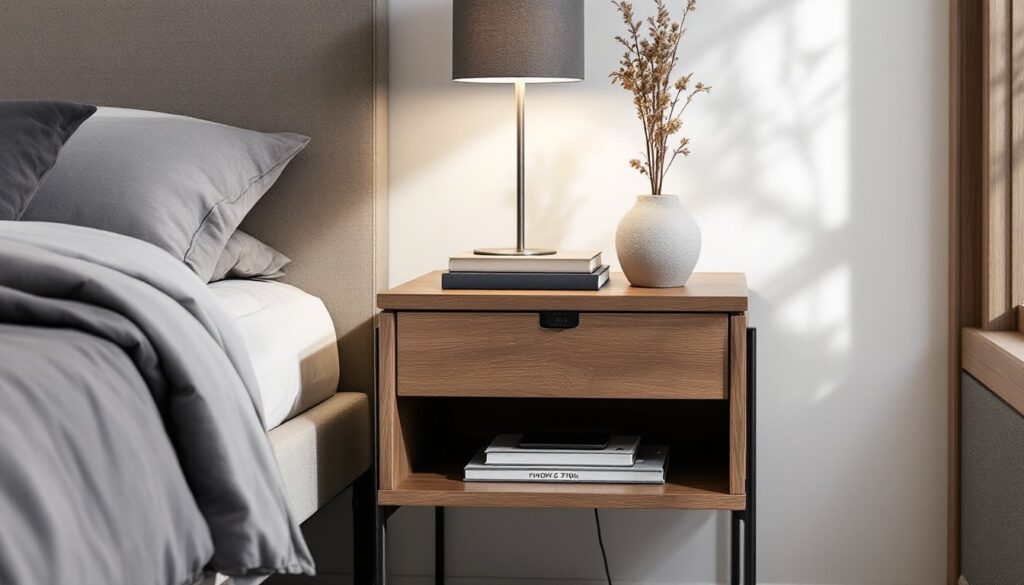
Modern style bedroom furniture emphasizes function alongside form. Your nightstand holds a lamp, a book, perhaps a charger or water glass, and a well-designed piece makes room for those essentials without looking crammed. Many modern contemporary pieces include a single drawer and an open shelf, or a combination of cubbies, giving you flexibility without visual heaviness. The goal is a piece that breathes in your room and supports your bedtime routine without drawing needless attention.
Key Design Features and Materials to Consider
Clean Lines and Minimalist Aesthetics
Clean lines are the hallmark of any modern nightstand design. Look for pieces with straight edges, minimal trim, and unadorned surfaces. Hardware, when present, should be small and recessed, a simple bar pull or a subtle metal handle that doesn’t protrude. Avoid nightstands with curved edges, ornamental feet, or multi-tiered tops unless they’re intentionally paired with that aesthetic throughout your space.
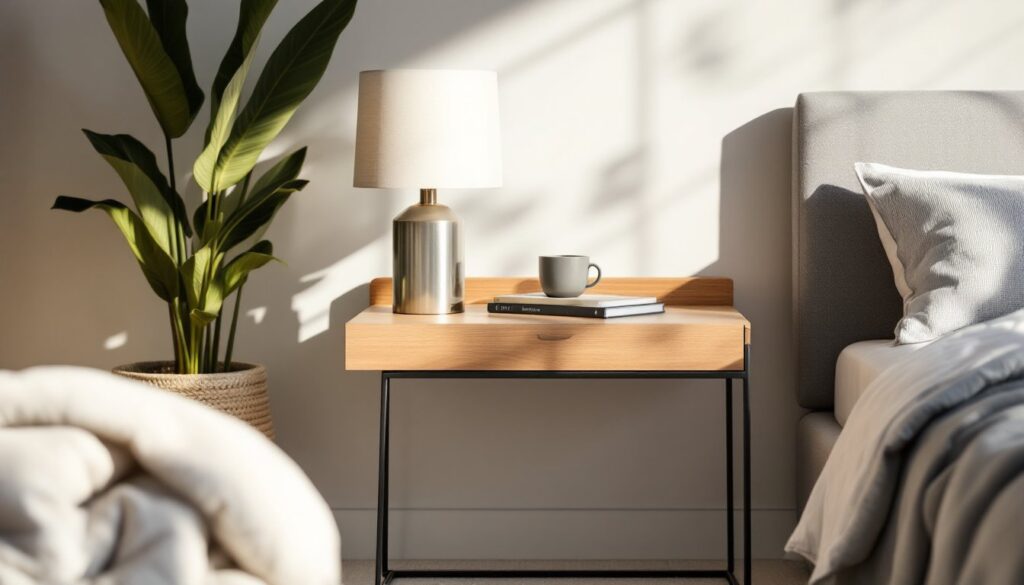
Minimalism in contemporary design doesn’t mean sparse or unfriendly. A bedroom furniture modern style piece can have warmth through wood stain, a pop of color in the base, or an interesting material contrast. The difference is that every element earns its place. A nightstand with a walnut top and steel legs, for instance, combines two materials purposefully, it’s not decoration, it’s honest construction visible as design.
Height matters too. Standard nightstands sit between 24 and 28 inches tall, roughly level with the top of your mattress. This keeps reach-distance reasonable and creates visual balance in a room. Modern contemporary bedside tables often run on the shorter side of that range, contributing to their airy feel.
Popular Materials and Finishes
Solid wood remains the top choice for contemporary nightstands. Walnut, oak, and white oak offer durability and warm tone. Ash and maple are lighter options that suit minimalist spaces. These woods are typically finished with stain or natural oil, showcasing the grain rather than hiding it under thick lacquer.
For a cooler, industrial vibe, pairing wood with metal, steel, black iron, or brushed aluminum legs, creates visual interest without clutter. Engineered wood (plywood or MDF with veneer) works fine for function and cost, though solid wood holds up to moving and adjustment better over years.
White or light gray finishes are popular in contemporary bedroom furniture modern style schemes. These read clean and pair with almost any palette, though they show dust and water rings more readily. Darker finishes like charcoal or matte black feel more dramatic and hide marks better, but demand careful placement in smaller rooms to avoid feeling heavy.
Texture variations, a matte finish paired with one glossy drawer front, or a smooth surface against a woven door panel, add depth without breaking the minimalist rule. The key is intentionality: one or two material contrasts, not a jumble.
Styling and Decorating Your Modern Nightstand
Less is more, but not nothing. A styled modern contemporary nightstand serves a purpose and looks intentional. Start with your essentials: a task lamp, a book or two, and perhaps a water glass. Arrange these at different heights to avoid a flat, one-note appearance.
Lighting is critical. A lamp with a linen or paper shade and a slim, dark base fits the contemporary look better than a heavily ornamental fixture. LED bulbs in 2700K color temperature provide warm light for winding down. If your nightstand has an open shelf below, hiding a slim charging cable there keeps cords invisible, a hallmark of polished contemporary design.
Decorative items should be restrained. A single piece of art, a small plant, or a textured ceramic object can anchor the look, but avoid piling books, photos, or trinkets on the surface. Stack books by spine color if you display them: leaning one open book on the stack adds visual ease. A narrow vase with a few tall stems or dried branches brings height and lightness without fussiness.
Material repetition helps cohesion. If your nightstand features walnut, echo that wood elsewhere, on a shelf, in a picture frame, or a small accessory. If metal legs define the piece, a metal-framed mirror or a steel-based lamp continues the thread.
Personal touches matter. A framed photo, a small tray for jewelry, or a dish for loose change make the nightstand functional in a way that suits your life. The modern contemporary philosophy embraces everyday objects when they’re chosen with intention rather than scattered haphazardly. Resources like Design Milk showcase how contemporary designers balance function and style, offering inspiration for what “curated but lived-in” actually looks like.
Space-Saving and Functional Solutions
Small bedrooms demand smart nightstand choices. A modern contemporary bedside table with open shelving takes up no more visual footprint than a traditional cabinet but feels less bulky. Look for pieces with a single drawer and one shelf, or even a single-shelf design if you need minimal storage. Wall-mounted floating nightstands are an option if you’re committed to the look: they free floor space and suit minimalist rooms, though they require studs and proper installation.
Drawer depth matters. A 12-inch-deep drawer holds most items (lamp base, charger, lip balm) without forcing you to reach or manage excessive clutter. Wider is sometimes better than deeper, a 36-inch-wide nightstand with slim drawers feels less imposing than a 24-inch piece with deep cavities.
Multi-purpose design is the contemporary answer to space constraints. Nightstands that combine open and closed storage, or pieces with integrated storage benches at the foot of the bed, work hard in small rooms. Some modern designs include a small hinged shelf or drop-down surface that expands workspace when needed, practical without sacrificing clean lines.
Placement angles are worth considering too. If your bedroom layout is tight, a corner nightstand or an asymmetrical arrangement (one larger piece on one side, a smaller floating shelf on the other) creates flow. Modern furniture styling doesn’t demand symmetry: it demands intention. Studies from Homify show that asymmetrical nightstand arrangements in smaller rooms actually feel more spacious because the eye moves through the room rather than getting stopped by matched pairs. Vertical storage, tall, narrow shelving attached to or placed beside the nightstand, adds function without consuming floor area.
Conclusion
Choosing the right modern contemporary nightstand means balancing aesthetics, function, and your room’s actual constraints. The best piece complements your mattress height, houses what you genuinely use at bedtime, and fits the visual language of your space without overwhelming it. Whether you opt for solid wood with metal legs, a minimalist white finish, or a walnut-topped design, focus on clean lines, honest materials, and intentional styling. Your bedside table deserves to work as hard as it looks, a true anchor for restful sleep and a quiet expression of your design taste.