
Memphis homeowners know their city’s got soul, blues, barbecue, and a design vernacular that mixes Southern tradition with gritty urban texture. Whether renovating a Midtown bungalow or freshening up a Germantown colonial, interior design here means honoring regional character while making spaces work for real life. This guide walks through the style signatures, material considerations, and practical DIY moves that help Memphis homes look sharp and live comfortably. No fluff, just the details that matter when you’re planning a room refresh or a whole-house update in the 901.
Table of Contents
ToggleKey Takeaways
- Memphis interior design blends Southern tradition with blues heritage, layered eclecticism, and industrial textures that honor the city’s unique cultural character.
- High ceilings, original hardwood floors, and brick elements are signature features in Memphis homes requiring specialized care: pine flooring needs fine-grit sanding, and exposed brick must be sealed with breathable masonry sealers to prevent moisture damage.
- DIY projects like refinishing hardwood floors, installing board-and-batten wainscoting, and updating kitchen cabinets are achievable for intermediate homeowners but require proper prep work and safety precautions, especially when dealing with potential lead paint.
- Memphis climate demands climate-conscious design choices: cellular shades reduce solar heat gain, hardwood needs humidity acclimation before installation, and exterior ventilation fans prevent mold in high-moisture areas like bathrooms and kitchens.
- Local antique shops, reclaimed material suppliers, and Habitat for Humanity ReStore offer unique, affordable finds that support regional character better than national chains.
- Respecting architectural bones—whether Craftsman bungalows in Midtown or lofts in SoMa—while adapting spaces for modern comfort creates homes that feel both rooted in place and livable for daily life.
Understanding Memphis Interior Design Style
Memphis design isn’t one-note. The city’s housing stock spans Craftsman bungalows, shotgun cottages, mid-century ranches, and newer brick colonials, each with distinct bones and spatial logic.
Southern Traditional shows up in formal dining rooms, crown molding, and wainscoting. Think painted trim, hardwood floors, and layouts that separate public and private zones. This isn’t the place for open-concept everything: many older homes have defined rooms, and leaning into that structure often yields better results than forcing modern flow.
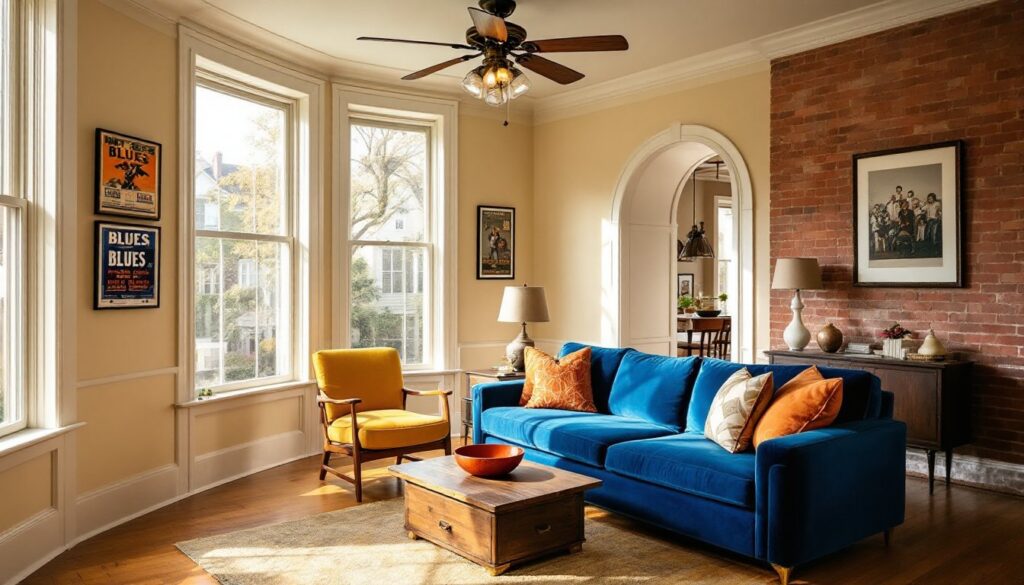
Blues and Music Heritage influence color choices and art. Deep indigo, burnt orange, mustard yellow, and rich wood tones reference Beale Street and the Delta. Vintage concert posters, reclaimed wood from local mills, and industrial metal accents nod to the city’s manufacturing and recording studio history.
Layered Eclecticism thrives here. Memphis homeowners mix heirloom pieces with flea market finds and contemporary upholstery. It’s not about matching sets, it’s about texture, patina, and narrative. A velvet sofa next to a painted farm table feels right if the proportions and palette hold together.
For reference on how local designers interpret these threads, the top interior designers in Memphis often blend traditional Southern comfort with bold, personalized accents.
Key Design Elements Unique to Memphis Homes
Certain features crop up again and again in Memphis interiors, shaped by architecture, climate, and local building history.
High Ceilings and Plaster Walls
Many pre-1950s homes feature 9- to 10-foot ceilings and thick plaster walls. This offers acoustic insulation and thermal mass, good for hot summers, but patching plaster requires mesh tape and multiple coats of joint compound. If you’re hanging heavy art or shelving, locate studs (typically 16 inches on center) or use toggle bolts rated for plaster and lath.
Wood Floors, Often Pine or Oak
Original floors are usually tongue-and-groove pine (softer, prone to dents) or red or white oak (harder, more durable). Refinishing pine takes 60- to 80-grit for initial sanding and 120-grit for smoothing before stain. Oak tolerates aggressive sanding better. Budget one gallon of polyurethane per 400–500 square feet for three coats.
Front Porches and Screened Additions
Porches aren’t decorative, they’re living space. Many Memphis homeowners extend design continuity outdoors with ceiling fans (look for damp-rated motors), outdoor rugs, and painted tongue-and-groove porch ceilings (haint blue is traditional). Screened porches need 20×20 mesh aluminum or fiberglass screening and treated lumber framing if you’re building or repairing.
Brick, Inside and Out
Exposed interior brick adds texture but needs sealing if it’s never been painted. Use a breathable masonry sealer: fully encapsulating sealers trap moisture. If you’re painting brick, clean with trisodium phosphate (TSP), prime with a masonry primer, and use acrylic latex masonry paint for durability.
Best Neighborhoods for Design Inspiration in Memphis
Walking Memphis neighborhoods offers a crash course in regional style and adaptive reuse.
Midtown showcases Craftsman, Tudor Revival, and Colonial Revival homes with original hardwood, built-in cabinetry, and arched doorways. Overton Park area homes often feature window seats, box-beam ceilings, and decorative tile in bathrooms.
Cooper-Young leans eclectic and artsy, renovated bungalows with bold exterior paint, vintage signage, and DIY curb appeal. Interiors mix retro appliances, open shelving, and reclaimed materials.
Germantown and Collierville represent newer suburban builds, brick exteriors, vaulted great rooms, granite counters, and builder-grade trim. Design moves here often involve updating finishes: swapping brass fixtures for brushed nickel, replacing carpet with luxury vinyl plank (LVP), and adding shiplap or board-and-batten accent walls.
South Main (SoMa) offers loft conversions in former warehouses. Exposed ductwork, concrete floors, and tall windows define the aesthetic. Soundproofing is key, use mass-loaded vinyl (MLV) underlayment if adding flooring, and consider acoustic panels on brick walls.
Victorian Village preserves late-1800s Italianate and Queen Anne homes with ornate woodwork, stained glass, and high baseboards. Restoration projects here often require matching historic millwork profiles and period-appropriate hardware.
DIY Interior Design Projects for Memphis Homeowners
These projects suit common Memphis home features and can be tackled by intermediate DIYers.
Refinishing Hardwood Floors
Rental drum sanders are aggressive: consider an orbital floor sander for pine to avoid gouging. Always sand with the grain. After final sanding, vacuum thoroughly and tack-cloth the floor. Apply oil-based polyurethane in well-ventilated conditions or water-based poly for faster dry times and lower VOC. Memphis humidity slows dry times, plan 24 hours between coats in summer.
Installing Board-and-Batten Wainscoting
This adds Southern Traditional texture and protects plaster walls in high-traffic areas. Use 1×4 or 1×6 MDF boards for verticals (actual dimensions: 3.5″ or 5.5″ wide) spaced 12 to 18 inches apart. Attach with construction adhesive and 18-gauge brad nails into studs. Top with a 1×4 cap rail. Prime all sides before installation to prevent warping, then caulk seams and paint with semi-gloss latex for easy cleaning.
Painting Brick Fireplaces
Clean brick with a wire brush and TSP. Apply acrylic masonry primer (e.g., KILZ or Zinsser), then two coats of interior acrylic latex paint in satin or semi-gloss. Limewash is an alternative that lets brick breathe and ages with patina, but it requires reapplication every few years.
Updating Kitchen Cabinets
If cabinets are solid wood, clean with degreaser, lightly sand with 120-grit, prime with a bonding primer (e.g., Zinsser B-I-N shellac-based), and paint with alkyd or acrylic enamel in satin. Use a foam roller for doors and a 2-inch angled brush for frames. Swap hardware, center-to-center measurements for pulls are typically 3 or 3.75 inches: confirm before buying.
Safety: Wear respirator masks (N95 minimum) when sanding old paint: many Memphis homes built before 1978 contain lead paint. Wet-sand or use a HEPA-filter vacuum to minimize dust.
Where to Shop for Home Decor and Furniture in Memphis
Local sourcing supports regional makers and often yields unique finds that fit Memphis character.
Peddler Antique Mall (multiple locations) stocks salvaged architectural elements, vintage hardware, and mid-century furniture. Check dimensions and condition, repairs are often needed but worthwhile for one-of-a-kind pieces.
Carousel Antiques & Uniques offers lighting fixtures, reclaimed wood, and statement mirrors. Bring measurements: oversized pieces dominate the space.
City & State (Broad Avenue Arts District) focuses on local artisans, custom upholstery, handmade textiles, and ceramics. Lead times for custom work run 6 to 8 weeks.
IKEA isn’t in Memphis, but West Elm, Pottery Barn, and Crate & Barrel are accessible via online ordering. For flat-pack assembly, invest in a cordless drill and a set of hex keys, Billy bookcases and similar builds go faster with power tools.
Habitat for Humanity ReStore (multiple locations) sells surplus building materials, cabinetry, and appliances at steep discounts. Stock rotates fast: visit midweek for best selection.
For design ideas and planning, browsing galleries on home design platforms can help visualize how materials and layouts come together before committing to purchases.
Designing for Memphis Climate and Lifestyle
Memphis summers hit 90°F with high humidity: winters dip to the 30s but rarely sustain freezing. Design choices should account for this.
Window Treatments and Solar Gain
South- and west-facing windows generate heat gain. Use cellular shades (honeycomb) with a high R-value (3.0+) or exterior shutters to block sun before it enters. Avoid heavy velvet drapes unless you have efficient HVAC, they trap heat.
Flooring and Humidity
Hardwood and engineered wood need acclimation, let planks sit in the room for 72 hours before installation to match moisture content. Relative humidity swings between 50% in winter and 75% in summer. Use a moisture meter before laying floors: readings above 12% for hardwood mean you need to wait or adjust HVAC.
Luxury vinyl plank (LVP) is stable and water-resistant, good for kitchens, baths, and basements prone to occasional moisture. Install with a vapor barrier underlayment if over concrete slabs.
Color and Light
High summer sun washes out pale colors: mid-tones and saturated hues read better in bright light. In rooms with limited natural light (common in shotgun layouts), use warm whites (2700–3000K LED bulbs) to counter the cave effect. For Southern-inspired palettes, shades seen in regional home design like sage green, terracotta, and creamy off-whites balance tradition with brightness.
HVAC Considerations
Central air is standard, but older homes may have undersized ductwork. If adding insulation or sealing leaks, rebalance airflow, closing off unused rooms or adding dampers helps direct conditioned air where it’s needed. Ceiling fans should run counterclockwise in summer (downdraft) and clockwise in winter (updraft).
Ventilation: Memphis humidity favors mold in bathrooms and kitchens. Install or upgrade exhaust fans rated for the room’s cubic footage (CFM = room volume ÷ 7.5 for bathrooms). Vent to the exterior, not the attic.
Conclusion
Memphis interior design rewards homeowners who respect the bones of their homes while adapting spaces for modern comfort. Whether refinishing original pine floors, adding board-and-batten detail, or sourcing vintage finds from local antique markets, the goal is the same: create rooms that feel rooted in place and ready for daily life. Start with one project, measure twice, and don’t skip the prep work, most DIY wins come down to patience and attention to detail.