
Restoring or designing a vintage 1920s bungalow interior isn’t just about slapping up some beadboard and calling it done. These homes came with distinct architectural bones, built-in cabinetry, oak trim, natural light from double-hung windows, and they deserve period-appropriate choices that honor that craftsmanship. Whether someone’s renovating an original Craftsman or replicating the look in a newer build, understanding the materials, proportions, and color schemes of the era keeps the project grounded in authenticity rather than theme-park nostalgia. This guide walks through the core elements that define 1920s bungalow interiors, from paint colors and woodwork to furniture placement and lighting, with practical advice on how to source, install, or refinish each component.
Table of Contents
ToggleKey Takeaways
- Authentic 1920s bungalow interior design prioritizes architectural elements like quarter-sawn oak woodwork, built-in cabinetry, and period-correct color palettes rooted in the Arts and Crafts movement.
- Choose warm, earthy paint colors—such as sage, taupe, dusty olive, and warm whites—that let natural wood trim stand out rather than bright or pastel tones.
- Vintage 1920s bungalow furnishings should reflect Mission-style and Arts and Crafts principles with visible joinery, solid construction, and minimal ornamentation.
- Source authentic lighting fixtures in hammered copper, mica, or slag glass; avoid shiny chrome or overly ornate designs that conflict with the era’s restrained aesthetic.
- Keep textiles, patterns, and decorative accents minimal and functional—heavy linen fabrics in earth tones, geometric patterns, and simple window treatments without swags or valances preserve the home’s original character.
- Invest in restoring original woodwork and built-ins before adding decorative layers, as these structural elements form the foundation that makes everything else work cohesively.
Understanding the 1920s Bungalow Aesthetic
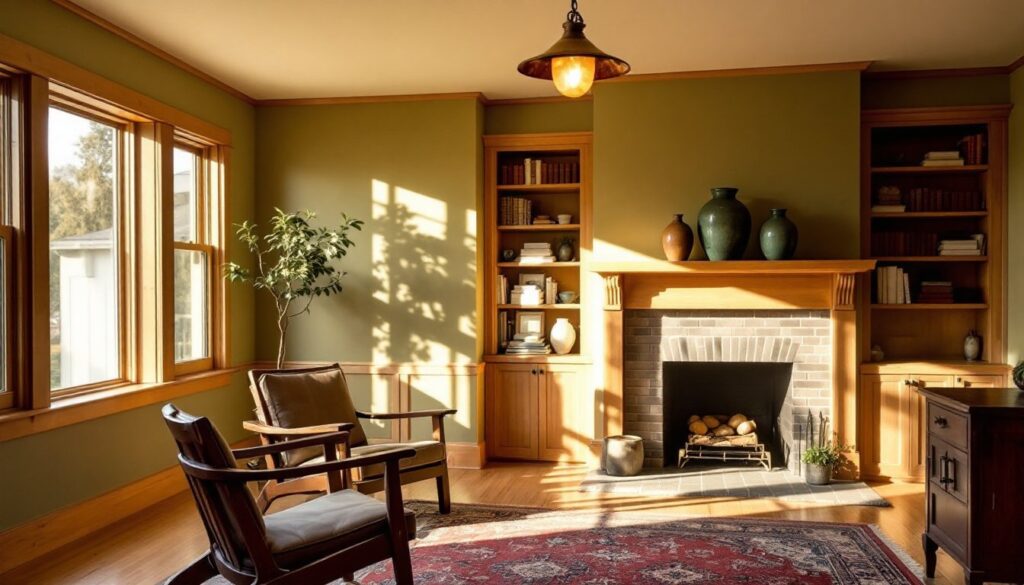
The 1920s bungalow aesthetic emerged from the Arts and Crafts movement, emphasizing honest materials, functional design, and handcrafted details. These homes typically feature low-pitched rooflines, wide eaves, and open floor plans that connected living spaces without sacrificing cozy room definition. Inside, built-in furniture, bookcases, window seats, sideboards, was standard, not an upgrade.
Wood dominates the interior palette. Quarter-sawn oak was the premium choice for trim, flooring, and built-ins, prized for its straight grain and resistance to warping. Fir and maple appeared in more modest builds. Walls often combined plaster with wainscoting or picture rails set about 18 inches below the ceiling, creating visual breaks that made 8-foot ceilings feel taller.
Authenticity hinges on proportion and restraint. Trim profiles were substantial, casing widths ran 3 to 5 inches, but not ornate. Moldings featured clean lines and minimal decoration compared to Victorian excess. Fireplaces anchored living rooms, usually clad in clinker brick or river stone, with wide mantels that served as display ledges. Anyone renovating should prioritize preserving or replicating these built-in elements before adding decorative layers: they’re the skeleton that makes everything else work.
Authentic Color Palettes for 1920s Bungalows
Period-correct 1920s paint schemes leaned earthy and grounded, not bright or pastel. Exteriors used olive green, russet brown, ochre yellow, and deep terracotta, while interiors echoed those tones in slightly lighter values. Paint manufacturers like Sherwin-Williams and Benjamin Moore maintain historical collections that reference the era: look for names like “Rookwood Dark Green,” “Craftsman Brown,” or “Softer Tan.”
Wall colors typically fell into three zones:
• Living rooms and dining rooms: Warm neutrals, taupe, tan, sage, or dusty olive, that let wood trim stand out
• Bedrooms: Slightly lighter versions of living-area colors, or muted blues and soft grays
• Kitchens and bathrooms: Cream, ivory, or pale yellow, often with white or colored subway tile wainscoting
Ceilings were almost always flat white or cream, never glossy. Trim color is where decisions get tricky. Purists keep all woodwork natural and sealed with tung oil or shellac, which amber over time. Others paint trim in a color slightly darker than walls to frame doorways and windows, think warm white or bone, not bright contractor white.
If the existing trim is painted and in poor shape, stripping it down to bare wood is a multi-day slog involving chemical strippers, heat guns, and lots of sanding. Weigh that effort against a quality repaint. Either choice works, but mixing painted and stained wood in the same room rarely looks intentional.
Woodwork and Architectural Details That Define the Era
Woodwork is the signature element of any 1920s bungalow, and shortcuts here undermine the entire aesthetic. Original trim profiles were flat-stock with chamfered edges or simple backbands, not the complex built-up profiles of earlier Victorian homes. Door and window casings averaged 4 to 5 inches wide, with baseboards ranging from 5 to 8 inches depending on the room’s formality.
Built-ins were everywhere:
• Plate rails in dining rooms, set 54 to 60 inches off the floor
• Box-beam ceilings in living areas, creating visual depth with exposed beams (often decorative, not structural)
• Colonnade openings between rooms, using tapered square columns instead of arches
• Window seats with lift-up storage, flanked by bookcases or cabinetry
If someone’s adding or replicating these features, quarter-sawn white oak remains the gold standard but runs $8–$12 per board foot. Red oak is cheaper and more available but lacks the distinctive ray fleck pattern. For painted built-ins, poplar is a budget-friendly alternative at $4–$6 per board foot.
Restoring existing woodwork starts with cleaning decades of grime using mineral spirits and fine steel wool (0000 grade). If the finish is intact, a coat of paste wax or fresh shellac brings back the luster. Stripping and refinishing is only necessary if the wood is painted, badly damaged, or coated in thick varnish that’s alligatored. Use chemical stripper outdoors or with serious ventilation, those fumes aren’t mild. Sand progressively from 80-grit to 220-grit, then apply a wipe-on poly or tung oil blend for a hand-rubbed look.
Furniture Styles and Placement for Period-Appropriate Rooms
Furniture in 1920s bungalows reflected the same Arts and Crafts principles as the architecture: solid construction, visible joinery, and minimal ornamentation. Mission-style and Stickley-inspired pieces dominated, featuring straight lines, through-tenon joints, and leather or canvas upholstery. Dark-stained oak was standard, though lighter finishes appeared in bedrooms.
Key furniture pieces by room:
• Living room: Low-slung Morris chairs, straight-back sofas with exposed wood frames, trestle coffee tables, and at least one substantial bookcase
• Dining room: Rectangular extension tables with thick legs, ladder-back or slat-back chairs, and a built-in or freestanding sideboard
• Bedroom: Platform beds with simple headboards, tall dressers with beveled mirrors, and maybe a small writing desk
Arrangement mattered as much as the pieces themselves. Furniture hugged the walls or created conversation clusters around the fireplace, leaving the center of the room open. Rugs defined zones but didn’t cover the entire floor, hardwood was meant to show. Avoid floating furniture in the middle of a room: it breaks the period logic.
Sourcing authentic pieces means scouring estate sales, architectural salvage yards, and online marketplaces. Reproductions from companies like Stickley or L. & J.G. Stickley cost $1,000–$5,000+ per major piece, but they’re built to last. Budget-conscious DIYers can find solid vintage frames that need reupholstery or refinishing for $200–$500. Just check joinery, if it’s stapled particleboard, walk away.
Lighting Fixtures That Enhance Vintage Bungalow Character
Lighting in the 1920s transitioned from gas to electric, and fixtures reflected both the novelty of electricity and the Arts and Crafts love of handcrafted materials. Hammered copper, mica, slag glass, and amber glass shades were common, often paired with dark bronze or oil-rubbed iron hardware. Avoid anything shiny chrome, crystal, or overly ornate.
Fixture types by location:
• Living and dining rooms: Pendant fixtures with art glass shades or lantern-style chandeliers, often hung low over tables (30–36 inches above the surface)
• Hallways and entries: Flush-mount or semi-flush ceiling fixtures with geometric or Prairie-style patterns
• Bedrooms: Simple sconces flanking the bed or a single pendant with a fabric or glass shade
• Kitchens: Porcelain or milk-glass shades on simple pendant or flush mounts, prioritizing function over flair
Many farmhouse-inspired lighting designs draw from this same era, so crossover exists, but steer clear of anything too rustic or industrial. Original fixtures show up at salvage yards and antique stores, typically $150–$800 depending on condition and complexity. Reproduction companies like Rejuvenation, Schoolhouse Electric, and Meyda Tiffany make period-faithful options starting around $200.
Wiring note: If retrofitting old fixtures, have an electrician verify the wiring meets current NEC standards. Cloth-wrapped wire, missing ground wires, or undersized junction boxes are common in homes this age and can be fire hazards. Budget $100–$300 per fixture for professional installation and code-compliant wiring updates.
Textiles, Patterns, and Decorative Accents from the 1920s
Textiles in 1920s bungalows balanced practicality with restrained decoration. Heavy fabrics, linen, wool, cotton canvas, appeared in upholstery and drapery, often in earth tones, deep greens, rust, or indigo. Patterns leaned geometric: stylized florals, Art Deco sunbursts, or simple stripes. Avoid anything Victorian-fussy or overly floral: the era preferred abstraction and symmetry.
Window treatments were functional, not decorative. Full-length drapes on simple wooden or iron rods, sometimes paired with roller shades or lace sheers for privacy. Valances and swags didn’t belong here. Fabric weight matters, 12-ounce cotton duck or linen-cotton blends drape naturally and block light without needing blackout liners.
Rugs anchored rooms but didn’t dominate them. Persian or Turkish rugs in muted reds, blues, and golds were period-appropriate, as were simpler flat-weave runners in hallways. Rug size should leave at least 12–18 inches of bare floor around the perimeter. Wall-to-wall carpet didn’t exist yet, and hardwood or tile flooring was a point of pride.
Decorative accents stayed minimal and purposeful:
• Pottery: Matte-glazed ceramics from makers like Rookwood or Grueby, displayed on mantels or built-in shelves
• Metalwork: Hammered copper bowls, wrought-iron fireplace tools, or bronze bookends
• Art: Framed prints of landscapes or craftsman-style block prints, not family photo collages
Less is more. A room shouldn’t look like an antique shop exploded. Three well-chosen objects on a mantel beat a dozen knickknacks any day.
Conclusion
Capturing authentic 1920s bungalow interior design isn’t about recreating a museum, it’s about respecting the bones of the house and making choices that align with its original intent. Prioritize the big-ticket architectural elements first: woodwork, built-ins, and color palette. Once those foundations are solid, layer in period-appropriate furniture, lighting, and textiles without overcrowding. The era valued simplicity, craftsmanship, and honest materials, and any renovation or refresh should echo those principles.